
Meet our expert: Peter Jensen, Founder
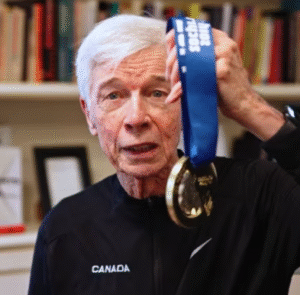
“What Is The Olympic Experience Really Like Behind The Scenes?”
The Games begin before the Games
One of the biggest misconceptions is that pressure suddenly appears for athletes at the Olympics. It doesn’t. It accumulates long before. I used to tell athletes that the start of an Olympic year feels like walking around with an empty backpack. As the year progresses, they start putting things into it without realizing it. Expectations. Hopes. Comments from others such as “You’re the favourite” or “Don’t let us down.” None of it is meant to be harmful, but it all adds mental weight to the backpack. If athletes don’t learn how to empty that backpack, they won’t perform well when it matters. That’s why preparation must include simulation. Before major championships, we would recreate the full competition environment – crowds, judges, uniforms, even the order in which athletes compete – and then debrief it together. One of the most powerful moments for me was watching younger athletes realize that even world champions get nervous. Experience doesn’t remove pressure. It changes how you respond to it.Arrival: awe, structure, and distraction
Arriving at the Olympic Village feels a lot like taking a child to university for the first time. You step off the bus, people help with your bags, you’re shown where you’ll stay, eat, and where everything else is. Then comes the flag-raising ceremony: your anthem, your team, the first moment you fully register that you are at the biggest sporting event on the planet: the Olympics. That moment matters. It grounds you. It also amplifies everything you’re carrying. The village itself is extraordinary. You eat meals with athletes from all over the world. In the Summer Games especially, the scale is overwhelming. It’s inspiring and distracting at the same time. Learning what to engage with, and what to tune out, is part of performing well.Walking into the opening ceremonies
One of the most formative experiences I’ve had was walking into the opening ceremonies. I did it first in Calgary in 1988, and later again in Vancouver in 2010. Walking into the Games in your own country is unlike anything else. The roar of the crowd isn’t just loud – it’s personal. These are your people. The support is energizing, but it also adds another layer of expectation. My experience at the Olympics has caused me to change how I work with athletes. When I talk about the Games with them, I’m not describing something abstract. I know what it feels like in your body to be there: the adrenaline, the noise, the pride, and the responsibility, all at once. It has reinforced something I’ve believed for a long time: preparation isn’t just about skill. It’s about knowing how to respond when emotions are high and attention is pulled in every direction.The reality of daily performance
Most days at the Olympics look nothing like television. They’re built around routines: meals, practices, travel, waiting, and adjusting to constant change. Schedules shift. Buses run late. Events are delayed. Ice gets damaged mid-competition and must be resurfaced. Competing at the Olympics is largely about learning how to manage time and how to return to your routine when that time is disrupted. When delays happen, the question I always ask athletes is simple: Where would you normally be in your preparation right now? Then we go back there, mentally and physically, and continue as planned. Consistency creates stability when conditions aren’t stable.Moments you never forget
Some of the most powerful Olympic moments never make the broadcast. One that has stayed with me happened late at night in Calgary after Elizabeth Manley won her silver medal. Hours earlier, the crowd had been deafening. Now it was just the two of us walking through an underground residence tunnel. Two cleaners looked up, saw her medal, stepped aside, and quietly clapped as she passed. No cameras. No noise. Just recognition. That moment captured the Olympics better than any podium moment ever could.What leaders can learn from the Games
Behind the scenes, the Olympics are not polished or predictable. They’re demanding, human, and full of disruption. The athletes who thrive aren’t the ones who wait for perfect conditions. They’re the ones who know their routines, understand themselves under pressure, and can return to what matters when things go sideways. That lesson applies far beyond sport. High-stakes moments rarely unfold as planned. Performance, whether on the ice or in an organization, comes down to preparation, adaptability, and the ability to stay grounded when the noise gets loud. That’s the part of the Olympics you won’t see on TV.Meet our expert: Karyn Garossino, Associate Trainer

“How do you collaborate with someone who is different from you in personality, style, or approach?”
- Assertiveness: the ability to contribute and communicate your own perspective with conviction.
- Co-operation: an equal willingness to understand and integrate the other person’s view.
Diversity: The Advantage and the Risk
Differences in personality, style, and perspective are not obstacles; they are assets. Research shows that diverse teams often outperform homogeneous ones because they bring varied perspectives, unique knowledge, and deeper problem-solving capacity. However, diversity only leads to better performance when it’s managed properly. Without effective interactions, differences can amplify conflict, miscommunication, and breakdowns in cohesion. That’s the risk McKinsey and others have highlighted: diverse teams can either perform brilliantly or fail spectacularly depending on how they engage with one another. So the first step in collaborating with someone different is not to wish away those differences; it’s to welcome them, and reframe them as advantages. See differences not as barriers, but as opportunities to expand what’s possible. When someone’s style or perspective differs from yours, that’s not a threat; it’s new data. It’s an invitation to learn something new and explore another approach. To do this, you must be intentional about:- Setting aside your default approach long enough to understand how their thinking works.
- Asking questions to truly explore the other person’s priorities, assumptions, and logic.
- Active listening, where your goal is to nurture a trusting environment.
- Holding both stories as true – yours, theirs – and then creating a shared story together.
- Position yourself with the other person, not opposite them.
- Focus together on the problem, not on each other.
- Use a shared surface (whiteboard, document, screen) where both contributions and perspectives are captured and visible.
- “How do you see this unfolding?”
- “What matters most to you here?”
- “What’s your biggest concern?”
- “Where might we be missing something?”
Key Takeaways:
-
Collaboration ≠ Compromise. It’s Expansion. If you’re “meeting in the middle,” you’re probably shrinking the outcome. Real collaboration grows the pie by combining strengths, not trading them off. The goal isn’t to protect your idea, it’s to create a better one together.
-
Differences Are Data, Not Disruptions. When someone’s style or thinking throws you off, that’s not friction, it’s information. High-performing teams treat difference as an input to improve the solution, not a hurdle to overcome.
-
Psychological Safety Is the Multiplier. Diversity only pays off when people feel safe to speak, question, and challenge. If you’re defending or persuading, you’re shutting down performance. If you’re curious and inquiring, you’re unlocking it.
-
Get on the Same Side of the Table, Literally and Mentally. Opposite sides create opposition. Side-by-side creates partnership. Shift your posture, share the surface (whiteboard, doc, screen), and aim your energy at the problem, not the person. It’s a simple move that changes the whole dynamic.
Meet our expert: Garry Watanabe, Principal Trainer & Sport Lead

“What is the difference between leadership and coaching?”
The insight: It’s about who chooses the destination
Leadership is about having a vision, enlisting others, keeping the group on course and sustaining motivation on the journey. Coaching is about helping someone clarify their destination, navigate their obstacles, and keep going when the waters get rough. Is there overlap? Of course. Am I missing something? Almost certainly. Both leadership and coaching are about movement – helping people go from here to there. The question is: who chooses the destination?Key Takeaways:
-
Leadership is about setting a vision, mobilizing people, and sustaining group motivation toward a shared goal.
-
Coaching focuses on helping an individual move from where they are to where they want to go: clarifying goals, removing barriers, and offering support.
-
Leadership involves choosing direction and rallying others; coaching helps someone articulate their own destination and progress toward it.
-
Both involve movement and growth, but differ primarily in who defines the goal.