

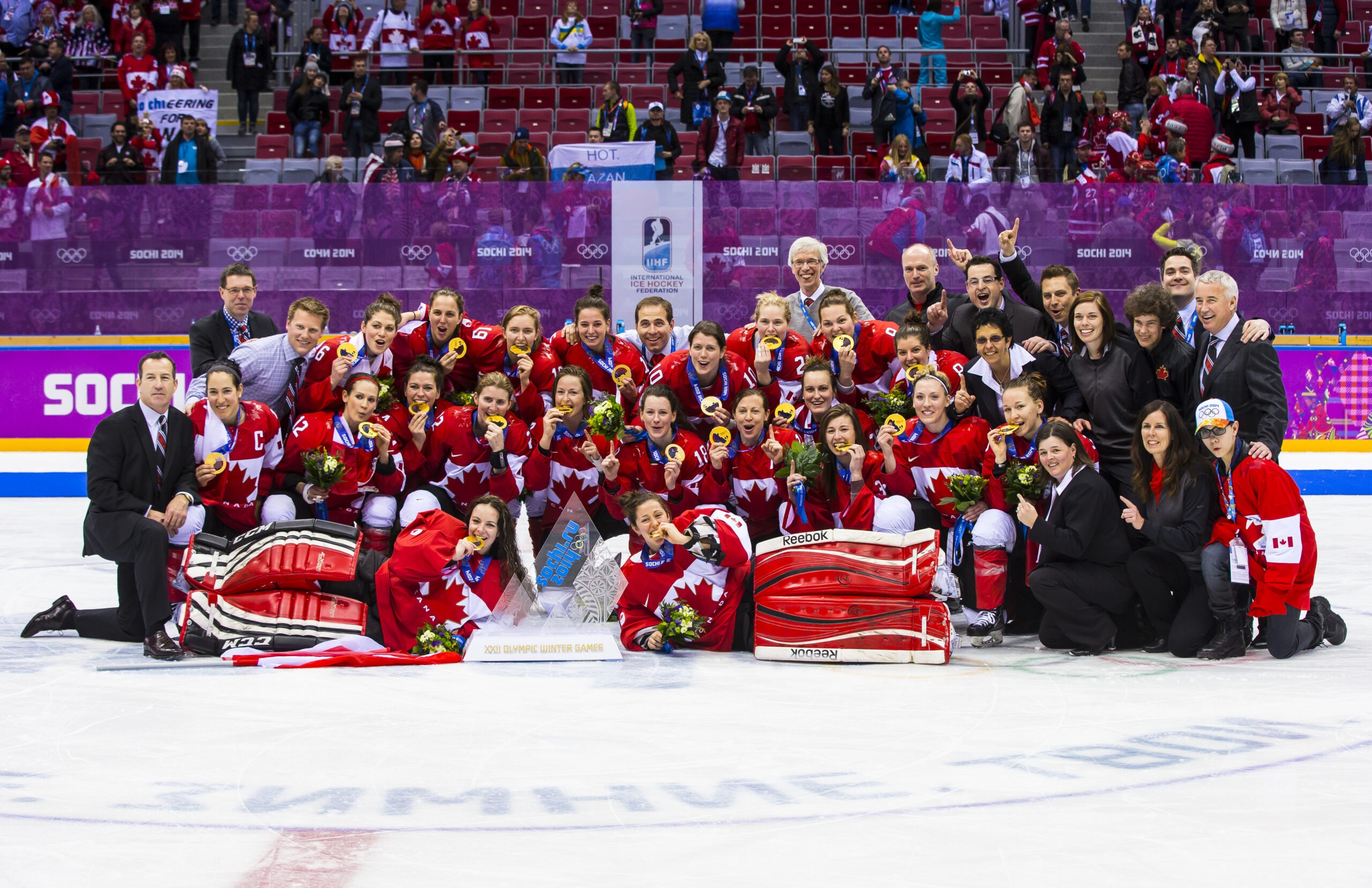

This article is part of Third Factor’s Story Behind the Story series, in which we look at stories behind iconic and under-the-radar Olympic and Paralympic moments. For this feature, Third Factor founder Peter Jensen takes us onto the ice at the Sochi Olympics women’s hockey final, from his vantage point as Team Canada’s mental performance coach, and explains how the team came from behind to defeat the United States for gold.
—
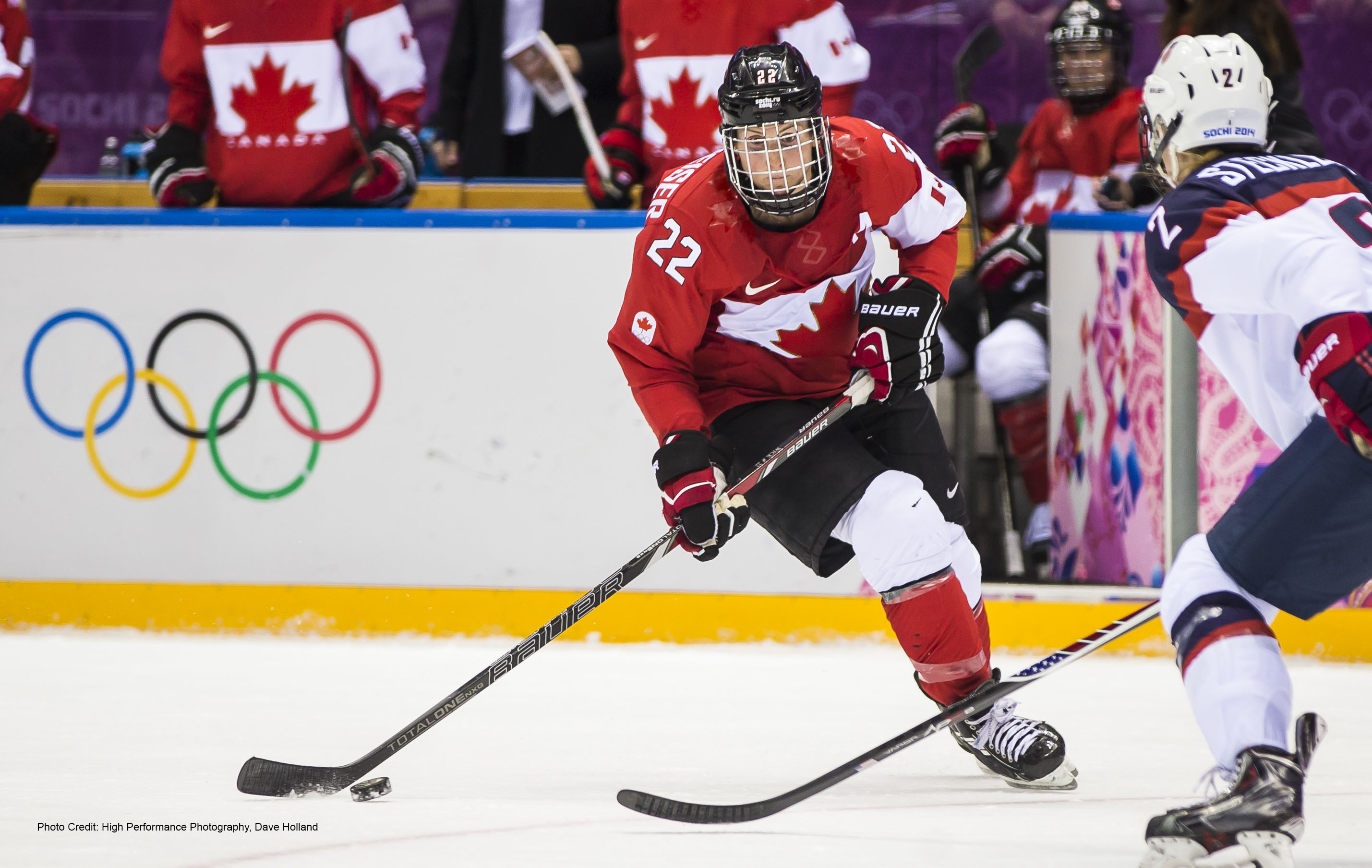
For a moment it looked as if Canada’s reign as Olympic women’s hockey champions was about to end. It was the gold-medal game at Sochi 2014 and in the third period the U.S. was up 2-0. Time was running out.
Then Canada scored to make it 2-1. With under a minute left, Marie-Philippe Poulin tied the game. In overtime, she scored again and Canada claimed gold.
Today, that finish is remembered as one of the greatest comebacks in Olympic hockey history. But it didn’t happen by accident. Team Canada had anticipated this scenario and prepared for it.
The weeks leading up to the Sochi Olympics were not easy for the national team. “We hadn’t done really well in our league play during the Olympic year,” recalls Third Factor founder Peter Jensen. The team also underwent a disruptive coaching change just prior to the Games. Momentum favoured the Americans, and confidence alone wasn’t going to be enough for Team Canada to clinch gold. They needed more.
So Jensen focused on something tangible: preparing the team for adversity.
That preparation mattered in Sochi. When pressure mounted, the team didn’t fracture emotionally. They had already agreed on how they would behave.
You Perform How You Prepare
A persistent myth about high performance – whether in athletes or business leaders – is that resilience appears when it’s needed most. The reality is simpler: it shows up only to the extent that it has been rehearsed.
Months before the Olympics, Jensen met with the team before a game against a strong AAA boys’ team from Brandon, Manitoba. The discussion wasn’t about winning that night. Instead, it focused on a specific scenario they could face: being down 2-0 in the third period.
The players began by talking through how they would manage the clock. “You think about it in 10-minute segments,” Jensen explains. “You break it in half … and break it down into achievable things.”
He then narrowed the window. What if there were only five minutes left? Now it became two-and-a-half-minute sequences. Smaller problems. Clearer focus. The emphasis was not on emotion or outcome, but on behaviours the team could control under pressure.
So when Team Canada found itself down two goals with around seven minutes left in the Sochi gold medal game, the players weren’t overwhelmed. The situation felt familiar. They had been there before and knew how to respond.
“Stay Positive” Is Not a Strategy
Another subtle but critical shift was Jensen’s refusal to let the team sidestep uncomfortable realities. When asked how they would respond individually late in a close game, players emphasized the importance of staying positive and supporting their teammates.
Jensen pushed back. “The coach shortens the bench. And so you’re irritated,” he told them, adding players who weren’t getting ice time would feel frustrated and lose focus. Pretending otherwise wouldn’t make that problem go away.
So the team discussed what that “irritation” might feel like and how players could still support their teammates on the ice. By talking about those moments in advance, they normalized them. Falling behind stopped being a psychological threat and became a known condition with a known response.
That preparation mattered in Sochi. When pressure mounted, the team didn’t fracture emotionally. They had already agreed on how they would behave.
Normalize Adversity Instead of Hoping It Won’t Appear
After the gold medal game, head coach Kevin Dineen summed up his team in a few words: They never gave up.
From Jensen’s perspective, there was more to that explanation. “They didn’t give up because that’s who they were,” he says. “We’d done a lot of work on team vision and culture. But we’d also simulated what they would need to do.”
The team didn’t treat adversity as an anomaly. They treated it as an inevitability. By rehearsing the moments most likely to derail them – shortened benches, frustration, time pressure – they removed surprise from the equation. And when surprise disappears, performance improves.
The Sochi gold medal didn’t come from belief summoned in the moment. It came from preparation that made the moment feel familiar.
Pre-Plan for Adversity
You don’t need an Olympic stage to apply these lessons. The same approach Team Canada used to win gold works in business, leadership and life. Here’s how to get started:
- Identify two to three scenarios that are most likely to derail your team.
- Break each scenario into smaller, controllable steps to solve, rather than treating it as one overwhelming problem.
- Decide in advance what you will think, say, and do when those moments show up.
- Choose simple imagery or verbal cues that help ground focus and regulate emotion under pressure.
Preparing for adversity doesn’t invite negativity. It builds confidence, so when things don’t go to plan, as they inevitably will, you’ll know exactly how to respond.
Watch the full conversation with Peter on the story behind gold in Sochi.
Key Insights:
-
Resilience is not a personality trait; it is a trained response to pressure.
-
Breaking high-stakes situations into smaller, controllable segments reduces cognitive overload and sharpens execution.
-
Avoiding negative scenarios creates fragility; rehearsing them creates confidence.
-
Teams perform better under pressure when they normalize adversity instead of treating it as failure.
-
Preparation replaces hope with clarity.
Build Resilience In Your Organization
Bring the skills that elite athletes use to build resilience and perform under pressure to your organization. Contact us to learn more about our resilience programs.