
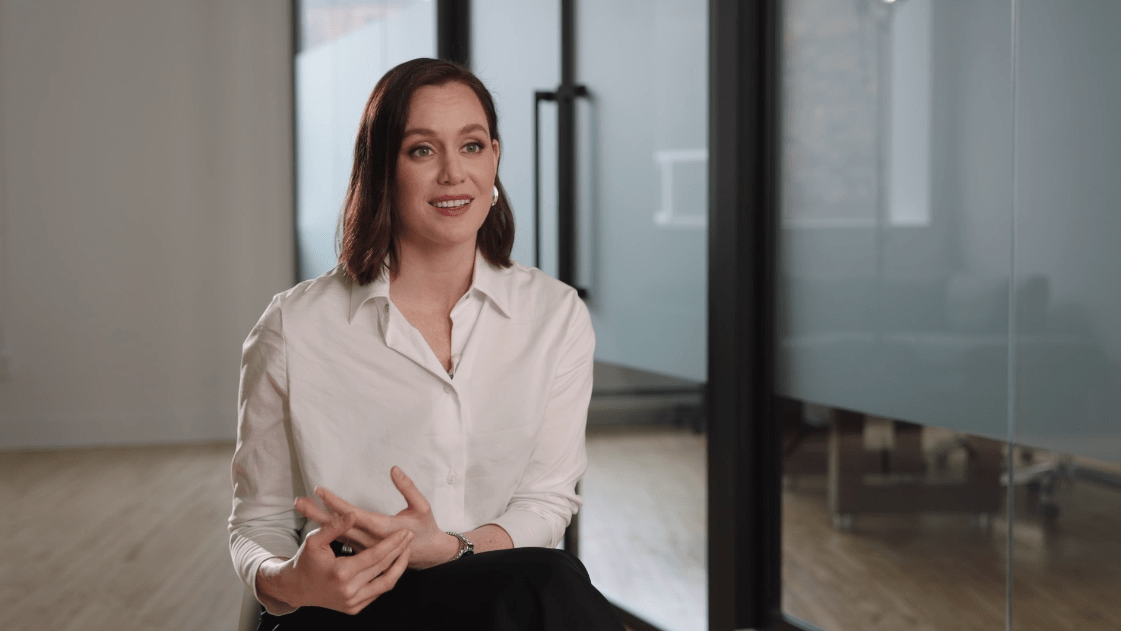

This article launches Third Factor’s Story Behind the Story series, in which we unpack the stories behind both iconic and under-the-radar Olympic and Paralympic moments. For our first feature, Third Factor CEO Dane Jensen sat down with Tessa Virtue – two-time Olympic champion and, with her partner Scott Moir, the most decorated Olympic figure skaters of all time.
—
From the outside, the story of Tessa Virtue and Scott Moir’s career is simple: show up every four years and win. Gold in Vancouver, silver in Sochi, then, after retiring and un-retiring in spectacular fashion, gold in PyeongChang via one of the Winter Olympics’ all-time iconic performances.
But the story behind gold in 2018 is strikingly different than gold in 2010.
The lead-up to 2010 in Vancouver was marked by overcoming both injury and conflict: “I had surgery to combat an overuse injury in my legs, and throughout the recovery process Scott and I stopped speaking. We just lost trust.” At the Olympics, Tessa was “counting the number of steps it would take to get to the cafeteria because I knew if I walked those 300 paces, I wouldn’t be able to practise or compete. And so, it felt like the ultimate Hail Mary just worrying about making it to the end of a program.”
In the end, talent and hard work – on both recovery and the relationship – aligned to produce one shining moment. Tessa and Scott were crowned the youngest ice dance champions in Olympic history.
It was an incredible performance – and one that felt like it would be hard to repeat. “Stepping off the podium in 2010 … I’m not sure I really felt like a winner, if I’m honest,” she says. “There were a lot of factors that had to come together for us to win, and I’m not really sure if I knew stepping off the podium in 2010 that I could replicate that.”
“We can BE the best, even when we’re not AT our best.”
At PyeongChang in 2018, on the other hand, “before our music even started, I felt different. I felt like a high performer, and I didn’t feel like I needed the judges’ results to prove that for me.” And contrary to the feeling after the 2010 Games, after 2018, “there was real joy and satisfaction that came from the hard work, from the pressure, from all of the things that I would’ve found totally depleting two, four, eight or 12 years earlier.”
So what changed? In our conversation with Tessa, three evolutions stood out: embracing discomfort rather than focusing on the number of hours spent in training; a deliberate shift in mindset from chasing perfection to pursuing excellence; and – above all else – a reclamation of personal power.
01. Creating discomfort vs. over-training
After the over-use injuries and surgeries that characterized 2010, the comeback in 2018 was built on less training time – three hours a day instead of 12 – more recovery time, and using the limited training hours to deliberately create imperfect conditions to sharpen their resilience. Whether it was leaving the ice unflooded and chipped, pumping in crowd noise, or falling on command to practise recovery, each practice built confidence that, as Tessa says, “we can BE the best, even when we’re not AT our best.”
Here’s Tessa discussing that process:
02. Pursuing excellence vs. chasing perfection
In Tessa’s words, “We needed to stop chasing perfection and instead pursue excellence … and once we took perfect off the table, we thought excellence was possible.” Their daily goal became showing up at an “8 out of 10”; not in effort, but in execution. Reframing their approach unhooked them from the impossible standard of perfection and freed them to connect with the joy and challenge of consistent excellence.
Listen to Tessa talk about this shift:
03. Becoming drivers vs. passengers
At the heart of Tessa and Scott’s story behind the story is reclaiming a sense of agency and self-efficacy. After years of being “good little soldiers,” for their 2018 comeback, they stepped into the driver’s seat: assembling their own team, setting their own standards, and “operating as if we were the CEOs of our own business,” she says. “We had agency and autonomy, we really were steering the ship.” That changed their experience leading up to the Games and, she believes, made the ultimate win more fulfilling.
Listen to Tessa talk about this shift:
Of course, the effectiveness of these shifts is not limited to sports. We can all benefit from:
- Increasing short-burst intensity and building time for recovery instead of focusing on hours worked or busyness as a proxy for effectiveness.
- ‘Roughing up the ice’ to build resilience into our projections, targets, pilots, and project plans instead of making plans that rely on perfect conditions.
- Embracing ‘8 out of 10’ efforts that will produce more from consistency over the long haul instead of aiming for the impossibility of perfection.
- Seeing ourselves as the author of our stories instead of allowing ourselves to fall into the mindset of being characters.
When Tessa and Scott made these shifts, the impact was transformative. In Tessa’s words, “I felt like I had the recipe for what it meant to be excellent.” Given the results, it’s a recipe that’s worth testing out for yourself.
Want to go deeper? Watch Tessa’s full conversation with Dane here:
Build Resilience In Your Organization
Bring the skills that elite athletes use to build resilience and perform under pressure to your organization. Contact us to learn more about our resilience programs.