

Welcome to our summer reading list for 2026. The team at Third Factor has once again pulled together their favourite reads from the past year, and the range is as eclectic as ever. Whether you’re after a novel to lose yourself in, a memoir that shifts your perspective, or something practical you can put to work on Monday morning, there’s a recommendation here for you.
As always, we’d love to hear what you think if you pick one up, and which titles you’d add to the list.


In this research-rich, highly readable book, Duhigg argues that every conversation is one of three things: a practical discussion about what something means, an emotional exchange about how we feel, or a social conversation about who we are to each other. Most miscommunications happen because people are having different conversations simultaneously without realizing it. You think you’re solving a problem. The other person needs to feel heard first. What I enjoyed about this book is that it shows us how to move beneath the surface topic to the more meaningful subject underneath. That’s where connection happens. And connection is where coaching happens, and change becomes possible. Duhigg does an amazing job by introducing research from neuroscience, psychology, FBI interrogation techniques, and marriage counselling to bring the topic to life. It’s an enjoyable read with some great insights you can apply at both work and home.


My selection for the summer reading list is “Digital Minimalism” by Cal Newport. Newport argues that technology is genuinely useful, but some of the apps and platforms we use daily are built to distract us and consume as much of our time as possible. Digital minimalism is the philosophy that we should intentionally and aggressively curate our digital lives, favouring a small number of carefully chosen tools that strongly support the things we value, and letting go of everything else. He suggests a 30-day digital declutter – completely stepping away from optional technology, then reintroducing it slowly with fresh eyes. This is to reveal what was actually useful versus what was just habit, mindless, or quietly draining our time. With that reclaimed time, Newport encourages solitude, real-world connection with friends and family, and pursuing high-quality leisure that leaves you genuinely fulfilled. I haven’t completed the full declutter myself (yet), but the book still shifted how I think. I’ve nearly eliminated mindless scrolling and started being much more intentional about when and why I pick up my phone. It’s a worthwhile read for anyone looking to be a little more intentional about how they spend their time.
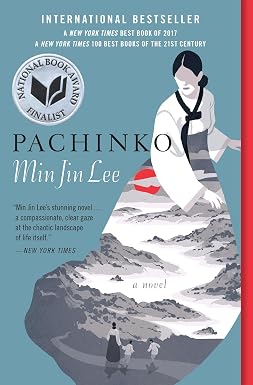
“Pachinko” follows four generations of a Korean family, beginning in early 20th-century Korea and unfolding across decades in Japan. It’s a deeply human story about identity, sacrifice, belonging, and what we inherit from those who came before us. I selected it for my HMBC (see below) because most of the wartime history I’d encountered hadn’t centred on Korean or Japanese perspectives, and this book filled that gap. I especially recommend the audiobook. It’s narrated by Sandra Oh, who brings an authenticity and warmth to the story. As a Canadian, there’s something extra delightful about hearing a familiar voice carry these characters, and her rendering of the Korean and Japanese names and dialogue gives you a feel of the language that you can’t get from reading. (Side note: Some readers of our Third Factor newsletter might be interested in my Hockey Mom Book Club selections in the last year: Demon Copperhead, The Women, Homegoing, A Town Like Alice, The Nightingale, Fourth Wing, Pachinko, My Friends, Remarkably Bright Creatures.)

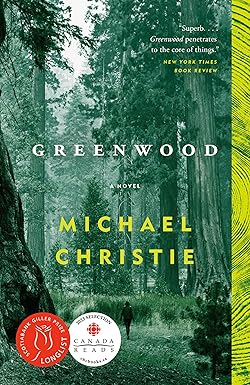
I turn to fiction as an escape; however, I don’t veer far from reality. In fact, I love a book that touches my heart, makes me reflect and shines a light on humanity – something I’m deeply interested in understanding better. Greenwood by Michael Christie was a bull’s-eye for me. At its core, this is a book about our interconnectedness with one another, with nature and across time. With beautiful descriptive writing about our West Coast, this is a family saga that highlights different personalities and priorities, commitments and secrets, loves and loyalties, protection and consumption. From a successful lumberman in the 1930’s to a world almost devoid of trees, our relationship to nature is explored. This is a story of Canada and how important our relative perspectives are. This is a story of resilience, and more importantly, one of hope.


I stumbled upon David Sedaris through podcasts, and his wit, sharpness and self-awareness quickly made him a favourite. “Let’s Explore Diabetes with Owls” is a collection of essays that is laugh-out-loud funny, blended with sharp reflections on everyday life. He has a unique ability to turn ordinary experiences like travel mishaps, family dynamics and cultural quirks into moments that are both entertaining and surprisingly moving. His storytelling is the kind that makes you want to read passages out loud to whoever’s around you, and it’s easy to pick up for a quick chapter while still walking away with something that sticks. This collection has a nice balance between humour and heart. It’s great for plane reading, when you have only a bit of time and want a quick read that gives you a good chuckle. It’s also perfect for a lazy summer afternoon by the pool. It’s a great pick for anyone who has ever found humour to be the best way through life. Sedaris’s stories have a way of delivering genuine laughs and they offer the perfect break from reality.


“Thunderstruck” is one of those fantastic non-fiction books that reads like a gripping thriller while educating at the same time. It is simultaneously a fascinating narrative history of Marconi’s invention of wireless radio and a character study of one of history’s more unlikely murder suspects – an unassuming doctor at the heart of a case that gripped an England still in the shadow of Jack the Ripper. These two seemingly unrelated stories come together on a ship steaming across the Atlantic with both a wanted fugitive and a wireless radio on board. Gripping and enlightening stuff.


This book is about love, kindness, and hope. It is a simple, easy read that will have you laughing out loud in places. It’s about a 100-year-old former baseball player who befriends a young boy in need of a heart transplant and helps him fulfill his list of five wishes. It is a heartwarming story, and you will fall in love with the characters. It definitely qualifies as a great summer read. You may get dragged away from it for short periods of time, but I assure you, it will pull you back.


I picked up “Talk” thinking it would give me a few new tools for my coaching toolkit. What I didn’t expect was how often I’d catch myself thinking about it at the dinner table and in the middle of tough conversations I’d been putting off. Alison Wood Brooks is a Harvard Business School professor whose research has been published in journals like Psychological Science, but the book itself reads like a smart friend telling you what she’s figured out. She organizes everything around a simple framework: Topics, Asking, Levity, and Kindness. Each one sounds obvious until you actually try to do it well. The section on asking follow-up questions stuck with me the most. It turns out the small move of asking one more question is one of the most powerful ways to make someone feel heard, and most of us do it far less than we think. If your work or your relationships depend on the quality of your conversations, this is a warm, useful, and quietly humbling read for the summer.


If you’re looking for the perfect companion for a long summer drive or some well-deserved downtime, I highly recommend listening to the audiobook written and narrated by Al Pacino himself. It feels like you’re sitting next to one of the greatest stage and screen actors while he just talks to you. What makes “Sonny Boy” especially compelling as an audiobook is its storytelling texture. Whether you’re a lifelong Pacino fan or simply someone who appreciates a beautifully told life story, “Sonny Boy” is a listen that will stay with you long after the final chapter, especially if you can find the time to relax, listen and let him do the talking.


Incredibly irreverent and very funny. Authored by a great comedy writer. Janetti shares his opinions, experiences, and life’s irritants in a hilarious series of vignettes from his own life. All true. To quote one reviewer: “…it is the literary equivalent of a night out with your funniest friend that you wish would never end.” Unfortunately, it is a quick read. Razor-sharp wit, pithy and profane – just some of the adjectives used to describe it. All the readers in my family read it. All loved it.


Ever since encountering Eliyahu Goldratt’s classic “The Goal,” I’ve been fascinated by the idea that bottlenecks aren’t problems to be solved, but rather, leverage points hiding in plain sight. Recent disruptions – the Strait of Hormuz, microchip shortages, the scramble for data centre energy – have put constraints back at the centre of every strategic conversation. Epstein flips the conventional wisdom. Instead of viewing constraints as obstacles to eliminate, he argues that the right constraints drive focus, creativity, and breakthrough. Dr. Seuss wrote one of the most beloved children’s books of all time after accepting a bet to use just 50 words. Freedom, as it turns out, can be the enemy of great work. And sometimes, effective leadership isn’t about removing all the friction. It’s about knowing which constraints to leave in place. If that tension feels familiar, this book is worth your time.


Summer’s a great time to try new things and while you’re enjoying other selections on this reading list, I’d recommend also exploring the rich history of culture and flavours of my father’s home – Palestine. Try something seasonal like Hindbeh – dandelion greens you can gather from your yard prepared with with caramelized onions and sumac; fattoush – a bright cucumber and tomato salad with toasted za’atar bread; or Palestine’s national dish, the hearty, savoury sumac chicken Mussakhran. You won’t be disappointed! And please support your local independent bookstore where you can.
Many websites use affiliate links to make money when you buy something from them – we don’t. Feel free to follow the links provided on Amazon or pick up the book you want from your favourite local bookseller.