
Meet our expert: Debbie Low, President and CEO of the Canadian Sport Institute Ontario

“How Can I Effectively Prepare My Team For The Day I Move Onto A New Role?”
01. Coach yourself out of a job, starting now, not later
“Life is unpredictable,” Debbie says. “You don’t always get to choose when a successor takes over.” Her rule: build the foundation long before you think you’ll need it. Her goal as a leader is to make herself helpful, but never essential. A strong team should be able to function without its leader in the room. If not, the team is too dependent on one person.02. Recruit a mirror you can’t argue with
Every leader has blind spots, and by definition, blind spots are invisible to the person who has them. So Debbie leans on her board chair, Ian Gordon, a former Loblaw Senior Executive. Because he sits outside the sport industry, he can offer a different perspective and challenge her assumptions. An outsider’s feedback isn’t clouded by the history and emotion that can obscure your view. Who plays that role for you? If no one does, it’s time to look for someone who can.03. Turn “who might replace me” into an honest conversation, not a guessing game
Talk directly with the people on your team who could realistically grow into your role. Ask if they see themselves in your job one day. If they do, be straight: You can’t guarantee the job, but you can commit to preparing them to compete for it. Then get specific. Sit down with them and map out what the role demands. Be candid where they measure up and where they don’t. Sometimes the fastest path forward is sideways – a lateral move that builds the experience the top job requires. Give feedback often enough so that no one interested in your job is ever blindsided. The worst outcome isn’t someone losing the opportunity. It’s someone feeling they never had a real shot because you weren’t honest about where they stood.04. Loop in the people who’ll actually make the call
A development plan is only as good as the intelligence behind it. Find out what the decision-makers need to see in a successful candidate, then build those exact requirements into how you’re preparing your people for succession.05. Make the process the prize, not just the promotion
This is the hardest part to get right but the one that matters the most. If you frame the entire plan as a competition to become you, then you’ve built a pressure cooker, not a pipeline. Instead, make sure the skills, relationships, and track record your people build along the way have value on their own. That way, even if they don’t get your job, the work they put in still pays off for their career. Succession planning isn’t about finding your replacement. It’s about building a team so capable that when you move on, you know you’ll be missed. But you also know your team will be just fine.Meet our expert: Peggy Baumgartner, Chief Learning Officer

“How Do I Keep My Team Focused and Engaged When Change Won’t Stop And We Are at Capacity?”
Building, maintaining, and deepening relationships
The deeper your connection with your team, the greater your influence. That relationship is the pipeline through which all communication flows. If that pipeline is clogged or doesn’t exist, it means that when you need strong communication the most, it won’t happen. Which brings me to energy. We often frame the feeling of being overwhelmed as a time management problem. And so we ask ourselves: Where do I find additional time? But many leaders are already great at time management, and that question won’t get you far. The better question is: Where can I find the energy? Pay attention as you move through your day. When does time seem to fly? What fills you up? What are your strengths? You will have far more energy working on things you feel you do well, and it’s remarkable how much gets done when energy is high and how little when it’s depleted. And this isn’t just about you. A big part of your job right now is making sure your people have the energy to do what they need to do. They need to believe in themselves and believe they have the trust and relationship with the person who matters most to them: their leader. And finally, when things do get hard, here is the one habit worth picking up: Stop listening to yourself and start talking to yourself. During hard times, the inner critic gets loud. This is so hard. I’m not on top of things. I can’t do this. The best performers don’t silence that voice by ignoring it. They pause and ask: Is it true? Yes, work is often hard. But does hard mean you’re not good at it? No. It might mean a task is new or difficult. It might mean you’re doing something no one has figured out yet. Get clear on what’s actually true and lead from there.Sustainable leadership for the long haul
Leading through relentless change is genuinely hard. And somewhere in the middle of keeping your team focused, your strategy on track, and your organization moving, it is easy to forget that you are also a person who needs to take care of themselves. The most effective leaders right now are not the ones who have it all figured out. They are the ones who stay honest with themselves, invest in the relationships that matter, manage their energy with the same intention they bring to their calendar, and extend to themselves the same patience and encouragement they would offer anyone on their team. Change will keep coming. The question is not whether you can outrun it. The question is whether you are leading in a way that is sustainable for you and the people counting on you. Be kind to yourself. That is not soft advice. It is how you stay in the game.This question and answer are adapted from a webinar hosted by Queen’s Executive Education featuring a panel led by Dr. Laurence Ashworth (Chair of Queen’s Executive Education), and panelists Peggy Baumgartner (Chief Learning Officer, Third Factor), Dr. Julian Barling (Smith School of Business Professor and Borden Chair of Leadership), and Dr. Lobna Chérif (Royal Military College’s Chair in Resilience). To watch the full Queen’s Executive Education Webinar, click this link.
Key Takeaways:
-
Vulnerability is a leadership tool, not a weakness. When leaders model honesty about what they’re experiencing, they give their teams permission to do the same.
-
Overwhelm is an energy problem, not a time management problem. Ask where you can find energy, not where you can find more hours.
-
Relationships are your pipeline. The deeper your connection with your people, the more effectively communication flows when it matters most.
-
Stop listening to yourself and start talking to yourself. When the inner critic gets loud, pause and ask: is it true? Get clear on what’s actually true, and lead from there.
-
Sustainable leadership requires caring for yourself, not just your team. The leaders who last are the ones who manage their own energy with the same intention they bring to everything else.
Meet our expert: Tracy Wilson, Olympic Figure Skater, Broadcaster & Third Factor Sport Advisor

Knowing how to support someone after failure is one of the hardest things a coach, leader, or mentor has to do. There is no rewind button. The moment has passed, the result is set, and the person in front of you is somewhere between devastated and numb. What do you do?“How do you support someone after failure, especially when the stakes are high and the moment has already passed?”
01. There is no one right way to respond
The first thing Tracy will tell you is that there is no script for this. Knowing how to support someone after failure starts with understanding who is in front of you and where they are emotionally before doing or saying anything else.02. Be present
In the immediate aftermath of a big failure, Tracy’s instinct is not to talk, it’s to listen. Or simply to be there.03. Help them find what else is true
Once the initial storm has passed, people often start telling themselves a catastrophic story: it’s over, I blew it, I’ll never recover. Tracy’s most consistent move is to gently challenge that narrative. Failure has a way of narrowing our vision, and part of a coach’s or leader’s job is to widen it again.04. Use hindsight and your own failures
One of Tracy’s most effective tools is perspective: using the person’s own past, and her own.05. Help break the spin
After a setback, people tend to replay it over and over. That loop can be hard to break. For anyone caught in that circular thinking, Tracy often recommends something simple.06. Hold the belief for them
Ultimately, Tracy’s message to anyone supporting someone after failure is one of belief in their resilience, even when they can’t access it themselves.Key Takeaways:
- There is no script. How to support someone after failure depends on who they are and where they are in the moment. Read the person before reaching for the playbook.
- Presence over prescription. In the immediate aftermath of failure, a calm, quiet presence is often more valuable than advice. Being comfortable sitting in discomfort is a leadership skill.
- Ask “what else is true?” Failure narrows vision. The role of a coach or leader is to gently widen it again – not by dismissing the pain, but by creating space for a more complete picture.
- Draw on your own failures. When leaders and coaches share their own setbacks, they signal that failure is survivable and that the path forward is real.
- Help break the spin. Writing things down can interrupt the circular thinking that often follows a high-stakes failure.
- Hold the belief for them. Sometimes people can’t access their own resilience. That’s when a coach or leader holds it for them, until they can hold it themselves.
Lesson #1: Perfect Conditions Are a Myth
One of the clearest lessons from Tokyo is that “perfect conditions” are largely an illusion. Athletes spend years preparing, yet competition is always uncertain. They never know exactly how their body will respond, how opponents will perform, or what the environment will deliver on the day that matters most. Tokyo made that impossible to ignore. There were no guarantees. No familiar routines. No comforting rituals. Daily COVID testing became part of life. Every morning meant spitting in a tube and waiting. Stories circulated of athletes testing positive and being sent to the “fever clinic.” Each time, the village would ripple with silent worry. And still, athletes showed up to compete. I remember one athlete in an individual event whose entire Olympic experience lasted nine minutes. One performance. First round. Done. This was not the Games she had imagined. Within 48 hours, she was on a plane home. When we spoke, she was heartbroken. Not just about the result, but about the experience she missed. She couldn’t explore Tokyo. She couldn’t soak up the atmosphere and carry it forward into the next four-year cycle. “I don’t want to go yet,” she said. “I still want to feel the Olympics.” That moment captured the emotional whiplash of Tokyo. Years of preparation compressed into minutes, followed by an abrupt exit from a city she barely saw. And yet, she stepped in knowing this might happen. That willingness to enter uncertainty is the essence of sport. It also mirrors leadership and business more than we wish to admit. At work, we try to control what we can: plans, timelines, strategies, forecasts. We design “ideal conditions” in our heads and on our slides. But at some point, courage becomes simpler than that. We need to ask: What is mine to control right now? Then commit to that fully, even when the picture is incomplete. The bar shifts from “I will only perform if conditions are perfect” to “I will perform under the conditions that actually exist.” Listen to Monique describe how perfect conditions are a myth:Lesson #2: Self-Awareness Is a Performance Skill
When the external environment changes, self-awareness becomes non-negotiable. It becomes a performance skill. Many athletes rely on specific conditions to bring out their best. Some feed off the energy of a crowd. Others depend on routines and rituals. Others draw strength from the presence of family or familiar faces. In Tokyo, much of that disappeared. Athletes were forced to ask new questions:- What actually fuels me?
- What drains me?
- How do my strengths show up when conditions shift?
- Which parts of my routine are essential – and which are habits I’ve never questioned?
- Do I spiral when I see this, or can I notice it and return to my routine?
- Do I absorb everyone else’s fear, or anchor to what I can control today – sleep, food, warm-up, mindset?
Lesson #3: Presence Calms the System
In Tokyo, just arriving felt like an achievement. Between testing protocols, travel restrictions, health concerns, and constant logistical hurdles, getting to the Games was a maze. For many athletes, coaches, and staff, stepping into the village carried real emotional weight. Thinking too far ahead—to medals, expectations, outcomes – only amplified anxiety. Presence became more than a mindset. It became a stabilizer. Staying anchored to the next task, the next decision, the next controllable action helped athletes manage fear, disappointment, and even success. Because even success was disorienting. Celebrations were brief. Support systems were limited. Within two days of competing, many athletes were back home, sitting on a familiar couch, trying to process an experience that ended almost as quickly as it began. Uncertainty didn’t end with competition. It followed them home. The parallel to today’s work environment is hard to miss. Markets shift. Plans change. AI is reshaping roles and workflows in ways we can see but not yet fully understand. Conditions are moving faster than our slide decks. The leaders who navigate this best aren’t the ones who eliminate uncertainty. They’re the ones who stay present inside it. Presence doesn’t mean pretending everything is fine. It means acknowledging what’s hard, then returning to a simple question: Given everything going on, what matters most right now? Listen to Monique describe how presence can help focus attention:Beyond Tokyo: Adapting When the Script Changes
The Tokyo Games offered a powerful reminder: resilience isn’t about grinding endlessly. It’s about adapting intelligently when the script changes. It starts with acceptance. Some conditions are out of your control. The first step is to separate what you can’t influence from what you can – and invest your energy there. It also requires honest self-recognition:- Where do you get your energy from?
- What causes you to lose it?
- Which boundaries protect your ability to perform under pressure?
- How might those answers change when conditions do?
Build Resilience In Your Organization
Bring the skills that elite athletes use to build resilience and perform under pressure to your organization. Contact us to learn more about our resilience programs.
From the outside, Karyn and Rod Garossino’s ice dancing performance at the 1988 Calgary Olympics looked like a hometown dream. A brother and sister from rural Alberta. Competing for Canada. An Olympics on home ice. Five flawless performances on the biggest stage in sport. What people saw was excellence. What they did not see was how hard it was to stay steady enough to deliver it. For Karyn, the Olympics were shaped by two moments she could never have predicted. One came before the competition even began, while athletes waited to enter the opening ceremonies. The other came standing at centre ice, when a roaring hometown crowd would not stop cheering. Together, these moments revealed something essential about high performance: preparation matters, but so does an ability to adapt when things do not go as planned.“In high-performance sport, and in fact much of all high performance, consistency is the holy grail.”
–Karyn Garossino
From Carstairs to the Olympic Stage
Karyn and her brother Rod grew up in Carstairs, Alberta, where skating was simply part of Prairie life. What started as a love of the sport became a serious pursuit, supported by strong coaching, family commitment, and years of disciplined training. In 1981, the pair won junior ice dance gold at the Canadian National Skating Championships, and throughout the decade, they competed at the highest level in Canadian, international and World Championships. Then Calgary won the bid to host the 1988 Olympic Games. Suddenly, the idea of competing at a hometown Games became real. As that moment got closer, so did the pressure. Like many athletes facing a once-in-a-lifetime moment, Karyn prepared not only physically but mentally for what it would feel like to perform under a global spotlight.Different Fabric. Same Cloth.
One of Karyn’s most vivid Olympic memories came before the competition started. Athletes from around the world gathered in a staging area ahead of the opening ceremonies. Each team was dressed in its country’s colours. But as the wait stretched on, things got a little playful: jackets were briefly traded, hats and scarves were exchanged, and the differences between teams started to fade.What Karyn felt in that moment was a deep sense of connection and the awe of belonging to the historic Olympic movement. These athletes represented different nations, but they shared similarities – years of sacrifice, discipline, routine, and the pursuit of excellence. In her words, “we were wearing different fabric, but were cut from the same cloth.” One by one the nations left to join the ceremonies saving the host country to march in last. Then Team Canada entered the stadium. The sound of 85,000 people thundered through the building. In that instant, she realized something else: This was not just her Olympics, or even just the athletes’ Olympics It was our Games. The moment belonged to everyone who had made it possible: athletes, coaches, families, volunteers, organizers, sponsors, and an entire country. What she expected to feel as an individual competitor became something much bigger: the incredible honour of wearing red and white and representing the extraordinary collective effort of a nation.“We were wearing different fabric, but were cut from the same cloth.”
The Crowd Wouldn’t Stop Cheering
If the opening ceremonies created awe, the competition brought a different kind of pressure. When Karyn and Rod were announced onto centre ice, the crowd erupted. That part was expected. What was not was that the cheering didn’t stop. Normally, once skaters take their position, the arena quiets and the music begins. But this audience kept cheering, waving flags, and feeding even more energy into the building. The music could not start until the arena settled, so Karyn and Rod stood in position and waited. And waited. For a brief instant, they felt the weight of what was happening. They exchanged a smile and a shared realization: Oh my God, we’re at the Olympics. It was a deeply human moment. But it was also risky. Because even positive energy can get in the way of performance. The challenge was not only handling fear or adversity. It was managing excitement, emotion, and the significance of the moment. Karyn knew they had to get back to what they had trained for. They turned to breathwork, a skill they had practised for years to steady themselves under pressure. Within three exhales, they were back in form. Their activation level dropped. Their focus returned. Their physiology settled. The crowd eventually quieted, the music began, and they performed brilliantly. They achieved a 12th-place Olympic finish. The next year, they would win gold at the senior Canadian Championships. Looking back, what lessons did Karyn learn from her Olympic experience that are helpful to anyone facing high-performance situations? Here, she helps us understand three practical takeaways:Lesson #1: Consistency Is Built Before the Moment
Karyn describes consistency as the holy grail of high performance: the ability to deliver what you are capable of in any condition, not just ideal ones. That consistency was built long before the moment arrived. Karyn and Rod prepared not only their skating but also their mindset. Through imagery and planning, they anticipated the noise, emotion, and pressure of the Games so they would not be overwhelmed. That is a critical lesson for any high achiever – whether in sports or business. The goal is not to hope everything goes perfectly. It is to be ready when it doesn’t. Consistency is not about controlling the environment. It is about training how to respond to it. Listen to Karyn describe how consistency is built before the moment:Lesson #2: Control What You Can Control
One of Karyn’s clearest lessons from Calgary is simple: high performers must learn to distinguish between what they can control and what they cannot. She could not control the crowd. She could not make the audience quiet down. She could not change the scale of the moment. What she could control was her own internal state. That distinction matters because pressure grows when we fixate on things we cannot change. Recovery begins when we return to what we can manage: our breathing, our attention, our preparation, and our next move. In that moment on the ice, the solution for Karyn was not to fight the environment. It was to return to the training that brought her to the Games. Listen to Karyn distinguish what you can control and what you cannot:Lesson #3: Breathwork Is a Performance Skill
Karyn is clear that the breathing exercise she used in Calgary was not improvised. She had practised it for years. Its purpose was to manage the body when the outside world became overwhelming. Slow, controlled breathing gave her a direct way to regulate her physiology and recover focus. Her method was simple: breathe low and breathe slow. Under pressure, breathing rises high into the chest and speeds up. But when breathing starts lower in the body, from the diaphragm, and the exhale lasts longer than the inhale, the body begins to relax. That matters because physiology drives performance. If your body is overstimulated, thinking narrows and execution suffers. When your physiology settles, your trained skill improves. In Calgary, three breaths were enough because Karyn and Rod’s skills were already there. That is what makes breathwork so powerful: it is not just a calming technique; it is a trained performance tool. Listen to Karyn provide insight into how breathwork is a performance skill:Practical Tool: Return to Centre in Three Breaths
When pressure rises unexpectedly, use this simple reset:- Notice the surge: Pay attention to the moment when your energy starts to spike. Maybe your chest tightens, your focus narrows, or your thoughts speed up.
- Breathe low: Drop the breath lower into your body rather than keeping it high in the chest.
- Breathe slowly: Lengthen the exhale so it is longer than the inhale.
- Repeat for three breaths: Use three deliberate breaths to regain control.
- Return to the task: Ask: What can I control right now? Then put your attention there.
Build Resilience In Your Organization
Bring the skills that elite athletes use to build resilience and perform under pressure to your organization. Contact us to learn more about our resilience programs.
Behind the Scenes: When Effort Becomes the Problem
The start of a bobsleigh race creates a paradox. Athletes must be aggressive and explosive. But if they try to force the moment — if adrenaline turns into tension — they slow down. Timing slips. Co-ordination breaks down. The extra effort meant to improve performance actually hurts it. This became even clearer to Lumsden in Olympic sport. In professional football, games happen weekly. In the Olympics, pressure builds for four years toward one moment. That long buildup can either sharpen performance or overwhelm it. “If you’re not mentally prepared,” he explains, “if you haven’t done the work between the ears as much as you have in the gym, your mind is going to break before your body does.” The answer isn’t to remove pressure or hope it feels manageable. The answer is to make sure pressure never feels new.Lesson #1: Pressure Shouldn’t Be Saved for Game Day
In Olympic bobsleigh, the start is critical. A bad start can cost the race. It also happens in the most intense environment athletes face all year. If that intensity appears for the first time on race day, the nervous system reacts as if it’s under threat. Muscles tighten. Timing speeds up. Focus shifts from execution to survival.So teams train for it. “On the bobsleigh side, we manufacture adversity in our training environment,” Lumsden says. “We’ll throw metaphorical sticks in the spokes to see how people respond. We’ll put a hold on the track and turn the noise up really loud. Manufacturing some adversity in the training environment helps build that resilience.” Unexpected delays. Loud noise. Compressed timelines. Sudden changes. These are added on purpose. The goal isn’t to make practice harder just for the sake of it. The goal is to make high-pressure conditions feel normal. On competition day, the body recognizes the intensity. But instead of reacting to it, athletes focus on execution. So the real danger isn’t pressure. It’s surprise pressure. Listen to Jesse describe how pressure shouldn’t be saved for game day:“We’ll throw metaphorical sticks in the spokes to see how people respond… Manufacturing some adversity in the training environment helps build that resilience.”
Lesson #2: Manufacturing Adversity Builds Confidence
When pressure rises, confidence doesn’t come from positive thinking or motivation. It comes from evidence. Athletes need proof they can perform when things aren’t perfect. In high-performance sport, problems are guaranteed. Equipment fails. Schedules change. Mistakes happen. If athletes only train under perfect conditions, any disruption feels like a threat. Manufacturing adversity changes that, Lumsden says. “You do it not because it’s going to happen, but if it does, you’re more prepared … it becomes not a panic moment, but a moment of ‘I’ve been here. Let’s go do our job.’” When athletes practice amid noise, fatigue, uncertainty, and disruption, competition feels manageable. Emotions stay steadier. Decisions stay clear. Execution stays sharp. That’s real confidence. Not the belief that everything will go well, but the knowledge that you can perform even if it doesn’t. Listen to Jesse describe how manufacturing adversity builds confidence:Lesson #3: Optimal Performance Comes from Controlled Intensity
Under pressure, most people try to push harder. More effort. More urgency. More control. In bobsleigh, that backfires. The start of a race requires maximum power, but it also demands rhythm and coordination. When athletes tighten up or force the moment, their speed drops.The same thing happens in business and leadership. High-stakes moments often cause people to rush, over-control, or narrow their focus too much. They try to raise performance but end up lowering clarity instead. As Lumsden says: “If you’re not mentally prepared… your mind is going to break before your body does.” Elite performers learn to operate with high intensity and low tension. Aggressive but composed. Urgent but controlled. That ability doesn’t come from trying to relax in the moment. It comes from repeated exposure to pressure until the body learns how to stay loose at full speed. Listen to Jesse describe how optimal performance comes from contolled internsity:“If you’re not mentally prepared… your mind is going to break before your body does.”
Practical Tool: Manufacture Adversity
One of the most useful lessons from Jesse Lumsden’s experience is simple: Don’t wait for high pressure to show up. Introduce it on purpose. Manufacturing adversity means building controlled challenges into your preparation. Instead of always practicing in calm, predictable settings, recreate the stress you might face later. For example:- Rehearse with background noise or interruptions to strengthen focus
- Shorten preparation time to simulate urgency
- Ask a colleague to introduce unexpected questions or changes
- Practice recovering from mistakes instead of stopping
The surprise silver stirred his competitive spirit: “I should have been so fired up with winning a silver. But I was actually a little bit let down … and it dawned on me that I wanted more.” The next chance for “more” came in the Super G race – Josh’s strength. “When I go fast on snow, everything is slow for me, and I’m actually quite relaxed.” He believed he had a good chance for a medal, and at one point during the race, he was tied for first. Then, near the finish, he lost control. “I did a 360 at 100 kilometres an hour,” he recalls. After that near-miss for a gold medal, Josh’s next opportunity came in the Men’s Combined, a two-part event that blended both the Slalom and Super G. At first glance, it wasn’t an obvious fit. The speed portion suited him. The technical slalom did not. “I’m a speed skier. I love going fast – and so downhill and Super G were really my best opportunities to be successful.” And yet, the morning of the race felt different. “I woke up with a head full of steam,” he says. “I was like, ‘You know what? Today’s my day.’” In speaking with Josh about that day, a day that ended with a gold medal, there were two lessons that stood out:“I should have been so fired up with winning a silver. But I was actually a little bit let down … and it dawned on me that I wanted more.”
Lesson #1: Empty The Cup
Athletes are trained to process doubt – to learn from mistakes and let them go. What Josh discovered in Sochi is that managing the highs can be just as important as managing the lows. On the morning of the Combined, he was riding a wave of anticipation. Then he spoke with his sports psychologist. “He said, ‘How are you feeling?’ and I said to him, ‘You’ll never guess – all night I just kept waking up with the anthem in my head. I’m feeling it. I’m ready.” Instead of celebrating with him, his psychologist offered a reminder: “You know the exercise of letting go of failure and what isn’t in your control? It’s equally applicable to let go of this anticipation, these good feelings … you need to empty the cup out so you can go out with open eyes, open heart and a curious mind.”But letting go of positive emotion proved harder than letting go of failure. “It’s not so hard to let go of failure when you do it all the time – that’s the nature of being an athlete,” Josh reflected, “but the positive moments, you want to ride that wave. It feels really good.” To reset, he turned to breathing work and mindfulness. “I had to really go inside and just let it go… I started to let my heart fill with appreciation for my friends and family back home who had sacrificed so much to allow me to do what I do.” He also thought about his mom and dad and what he learned from them. When Josh was young, his dad stressed to him the joy of effort, while his mom taught him to handle setbacks with grace and to see every step back as an opportunity to grow. That shift reframed the moment. “I’d already realized that I was winning by being there. It wasn’t about crossing the line faster; it was about being open to the day.” Emptying the cup didn’t diminish his intensity. It allowed him to stay present, adapt to conditions and execute. The result was Paralympic gold. Listen to Josh describe how he let go of both positive and negative attachment:“… you need to empty the cup out so you can go out with open eyes, open heart and a curious mind.”
Lesson #2: Replace Confidence With Assurance
During our conversation, I suggested that what Josh was describing sounded like replacing bravado with confidence. He pushed back. “I’m not a confident person, and I never was as an athlete. My superpower was probably that I’m incredibly insecure.” Rather than trying to manufacture confidence, he focused on what he could control: effort. His approach was simple: outwork others, follow the plan, and measure readiness against preparation. He didn’t believe he was the most naturally talented athlete, but no one could take away his work ethic. Before each race, the question wasn’t whether he felt confident. It was whether he had done the work. If the answer was yes, the result could unfold as it would. “It wasn’t confidence. It was assurance,” he said. “I did my best, and if my best is good enough today, well, all right. And if it’s not, at least I did my best.” In Josh’s view, confidence can rise and fall with circumstances. Assurance – built through disciplined preparation – remains steady under pressure. So, when a big moment arrives, he explains, you don’t need to feel confident. You need to know you’ve done the work and that you’re ready for the challenge ahead. Listen to Josh talk about replacing confidence with assurance:Putting It Together
From the outside, Josh’s Sochi performance looks like a story of momentum: a surprise silver followed by a gold medal finish. The story behind the story goes deeper. His performance was grounded in preparation that built assurance and in training to let go of both disappointment and success, so he could stay present when it mattered most. In business, high-stakes moments create similar emotional swings. When results falter, anxiety rises. When things go well, excitement and expectation can take over. Both can distort judgment. Josh’s recipe is simple and can be applied in any domain:- Do the work: Preparation is the foundation of assurance. When you’ve done the work, you don’t need to manufacture confidence – you can rely on what you’ve built.
- Let go of both negative and positive attachment: Don’t cling to mistakes, but don’t get caught up in hype either. Managing success can be just as important as managing failure.
- Enter the moment with an empty cup: Clear out expectation and ego so you can respond to what’s actually happening. Remember: open eyes, open heart and a curious mind.
Meet our expert: Peter Jensen, Founder
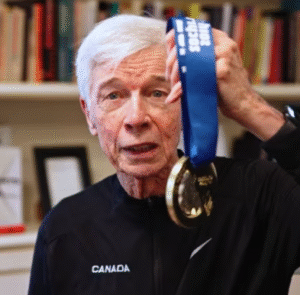
“What Is The Olympic Experience Really Like Behind The Scenes?”