
Meet our expert: Peter Jensen, Founder
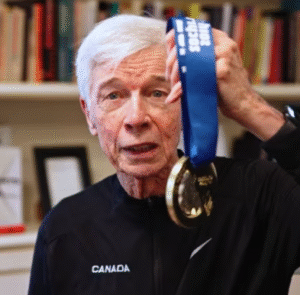
“What Is The Olympic Experience Really Like Behind The Scenes?”
The Games begin before the Games
One of the biggest misconceptions is that pressure suddenly appears for athletes at the Olympics. It doesn’t. It accumulates long before. I used to tell athletes that the start of an Olympic year feels like walking around with an empty backpack. As the year progresses, they start putting things into it without realizing it. Expectations. Hopes. Comments from others such as “You’re the favourite” or “Don’t let us down.” None of it is meant to be harmful, but it all adds mental weight to the backpack. If athletes don’t learn how to empty that backpack, they won’t perform well when it matters. That’s why preparation must include simulation. Before major championships, we would recreate the full competition environment – crowds, judges, uniforms, even the order in which athletes compete – and then debrief it together. One of the most powerful moments for me was watching younger athletes realize that even world champions get nervous. Experience doesn’t remove pressure. It changes how you respond to it.Arrival: awe, structure, and distraction
Arriving at the Olympic Village feels a lot like taking a child to university for the first time. You step off the bus, people help with your bags, you’re shown where you’ll stay, eat, and where everything else is. Then comes the flag-raising ceremony: your anthem, your team, the first moment you fully register that you are at the biggest sporting event on the planet: the Olympics. That moment matters. It grounds you. It also amplifies everything you’re carrying. The village itself is extraordinary. You eat meals with athletes from all over the world. In the Summer Games especially, the scale is overwhelming. It’s inspiring and distracting at the same time. Learning what to engage with, and what to tune out, is part of performing well.Walking into the opening ceremonies
One of the most formative experiences I’ve had was walking into the opening ceremonies. I did it first in Calgary in 1988, and later again in Vancouver in 2010. Walking into the Games in your own country is unlike anything else. The roar of the crowd isn’t just loud – it’s personal. These are your people. The support is energizing, but it also adds another layer of expectation. My experience at the Olympics has caused me to change how I work with athletes. When I talk about the Games with them, I’m not describing something abstract. I know what it feels like in your body to be there: the adrenaline, the noise, the pride, and the responsibility, all at once. It has reinforced something I’ve believed for a long time: preparation isn’t just about skill. It’s about knowing how to respond when emotions are high and attention is pulled in every direction.The reality of daily performance
Most days at the Olympics look nothing like television. They’re built around routines: meals, practices, travel, waiting, and adjusting to constant change. Schedules shift. Buses run late. Events are delayed. Ice gets damaged mid-competition and must be resurfaced. Competing at the Olympics is largely about learning how to manage time and how to return to your routine when that time is disrupted. When delays happen, the question I always ask athletes is simple: Where would you normally be in your preparation right now? Then we go back there, mentally and physically, and continue as planned. Consistency creates stability when conditions aren’t stable.Moments you never forget
Some of the most powerful Olympic moments never make the broadcast. One that has stayed with me happened late at night in Calgary after Elizabeth Manley won her silver medal. Hours earlier, the crowd had been deafening. Now it was just the two of us walking through an underground residence tunnel. Two cleaners looked up, saw her medal, stepped aside, and quietly clapped as she passed. No cameras. No noise. Just recognition. That moment captured the Olympics better than any podium moment ever could.What leaders can learn from the Games
Behind the scenes, the Olympics are not polished or predictable. They’re demanding, human, and full of disruption. The athletes who thrive aren’t the ones who wait for perfect conditions. They’re the ones who know their routines, understand themselves under pressure, and can return to what matters when things go sideways. That lesson applies far beyond sport. High-stakes moments rarely unfold as planned. Performance, whether on the ice or in an organization, comes down to preparation, adaptability, and the ability to stay grounded when the noise gets loud. That’s the part of the Olympics you won’t see on TV. This article is part of Third Factor’s Story Behind the Story series, in which we unpack the stories behind both iconic and under-the-radar Olympic and Paralympic moments. In this feature, Third Factor Partner Sandra Stark shares the mental performance work she and Peter Jensen did with Canadian figure skaters Brian Orser and Tracy Wilson ahead of the 1988 Calgary Winter Olympics to help them manage pressure and perform when the stakes were highest. — The 1988 Winter Olympics in Calgary were one of the most pressure-filled environments Canadian athletes had ever faced. Canada had never won an Olympic gold medal on home soil, the expectations were immense, and national attention was relentless. Nowhere was the spotlight brighter than on figure skating. Brian Orser entered the Games as the reigning world champion and the central figure in what the media called the “Battle of the Brians,” a highly publicized rivalry with American Brian Boitano. He was Canada’s flag bearer and one of the country’s best hopes for gold. Everywhere he went, strangers reminded him what the country expected – “don’t let us down.” At the same time, ice dancers Tracy Wilson and Rob McCall were carrying a different kind of pressure. Canada had never won an Olympic medal in ice dance, and breaking the long-standing dominance of the Soviet teams was widely viewed as unlikely. What the public saw was composure under extraordinary pressure. Orser delivered a near-flawless performance to win silver by the narrowest of margins, and Wilson and McCall captured an unexpected bronze, part of a remarkable showing in which figure skaters won three of Canada’s five medals. What most people didn’t see was the internal challenge both athletes were managing. Whenever something important is on the line and the outcome is uncertain, arousal – the body’s activation level – increases. The heart rate rises. Muscles tighten. Attention narrows. Up to a point, this activation improves performance. But when arousal climbs too high, execution suffers. Timing slips. Decision-making tightens. Small errors multiply. This is why elite performers don’t just train physically. They train to manage their activation level so they can perform at their best when the pressure is highest. The goal isn’t to eliminate nerves – that isn’t possible when something really matters – but instead to keep arousal within a functional range. In service of this, two years before the Games, the Canadian Figure Skating Association made mental preparation a priority. They brought in Peter and I to help athletes identify the moments that would elevate their arousal and develop specific plans for managing their arousal when those moments arrive. Here are two of the techniques that we used, as relayed in conversation with Brian and Tracy.Lesson #1: Plan for Reality Instead of Avoiding It
After the World Championships in Geneva, where Brian was not happy with how he skated, Peter asked him how he was preparing mentally before skating. Brian explained that he “had all the showers turned on in the dressing room so he wouldn’t hear how the Russian skater [who went ahead of him] had done.” Standing in the noise of the shower, Brian imagined the Russian had skated brilliantly. In reality, the Russian had fallen on both triple axels. In trying to avoid reality, Brian instead magnified his anxiety. “That was the turning point,” Peter explains. From then on, Brian’s training approach shifted: instead of trying to shut out uncertainty, Peter worked with Brian to plan for it. Together they laid out exactly what he would do after warm-up: walk through his program, rehearse key jumps, and – most importantly – rehearse the opening segment he was about to skate. In figure skating competitions, skating order matters – and skaters don’t learn their order to skate until the day before they skate the short program. If you skate late, you may have an agonizing half-hour wait after your warm-up to compete. If you skate early, you may not even leave the ice – which feels incredibly rushed. Brian hated skating first – but instead of hoping it wouldn’t happen, Peter helped him normalize it by creating a plan for each scenario: “We developed a routine that worked for me,” Brian explains. “A skating-first routine, a skating-sixth routine. We were prepared for any scenario.” The plan removed the uncertainty and second guessing that could creep in. Once Brian had clarity on what he was going to pay attention to and practised it; he could maintain control over his arousal level. This wasn’t about calming down, it was about restoring control. In particular, they agreed that if Brian drew his dreaded skating-first slot, he would skate only part of the warm-up, step off the ice, and walk through the opening of his program – physically and mentally – with skate guards on. He would mentally rehearse through to his first major jump, then return to the ice once his warm-up ended. At the Olympics, that exact scenario played out. Brian skated first in the short program – and won it convincingly. Anyone watching would never have known how uncomfortable that situation was for him. Listen to Brian talk about the steps that lead to a great performance:Lesson #2: Train For High Arousal Instead of Trying to Eliminate It
Tracy Wilson knew exactly when her arousal would spike: the moment she stepped onto the ice and heard her name announced in a packed Calgary arena. “Nothing would get me more jazzed up than hearing ‘Tracy Wilson, Rob McCall, Canada,’” she recalls. Instead of trying to suppress that reaction and stay calm, she trained for it. Tracy used vivid mental imagery, rehearsed repeatedly in everyday moments: driving to the rink or lying in bed at night. “I hear the announcement and I observe how I feel,” she explains. Then she ran a specific attentional cue: “I hear the noise … I’m going to go under the noise. It’s there. It’s going to go over. It’s going to go behind my back and down.” This wasn’t intellectual visualization. It was sensory and physical. Because the body responds to imagery as if it’s real, repetition trained her nervous system to respond automatically. Peter and I saw this pattern repeatedly: performers assume the goal is to eliminate nerves. But when something matters, high arousal is inevitable. The skill is learning to perform with it and keeping it within a functional range by directing attention to where it belongs. Tracy’s imagery did exactly that. It kept her focus on skating to centre ice, waiting for the music, and entering the opening movements, rather than drifting toward outcomes, judgments, or expectations. Listen to Tracy discuss training and preparation for emotional moments:What This Means for You
The more important something is, and the more uncertainty it contains, the higher your activation will rise. The question isn’t whether you’ll feel pressure but rather how you will respond to it. And how you respond in the moment is a function of how you’ve trained and what you’ve practiced: Orser used structure to manage waiting and uncertainty. Wilson used imagery to regulate the surge that came with public introduction. Different methods, same objective: directing attention toward controllable actions and away from the thoughts and feelings that lead to overwhelm. Whether you’re stepping onto Olympic ice or into a high-stakes meeting, the principle is the same: you don’t rise to the occasion, you default to what you’ve trained. Here are four ways to apply the principles of mental preparation to your reality:- Know your optimal arousal level When you need to perform – where do you want your energy level to be? A 6 out of 10? An 8 out of 10? In order to manage arousal, you need to have a goal.
- Identify your triggers What moment will increase your arousal? For Brian it was the wait, for Tracy it was the introduction. Once you identify where you are likely to get thrown off, now you can plan.
- Create a strategy You can use routine like Brian, a mental image like Tracy that directs your focus, or a tool that works best for you to anchor your attention where it will serve you.
- Practice it repeatedly When the moment arrives, your attention will go where it has been trained to go.
Build Resilience In Your Organization
Bring the skills that elite athletes use to build resilience and perform under pressure to your organization. Contact us to learn more about our resilience programs.
Kindness Is the Mechanism That Lets Standards Hold
When choosing who to work with, one thing mattered most to the brothers. “Skills can be learned,” Brian says, “but the right compatibility is [most] important.” For Brian and Robin, compatibility meant being able to handle feedback without eroding trust. It wasn’t about being agreeable, it was about keeping standards high while delivering feedback with kindness. “There could be criticisms, there can be hard conversations,” Brian explains. But when feedback came with “kindness in their hearts and how it’s being presented,” it became “much easier to listen to it and to debrief, and figure out a better way forward.” That difference mattered for learning. With trust in place, someone could say, “Hey, I think if you do something this way, you’ll be faster,” and it would be heard as help. As Brian says, “we all get better together.” Robin noticed the same effect. Strong trust meant “less micromanaging.” Standards didn’t drop; roles were clear, intentions were trusted, and learning could continue under pressure. Here’s Brian sharing about the importance of kindness to their culture:Kindness Can Raise the Bar
One of the most important moments in Brian’s Paralympic career happened because a competitor took the time to help him. Early in his Para Nordic career, Brian sometimes raced without a guide. In one event, he finished just “30 seconds behind the top guy in the world.” Afterward, the German athlete and his guide told him, “You need to have a guide, because today with a guide, you might have won.” Brian remembers thinking, “Why would another nation be helping me out on this?” The answer was simple: they were “just excited to have competition.” That advice changed Brian’s path. Because of that conversation, he asked Robin to guide him, beginning “10 years of pretty fun work racing together.” Sometimes kindness doesn’t make sport easier. It makes it better. On why others helped them out to raise the bar:Trust Is Built in the First Failure, Not the First Success
Their first World Cup together took place at the Salt Lake City Olympic course in March 2001. It was unusually warm – about 15 Celsius, Robin recalls – and the snow was wet and unpredictable. On a fast downhill, something went wrong. Robin reached the bottom and realized, “Brian’s not there.” He waited, then started hiking back up the course. He heard Brian yelling. What he saw first wasn’t Brian, but “a ski sitting off the edge of the trail.” Brian had caught an edge in the “sloppy snow,” gone off course, and ended up “hanging off of a tree upside down.” Robin climbed down, removed the skis, and pulled him back up. From Brian’s side, he stepped outside the track to get a push and hit the “mashed potatoes” snow: “My ski stopped and I kept going.” The tree became “the only thing stopping me from sliding headfirst down a steep mud slope.” He held on and waited for Robin. “I figured he’d eventually figure out I wasn’t there,” Brian says. Robin later called it “a very big failure on day one.” What mattered was what followed. “We laughed about it.” No blame. No anger. That moment set the tone. Trust wasn’t automatic – even between brothers. It was built through shared experience and protected by how mistakes were handled. Kindness showed up early, not as softness, but as steadiness. Here’s Robin sharing their early guiding failures:Autonomy in Preparation. Alignment in Execution.
The McKeevers succeeded because they didn’t pretend they were the same athlete. As Robin explains, “We have overlapping roles that work together … we have the same end goal, but we still need to arrive there in slightly different ways.” That showed up in training. “We have our own training programs,” he says. “It’s not exactly the same, but we still need to arrive at the same point where we can ski together, race together, and communicate in order to achieve a team victory.” Brian puts it plainly: “I can ski by myself. Robin can ski by himself, but he’s there to help me. And we are winning this together. We’re not doing this individually.” Giving each other space reduced friction. Coming together at the right moments kept them aligned. Trust and looking out for each other were the glue that made both possible.What Leading With Kindness Looks Like in Practice
The McKeevers’ story reveals three practical behaviours that translate directly to leadership and teams:01.
Reset without blame when something goes wrong.
02.
Deliver feedback as performance support, not personal judgment.
03.
Clarify ownership to reduce micromanagement and create alignment.
01. Reset without blame when something goes wrong
When Brian crashed off the course in Salt Lake City, the response wasn’t panic or finger-pointing. Robin described the day as a failure, but one they laughed about and moved on from. That response preserved trust in a moment where it could have fractured.02. Deliver feedback as performance support, not personal judgment
Hard conversations were unavoidable, but when framed with respect, people stayed receptive. The feedback that mattered most was specific and performance-focused: if you do this differently, you’ll be faster.03. Reduce micromanagement by clarifying ownership and alignment
Trust allowed Brian and Robin to prepare in their own way while still arriving at the same execution point. Different paths. Same outcome. This is kindness without lowering the bar: respect that keeps people engaged, paired with precision that drives improvement. In the McKeevers’ case, kindness turned trust into medals, and a partnership into a lasting competitive advantage. —- Brian will be coaching the Canadian para-Nordic team as they go for gold in Milan-Cortina starting on March 10 (see the team schedule here), while Robin will be supporting the Canadian Nordic team as a member of the coaching staff.Build Resilience In Your Organization
Bring the skills that elite athletes use to build resilience and perform under pressure to your organization. Contact us to learn more about our resilience programs.
That preparation mattered in Sochi. When pressure mounted, the team didn’t fracture emotionally. They had already agreed on how they would behave.
You Perform How You Prepare
A persistent myth about high performance – whether in athletes or business leaders – is that resilience appears when it’s needed most. The reality is simpler: it shows up only to the extent that it has been rehearsed. Months before the Olympics, Jensen met with the team before a game against a strong AAA boys’ team from Brandon, Manitoba. The discussion wasn’t about winning that night. Instead, it focused on a specific scenario they could face: being down 2-0 in the third period. The players began by talking through how they would manage the clock. “You think about it in 10-minute segments,” Jensen explains. “You break it in half … and break it down into achievable things.” He then narrowed the window. What if there were only five minutes left? Now it became two-and-a-half-minute sequences. Smaller problems. Clearer focus. The emphasis was not on emotion or outcome, but on behaviours the team could control under pressure. So when Team Canada found itself down two goals with around seven minutes left in the Sochi gold medal game, the players weren’t overwhelmed. The situation felt familiar. They had been there before and knew how to respond.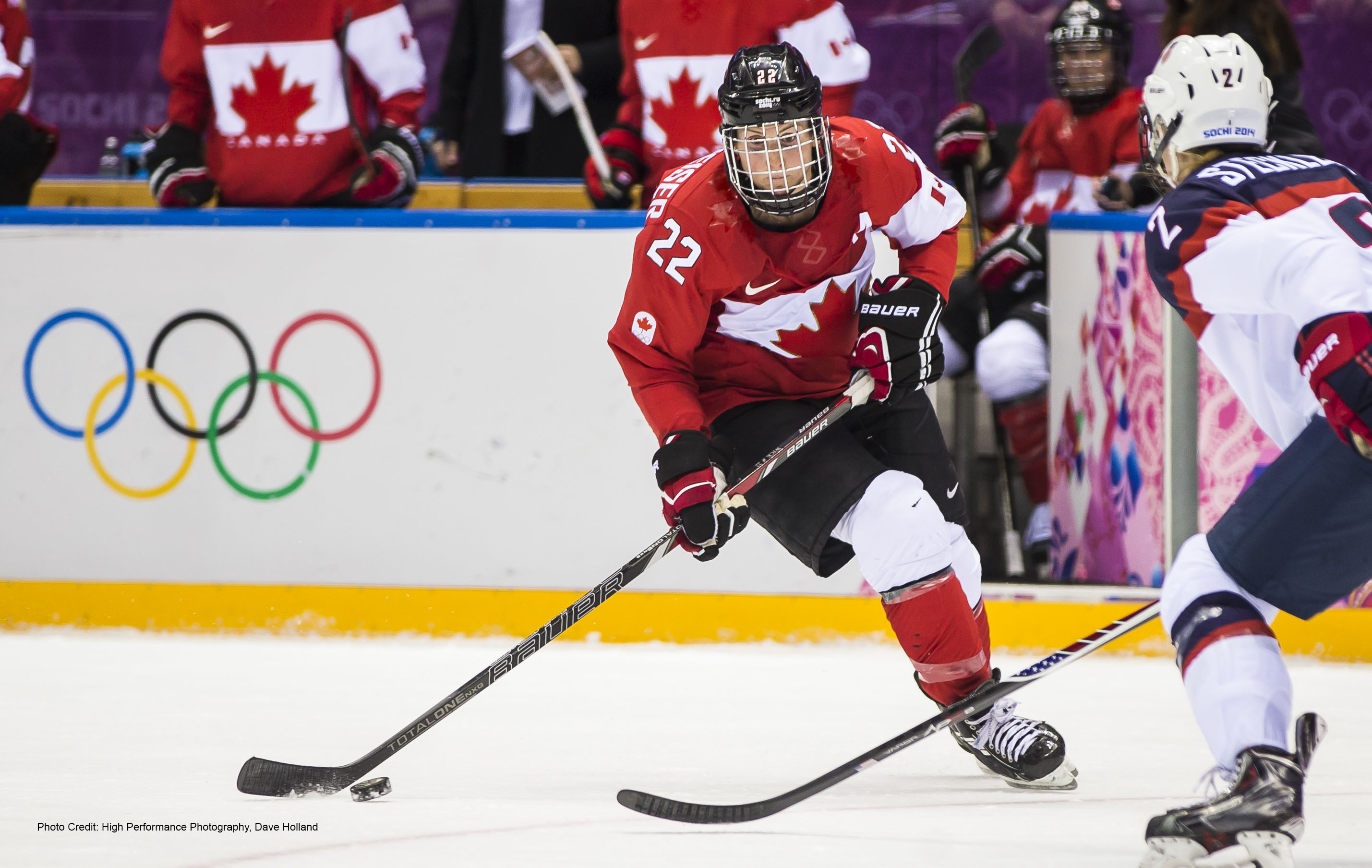
“Stay Positive” Is Not a Strategy
Another subtle but critical shift was Jensen’s refusal to let the team sidestep uncomfortable realities. When asked how they would respond individually late in a close game, players emphasized the importance of staying positive and supporting their teammates. Jensen pushed back. “The coach shortens the bench. And so you’re irritated,” he told them, adding players who weren’t getting ice time would feel frustrated and lose focus. Pretending otherwise wouldn’t make that problem go away. So the team discussed what that “irritation” might feel like and how players could still support their teammates on the ice. By talking about those moments in advance, they normalized them. Falling behind stopped being a psychological threat and became a known condition with a known response. That preparation mattered in Sochi. When pressure mounted, the team didn’t fracture emotionally. They had already agreed on how they would behave.Normalize Adversity Instead of Hoping It Won’t Appear
After the gold medal game, head coach Kevin Dineen summed up his team in a few words: They never gave up. From Jensen’s perspective, there was more to that explanation. “They didn’t give up because that’s who they were,” he says. “We’d done a lot of work on team vision and culture. But we’d also simulated what they would need to do.” The team didn’t treat adversity as an anomaly. They treated it as an inevitability. By rehearsing the moments most likely to derail them – shortened benches, frustration, time pressure – they removed surprise from the equation. And when surprise disappears, performance improves. The Sochi gold medal didn’t come from belief summoned in the moment. It came from preparation that made the moment feel familiar.Pre-Plan for Adversity
You don’t need an Olympic stage to apply these lessons. The same approach Team Canada used to win gold works in business, leadership and life. Here’s how to get started:- Identify two to three scenarios that are most likely to derail your team.
- Break each scenario into smaller, controllable steps to solve, rather than treating it as one overwhelming problem.
- Decide in advance what you will think, say, and do when those moments show up.
- Choose simple imagery or verbal cues that help ground focus and regulate emotion under pressure.
Key Insights:
-
Resilience is not a personality trait; it is a trained response to pressure.
-
Breaking high-stakes situations into smaller, controllable segments reduces cognitive overload and sharpens execution.
-
Avoiding negative scenarios creates fragility; rehearsing them creates confidence.
-
Teams perform better under pressure when they normalize adversity instead of treating it as failure.
-
Preparation replaces hope with clarity.
Build Resilience In Your Organization
Bring the skills that elite athletes use to build resilience and perform under pressure to your organization. Contact us to learn more about our resilience programs.
“We can BE the best, even when we’re not AT our best.”At PyeongChang in 2018, on the other hand, “before our music even started, I felt different. I felt like a high performer, and I didn’t feel like I needed the judges’ results to prove that for me.” And contrary to the feeling after the 2010 Games, after 2018, “there was real joy and satisfaction that came from the hard work, from the pressure, from all of the things that I would’ve found totally depleting two, four, eight or 12 years earlier.” So what changed? In our conversation with Tessa, three evolutions stood out: embracing discomfort rather than focusing on the number of hours spent in training; a deliberate shift in mindset from chasing perfection to pursuing excellence; and – above all else – a reclamation of personal power.
01. Creating discomfort vs. over-training
After the over-use injuries and surgeries that characterized 2010, the comeback in 2018 was built on less training time – three hours a day instead of 12 – more recovery time, and using the limited training hours to deliberately create imperfect conditions to sharpen their resilience. Whether it was leaving the ice unflooded and chipped, pumping in crowd noise, or falling on command to practise recovery, each practice built confidence that, as Tessa says, “we can BE the best, even when we’re not AT our best.” Here’s Tessa discussing that process:02. Pursuing excellence vs. chasing perfection
In Tessa’s words, “We needed to stop chasing perfection and instead pursue excellence … and once we took perfect off the table, we thought excellence was possible.” Their daily goal became showing up at an “8 out of 10”; not in effort, but in execution. Reframing their approach unhooked them from the impossible standard of perfection and freed them to connect with the joy and challenge of consistent excellence. Listen to Tessa talk about this shift:03. Becoming drivers vs. passengers
At the heart of Tessa and Scott’s story behind the story is reclaiming a sense of agency and self-efficacy. After years of being “good little soldiers,” for their 2018 comeback, they stepped into the driver’s seat: assembling their own team, setting their own standards, and “operating as if we were the CEOs of our own business,” she says. “We had agency and autonomy, we really were steering the ship.” That changed their experience leading up to the Games and, she believes, made the ultimate win more fulfilling. Listen to Tessa talk about this shift: Of course, the effectiveness of these shifts is not limited to sports. We can all benefit from:- Increasing short-burst intensity and building time for recovery instead of focusing on hours worked or busyness as a proxy for effectiveness.
- ‘Roughing up the ice’ to build resilience into our projections, targets, pilots, and project plans instead of making plans that rely on perfect conditions.
- Embracing ‘8 out of 10’ efforts that will produce more from consistency over the long haul instead of aiming for the impossibility of perfection.
- Seeing ourselves as the author of our stories instead of allowing ourselves to fall into the mindset of being characters.
Build Resilience In Your Organization
Bring the skills that elite athletes use to build resilience and perform under pressure to your organization. Contact us to learn more about our resilience programs.
Mel Davidson
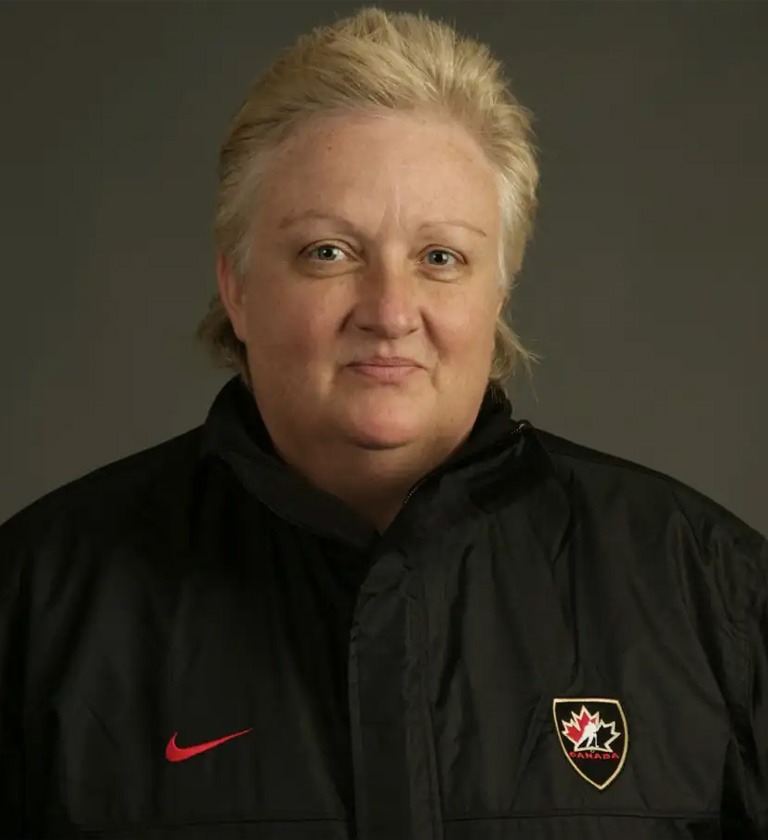
Debbie Low

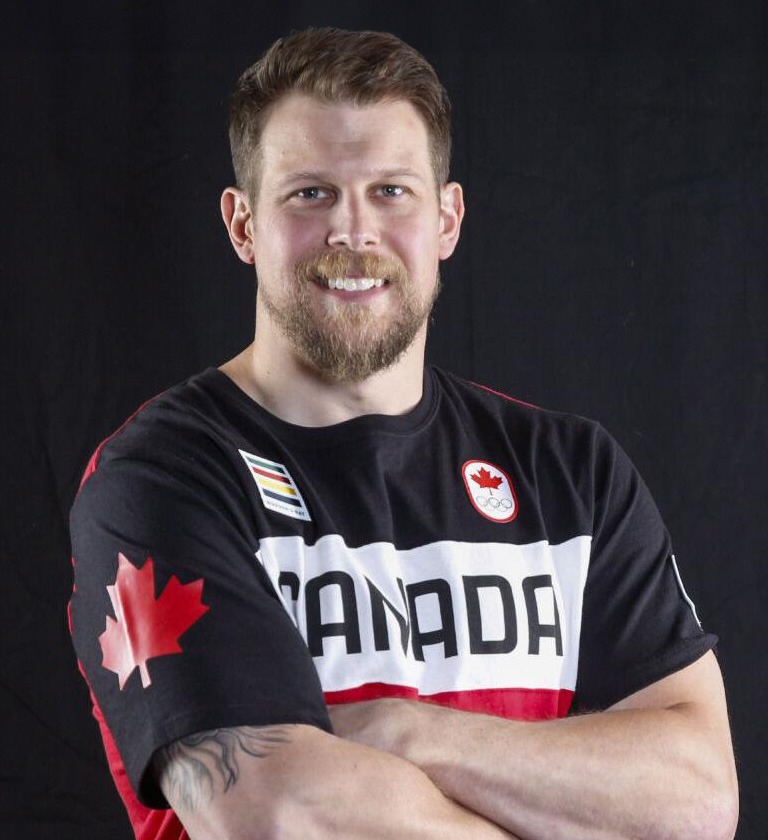
Jesse Lumsden
Tracy Wilson

 Here are three lessons from Rosie’s talk that can help anyone striving for their own version of a gold-medal performance.
1: Confront failure head-on
One of Rosie’s most interesting insights was slightly counter-intuitive: when the fear of failure is strong, don’t shy away from it – lean into it. Ahead of the Olympics, Rosie consciously worked to confront the possibility of failure directly, and work through her worst-case scenario in vivid detail.“By confronting the possibility of failure, you can free yourself from its grip.”In partnership with her mental performance coach, Rosie sat down and played out two scenarios: what if things go well and I win? And, what if I stumble and fail? With these two scenarios in mind, she vividly worked through how she would feel and what her life would be like: 1 day after, 1 week after, 1 month after, 1 year after, and, eventually, 5 years post-Olympics. Rosie’s realization? Ultimately, the outcome at the Games would have little impact on her life 5 years down the road. Regardless of the outcome she would be okay. This mental exercise allowed Rosie to remove the distraction of fear from her preparation. By confronting failure head-on, she could redirect her energy from worrying about what could go wrong to focusing on what she could control. Whether you’re preparing for a major presentation, launching a new business venture, or pursuing a personal goal – instead of trying to avoid thinking about failure, take the time to visualize the negative scenario. When we “play out the full movie” what we often find is that the fear comes from the fact that we are just imagining a moment in time – an incomplete thought or image that doesn’t reflect the fullness of time. By confronting the possibility of failure, you can free yourself from its grip and focus entirely on performing at your best.
2: Embrace direct feedback
Rosie’s coach, Dave Ross, is known for a style that is extremely candid. While some athletes balked at his bluntness, Rosie saw something deeper: a genuine commitment to helping her succeed. She understood that behind his straightforward critiques was a profound belief in her potential. Instead of resisting his feedback, she consciously worked to lean into it, using it as information to unlock higher levels of performance. This ability to harness the value in blunt feedback came from her taking the time to understand Dave as a person. She took the time to look beyond personality and style to understand his values and ultimately his character. These insights didn’t just unlock her own performance, they also allowed her to help other athletes shift their perspective on Dave’s feedback by sharing her insights into what was behind his style. When you find yourself chafing at direct feedback, consider the intent of the person delivering it. Where are they coming from? What are they trying to help you accomplish? Often, others are trying to help – even when their wording or approach might trigger some reactivity.3: Use visualization to overcome obstacles
In the lead-up to the Tokyo Olympics, Rosie faced a daunting challenge: a series of serious ankle injuries that left her unable to perform her trampoline routine for weeks. In fact, she was unable to practice her full routine until one day before leaving for the Games.“When we imagine something with enough vivid detail – to our body, it’s real.”Rather than letting this setback derail her preparation, Rosie turned to the power of imagery and visualization. Unable to train physically, she trained mentally. This started with simply imagining herself bouncing on the trampoline again. She shared that, initially after the injury, every time she would close her eyes and visualize jumping on the trampoline – she would see herself falling. With effort and (mental) practice, she was able to start to imagine herself jumping with confidence, and eventually to visualize her entire routine in vivid detail. Remarkably, Rosie finished 4th at the Tokyo Olympics— less than a single point off of the podium featuring the best athletes on the world, all of whom had been training regularly, despite having been unable to physically practice until a single day prior to travel. When we imagine something with enough vivid detail – to our body, it’s real. Some studies estimate that for elite athletes, mental rehearsal delivers roughly 85% of the benefits of physical rehearsal. Rosie’s experience certainly backs up that research. Visualization isn’t just for elite athletes. It’s a tool anyone can use to prepare for high-stakes situations —whether it’s a speech, negotiation, or exam—spend time visualizing your performance. Imagine every detail: the environment, your actions, and the desired outcome. This mental preparation can help you feel more confident and prepared when the moment arrives.
Bringing it all together
Rosie MacLennan’s journey to Olympic success is more than a story about athletic achievement. Her approach to confronting failure, embracing feedback, and harnessing the power of visualization provides lessons that can help all of us. Here’s a challenge: think about your own version of a “gold medal performance.” What are you striving for in your career, relationships, or personal growth? Now, consider how you can apply Rosie’s three strategies: Confront failure head-on: What’s holding you back? Imagine the worst-case scenario to start to rob it of its power. Embrace direct feedback: Who in your life is pushing you to be better? How can you listen with an open mind and use their insights to grow? Use visualization to your advantage: What mental rehearsals can you do to prepare for your big moment? 15,000 athletes will compete in 878 events across 54 sports at the Paris Olympic and Paralympic Games. To help you narrow in on what to watch, we asked our network of elite athletes, coaches and influencers to share the stories they’re most excited for. Here’s what they said.
When to watch
Summer McIntosh: July 27 – August 4 Josh Liendo: July 31, August 3, August 4 Ilya Kharun: July 31, August 3, August 4
When to watch
Paralympic Games: August 28 – September 8 Women’s Goalball: August 29 – September 5
When to watch
Women’s Beach Volleyball: July 27 – August 9
When to watch
Men’s Basketball: July 27 – August 10 Women’s Basketball: July 28 – August 11 Women’s 3×3 Basketball: July 30 – August 5 Men’s Wheelchair Basketball: August 29 – September 7 Women’s Wheelchair Basketball: August 29 – September 8
When to watch
Men’s Basketball: July 27 – August 10 Women’s Basketball: July 28 – August 11 Women’s 3×3 Basketball: July 30 – August 5 Men’s Wheelchair Basketball: August 29 – September 7 Women’s Wheelchair Basketball: August 29 – September 8
When to watch
Artistic Swimming: August 5 – August 10