


A senior leader recently told me he wanted better collaboration in his organization. He said his people often found working together exhausting. He asked me for advice.
Specifically, how could collaboration be made more “comfortable” when there seemed to be so much tension, conflict and competing priorities on the team?
Before I could answer, he suggested that maybe collaboration would be easier if the person on the other side of the table were more open, more interested in alignment and more willing to see other people’s perspectives.
Two thoughts came to mind.
First, at Third Factor, we just completed a research project on collaboration. One finding stood out: 95 per cent of people believe they are better at collaboration than others. Almost no one thinks they are the problem.
Second, the best collaborators I’ve worked with don’t try to make the process easy. They strive to make it effective. And there’s a big difference.
I recently asked Olympic ice dancer, coach and commentator Tracy Wilson how she approaches collaboration under pressure. Her response: “Breakdowns are when you break through.”
“95 per cent of people believe they are better at collaboration than others. Almost no one thinks they are the problem.”
The people she most enjoys working with challenge each other, hold different views and are willing to have tough conversations. Working through those moments brings people together rather than pulling them apart, she says.
In other words, great collaboration isn’t about avoiding tension or making things feel smooth. It’s about how people handle the tension that’s already there. The difference between good and great collaborators shows up in what they focus on – especially when things get hard.
Do We Have the Right People?
When collaboration becomes challenging, leaders often ask themselves, “Do we have the right team mix? The right skills and personalities? Are roles clear?”
These seem like fair questions, but research suggests they don’t tell us much. In 2012, Google ran one of the most rigorous team studies ever conducted. Project Aristotle studied 180 teams to determine which mix of people produced the best results. The outcome: there was no clear link between team composition and performance. It didn’t matter whether people had similar or different personalities, or whether they were friends or strangers. None of it predicted success.
Google concluded that who is on a team matters far less than how the team works together. That shifts the question from Who do we have? to What happens between them?
After more than a year of research, Project Aristotle found that group norms – not individual talent or personality – drive team effectiveness.
Two norms matter most. The first is psychological safety. Team members need to feel safe to speak up, take risks, admit mistakes and challenge ideas without fear of embarrassment or punishment. Without it, individual intelligence never becomes collective intelligence because people stay silent.
The second is conversational equity. Put simply, everyone gets to speak. Meetings don’t default to the loudest or most senior voice. Instead, people notice who hasn’t spoken and invite them in.
High-performance collaboration, it turns out, depends on who speaks, who listens and what happens when things go wrong – not who’s in the room.
From “I” Gaps to “We” Gaps
This is where Third Factor’s survey of 164 leaders adds something useful. When we asked strong collaborators what skills they wanted to build, they pointed to skills that connect people – listening more deeply, creating clarity, building alignment and understanding others’ needs.
They focused on the space between people. We called these “We gaps.”
When we asked weaker collaborators the same question, their focus shifted inward. They wanted to speak up more, present ideas more clearly, build confidence and overcome shyness. These were “I gaps.”
“The person in “We gap” mode is curious about what hasn’t been said. They track the energy in the room and notice who hasn’t spoken. When they do speak, they ask questions that bring others in, not questions that make them look smart.”
You’ve likely seen both in meetings. The person in “I gap” mode quietly rehearses what they’ll say while someone else is talking. They’re focused on their own next move. The person in “We gap” mode is curious about what hasn’t been said. They track the energy in the room and notice who hasn’t spoken. When they do speak, they ask questions that bring others in, not questions that make them look smart.
This distinction is at the heart of what makes a great collaborator. It’s not about having the most to say, it’s about paying attention to what the group needs.
What Great Collaborators Do Differently
The shift from “I gaps” to “We gaps” separates great collaborators from good ones. When teams struggle, strong collaborators don’t look for more influence for themselves. They work to strengthen the relationships, systems and habits that help the group perform.
To see how this plays out, I often think back to Tracy Wilson. She told me about two Olympic skating champions she coaches. At the end of practice, neither leaves right away. Instead, they stay and fill in the ice divots together.
These are athletes at the peak of individual performance, each competing for the same gold medal. Still, they choose to take care of each other and their shared environment. As Tracy explains, top performers push, inspire and learn from each other. They believe that they were better because of each other, because this is the culture that has been created.
Great collaborators think the same way. They spot pressure points early and work together to address them before they grow.
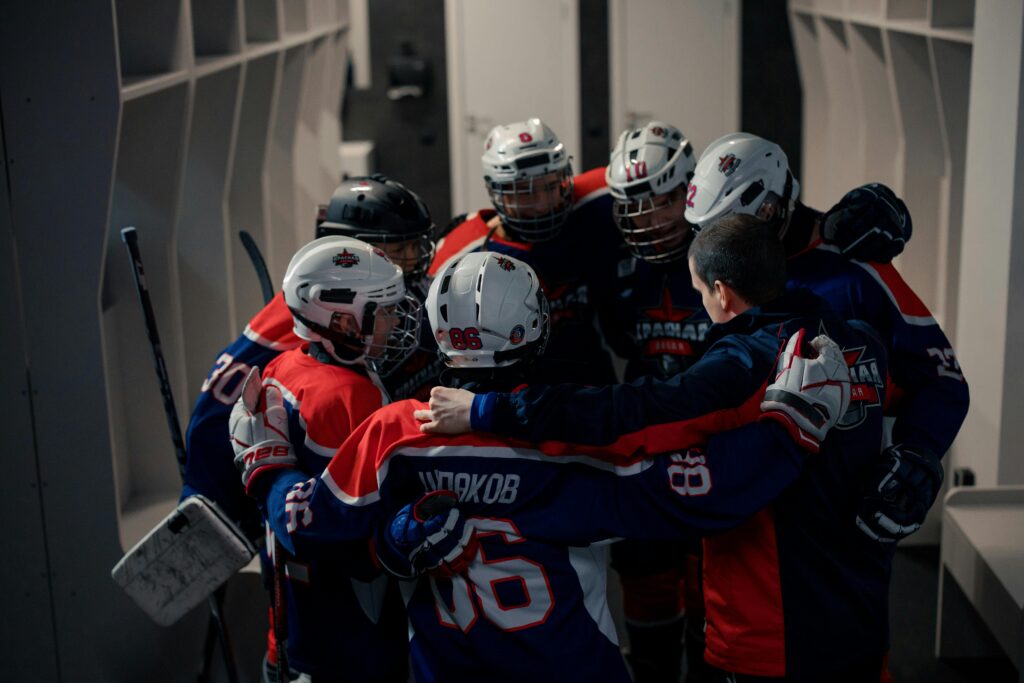
Another coach I spoke with made a similar point. Mel Davidson, one of Canada’s most decorated hockey coaches, helped the national women’s team win four Olympic gold medals and one silver medal.
One of the tough challenges her teams face is final cuts. Olympic Hockey teams rely on alternates – players who put their lives on hold, do all the work required to be ready for the Olympics, but unless a teammate gets hurt, will not play and will not win a medal. Early on, Mel told players what she expected from alternates. The message didn’t land.
So she changed her approach. Long before final cuts, she brought the team together and asked: What do you expect from alternates? How should they act?
She stopped asking players to meet her standard and asked them to define their own. And it worked. By shifting from “What do I expect of you?” to “What do we expect of each other?” the team did the work together. Mel created the conditions to build a shared clarity on expectations.
[Note: This dynamic of creating accountability through shared expectations can be further explored in Great Leaders Make Accountability Feel Like a Team Sport].
Trust Accelerates Everything
Scott Vicary is a senior executive I’ve worked with for nearly 20 years. Every time he steps into a new role, he runs a team kickoff focused on alignment and trust. What sets him apart is that he doesn’t hand the team a set of values. He asks them to create it together.
As he told me, “They need to feel like they own it. They created it. They’ve got some sort of piece of it they can take with them. When the team creates the values and approach, they carry weight. When they’re handed down, they’re just words.”
Scott is also clear about what gets in the way. At a recent meeting, he said, “Just because you have roles that require other people to do things for you doesn’t mean those people will simply listen and comply. The only way we are going to drive innovation and change is if we build relationships based on trust and respect. Without trust and respect, there is no mutually willing effort. And without mutually willing effort, nothing truly innovative gets done.”
Scott embodies what makes a great collaborator in senior leadership: he doesn’t treat trust as a soft idea. He treats it as the operating system for everything else.
“That shift doesn’t happen by accident. It occurs when leaders focus on what happens between people, rather than on how individuals perform.”
When collaboration breaks down, Scott focuses on the space between people, not the people themselves. He asks team members to put themselves in each other’s shoes and assume others are acting in the group’s best interest. In his experience, most issues start to resolve when people do this.
After a recent kickoff, Scott sent a note that captured the “We gap” in plain terms: “Our success doesn’t rely only on our plans or expertise – it depends on how well we work with the groups around us. Trust accelerates everything.”
He also defined what trust looks like: be clear, be consistent, communicate openly – especially when things get hard – assume positive intent and listen carefully under pressure.
Scott shared one moment that stuck with him. After a series of wins, one of his managers was invited to breakfast with the board and asked what drove the results. The manager didn’t list his achievements. He said, “I have the support of my leadership and the support of all my peers.”
Scott called that a small piece of gold. It shows what’s possible when people shift from mine to ours. That shift doesn’t happen by accident. It occurs when leaders focus on what happens between people, rather than on how individuals perform.
The gap between good and great collaboration isn’t filled by better team members or by making things more comfortable. It’s filled by people who pay attention to what happens between them.
That’s a shift we can all make.
Key Takeaways:
- You’re probably not as collaborative as you think. 95% of people believe they collaborate better than others. Almost no one thinks they’re the problem.
- Who’s in the room matters less than what happens between them. Team composition doesn’t predict success, group norms do. Psychological safety and conversational equity drive high performance.
- Great collaborators focus on “We gaps,” not “I gaps.” They pay attention to what the group needs — who hasn’t spoken, what’s unsaid, where tension is building — not their own next move.
- Effective collaboration isn’t comfortable, it’s purposeful. Great collaborators don’t avoid tension. They work through it, and that’s what builds stronger teams.
- Trust is the operating system, not a soft add-on. Clarity, consistency, and positive intent — focused on the space between people — accelerate everything else.