If there is one thing we can be certain of, it is the inevitability of uncertainty.
The world is not a still photograph –it is a motion picture and it requires that we are comfortable with change. As much as we may try to avoid periods of uncertainty, it is expected that we will experience them. However, it is during these periods that we are presented with an unparalleled opportunity to learn, to grow, and to adapt.
Peter Jensen discusses the merits of framing change as a challenge and provides suggestions on how to embrace periods of chaos in a healthy manner.
Click here to download the whitepaper. For many of us, our role as manager does not end in the workplace – we are also managers of our household.
Our greatest responsibility in life is to support the healthy growth and development of our children. Just as managers devote time towards guiding and mentoring their talent, as parents we can play a similar role in our children’s lives to help ensure healthy high performance. Garry Watanabe provides advice on how to best support your children as they pursue expertise in a certain domain. The advice given is based on Third Factor’s extensive work with high performers, whether they be Olympic athletes or top business executives.
Overall, developing expertise is a journey –one in which you and your children should not be alone on.
Click here to download the whitepaper. On November 19th, 2019, 75 leaders from Toronto’s business and HR communities gathered at OCAD U CO for a discussion on team resilience. Here’s what they learned:
Leading the discussion, Third Factor CEO Dane Jensen brought together the voices of elite athletes and coaches to talk about what separates those teams that are able to rebound from failure to reach even higher levels of performance from teams that tend to crumble or falter in the face of failure.
Drawing on insights from our work with high-performing sports teams, including the last four medal winning women’s Olympic hockey teams and the men’s and women’s national soccer teams, Dane identified what it takes for teams to not just perform but also to recover and be resilient. These are the four traits we’ve observed that characterize resilient teams, or differentiate resilient teams from those that are less resilient:
1. Negative emotion. Resilient teams process negative emotion in a way that leads to harder work and higher standards as opposed to detachment or combustion. They frame it so rather than being scared of negative emotion, they choose to lean into it, work with it, and see it with a sense of challenge, control and commitment.
2. Communication. The teams that recover quickly from setbacks communicate differently because they have worked consciously on awareness. They’ve surfaced their communication styles and worked on having performance conversations in the good times.
3. Relationships. Teams are more resilient when they work diligently on building relationships, even if that’s just 30 seconds for each person every day.
4. Shared purpose. Teams work best in the face of failure when they have a clear a line of sight to shared purpose. They don’t do hard work for it’s own sake, but because they choose to connect it to something that actually matters to them.
JOIN US FOR OUR NEXT LEARNING BREAKFAST
Be the first to know about upcoming learning opportunities from Third Factor by entering your information below.
Determining what you can and can’t control is the key to harnessing the tremendous instructive power of adversity.
Even when we lack control over certain circumstances, we will still have control over how we will deal with these circumstances, what perspective we will choose to take. In this whitepaper, Sandra Stark and Peter Jensen explore three aspects that comprise a resilient perspective during a time where many businesses began to lose hope – the global economic crisis.
Though the Great Recession is now behind us, the inner skills that they address will help you flourish in the face of adversity and grow in even the poorest of conditions.
Click here to download the whitepaper. Approximately 1 in 5 Canadians identify as having a disability, and this number will continue to rise as our population ages. At Third Factor, we have a long history of working to reduce barriers for people with disabilities and we want to shine some light on an initiative we’re participating in this week: the annual Rick Hansen Foundation Accessibility Leadership Forum.
Inspired by the belief that anything is possible, Rick Hansen began the Man In Motion World Tour in 1985, wheeling 40,000km over two years. The Rick Hansen Foundation, established in 1988, has made transformational change in raising awareness and removing barriers for people with disabilities, and funding research for the cure and care of people with spinal cord injuries. Today, the Foundation focuses on improving accessibility to create a world that’s accessible and inclusive for all.
In service of this, Rick and the Foundation have brought together a group of leaders from the disability community to collaborate on making Canada the most accessible country in the world. The forum has met annually for the past 4 years to leverage their unique organizational strengths, exchange ideas, build practical recommendations, assess progress, and identify priorities for the coming year.
Since this group first came together we’ve been privileged to work with Rick and his team at the Rick Hansen Foundation to help design the day, making sure that we’re engaging all the stakeholders appropriately and sending them back to the real world with a renewed sense of commitment towards an inclusive and accessible world for people of all abilities.
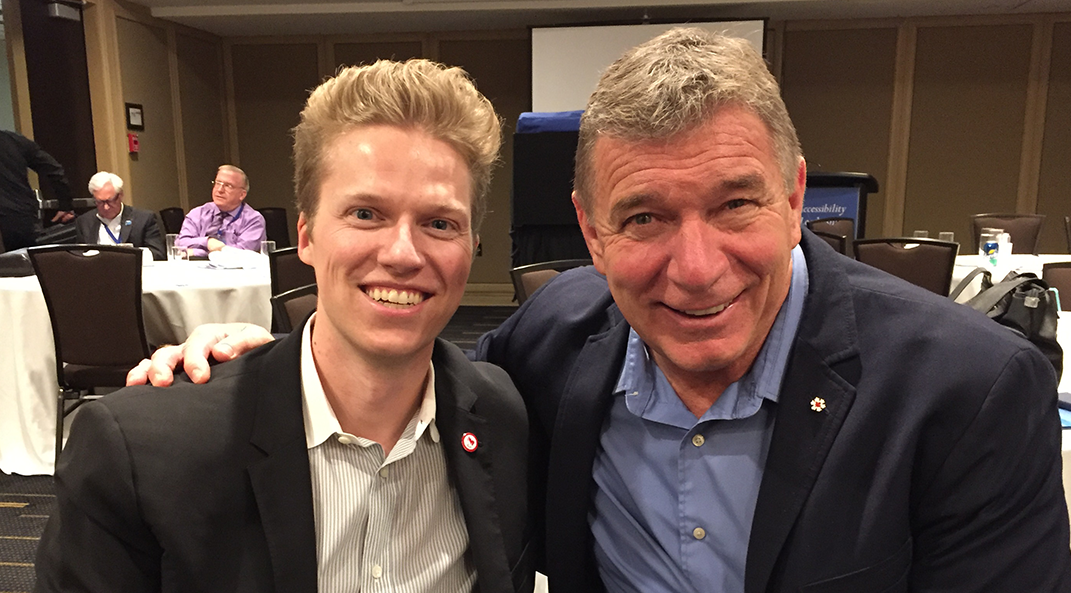 Third Factor CEO Dane Jensen and Rick Hansen
This year, the focus will be primarily on discussing what it means to be a collaborative community of organizations. How do we think about combining our efforts to make sure that we are punching above our weight and not just acting as a number of independent organizations? We are stronger as a whole and through better corporate collaboration, we can accelerate the pace of progress for people with disabilties.
This year also marks the launch of the Accessibility Professional Network, a membership network created to bring together accessibility professionals, consultants, students and anyone passionate about creating a Canada that’s accessible for all. The network will host its first Annual Accessibility Professional Network Conference on Oct. 31-Nov. 1 in Toronto, which will provide a platform to learn about national and international initiatives in accessibility and contribute to enhancing the field of accessibility in Canada.
Canada is a better place to live because of the important work that Rick and the Foundation have done to raise awareness and remove barriers, and we’re pleased that we’re able to contribute to a movement that’s making a real difference in the lives of people with disabilities in this country.
If you’re interested in doing more to improve accessibility within your organization or community, learn more at the Rick Hansen Foundation.
Valuing lessons from failure is an important mindset in business, but in reality most teams aren’t prepared to fail. The consequences of failure can breed negativity and erode team culture, destroying productivity, preventing future success, and masking the very lessons that make failure valuable in the first place.
In our 25 years of experience working with hundreds of teams in the worlds of elite sport, business, not-for-profit, Government and Academia – including the last 4 medal-winning Canadian Women’s Olympic hockey teams – we’ve observed the characteristics that define resilient teams, and the steps they and their leaders take to use failure as a catalyst for growth and high performance.
In this keynote address, Third Factor CEO, Dane Jensen, will draw on the lessons we’ve learned from the Olympic athletes we’ve worked with to inspire you with new ideas to foster resilience on teams in your organization by examining four characteristics of resilient teams.
Third Factor CEO Dane Jensen and Rick Hansen
This year, the focus will be primarily on discussing what it means to be a collaborative community of organizations. How do we think about combining our efforts to make sure that we are punching above our weight and not just acting as a number of independent organizations? We are stronger as a whole and through better corporate collaboration, we can accelerate the pace of progress for people with disabilties.
This year also marks the launch of the Accessibility Professional Network, a membership network created to bring together accessibility professionals, consultants, students and anyone passionate about creating a Canada that’s accessible for all. The network will host its first Annual Accessibility Professional Network Conference on Oct. 31-Nov. 1 in Toronto, which will provide a platform to learn about national and international initiatives in accessibility and contribute to enhancing the field of accessibility in Canada.
Canada is a better place to live because of the important work that Rick and the Foundation have done to raise awareness and remove barriers, and we’re pleased that we’re able to contribute to a movement that’s making a real difference in the lives of people with disabilities in this country.
If you’re interested in doing more to improve accessibility within your organization or community, learn more at the Rick Hansen Foundation.
Valuing lessons from failure is an important mindset in business, but in reality most teams aren’t prepared to fail. The consequences of failure can breed negativity and erode team culture, destroying productivity, preventing future success, and masking the very lessons that make failure valuable in the first place.
In our 25 years of experience working with hundreds of teams in the worlds of elite sport, business, not-for-profit, Government and Academia – including the last 4 medal-winning Canadian Women’s Olympic hockey teams – we’ve observed the characteristics that define resilient teams, and the steps they and their leaders take to use failure as a catalyst for growth and high performance.
In this keynote address, Third Factor CEO, Dane Jensen, will draw on the lessons we’ve learned from the Olympic athletes we’ve worked with to inspire you with new ideas to foster resilience on teams in your organization by examining four characteristics of resilient teams.
SORRY WE MISSED YOU
This event has passed, but it won’t be the last. Be the first to know about future events from Third Factor by entering your information below.
The presentation features the voices of athletes and coaches who have persevered in the face of failure and tremendous pressure, including:
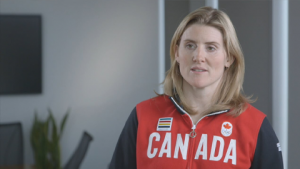
- Hayley Wickenheiser, 4-time Olympic Gold Medallist, women’s hockey
- Jayna Hefford, 4-time Olympic Gold Medallist, women’s hockey
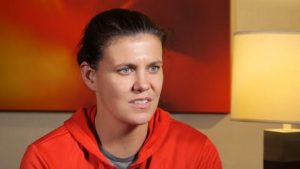
- Christine Sinclair, 2-time Olympic Medallist and captain of the Canadian Women’s National Soccer Team
- Roy Rana, Assistant Coach, Sacramento Kings
- Dr. Peter Jensen, Founder, Third Factor
Participants will learn:
- How resilient teams harness and channel the negative emotions associated with loss and disappointment
- How their communication systems allow them to work through setbacks more productively and therefore recover faster
- How the relationships amongst team members can support or hinder recovery, and
- The vital role that a strong shared purpose plays in making it through the hard times
You should attend if:
- You are responsible for enabling and fostering team culture in your organization
- You are responsible for fostering a culture of innovation in your organization
- You want new ideas on how to maintain productivity and performance through difficult times
- You want to build resilience for yourself or your team
Set against the backdrop of one of Toronto’s newest and most exciting innovation spaces, OCAD U CO, participants will enjoy great peer networking and a delicious breakfast.
About the presenter:
 Dane Jensen
 is a cross-pollinator between the podium and the boardroom. As CEO of Third Factor, he works every day to enhance Canada’s business and athletic competitiveness through better strategy and stronger leadership. His clients include RBC, CIBC, WestJet, University Health Network, the Canadian Paralympic Committee, the Canadian Sport Institute Ontario, and Right To Play. He has worked as an advisor to Senior Executives in 12 countries on 5 continents, he contributes regularly to The Globe and Mail on the topics of strategy and leadership, and was previously an Associate Partner at the strategy consultancy Monitor Deloitte.
About the venue:

Just minutes from Union Station on Toronto’s waterfront,
OCAD U CO is a state-of-the-art 14,000 square foot studio designed specifically for collaborative innovation work. The space features is home to 20 resident design-led startups, a suite of formal and informal meeting spaces, and is the setting for our program,
How To Lead Innovation, which we run in partnership with OCAD U CO and the Smith School of Business at Queen’s University.
Reserve your spot:
SORRY WE MISSED YOU
This event has passed, but it won’t be the last. Be the first to know about future events from Third Factor by entering your information below.
What do elite athletes know about resilience? They know that it is largely an inside job.
In the face of adversity, disappointment, and set-backs, Olympic athletes take on the role of Power Converters: they harness the energy inherent in pressure to enhance their own performance. Here’s the good news: you too can learn to leverage pressure in order to generate better results. The necessary skills are not innate genetic gifts, but rather, abilities that can be consciously learned and practiced.
Peter and Dane Jensen introduce the four skill sets that make up the personal resilience tool-kit used by elite athletes and high performers in business to gain control over how pressure and stress will impact performance.
Click here to download the whitepaper. Sometimes we need to step outside of ourselves in order to better understand what is going on, on the inside.
Self-reflection is one of those things that managers often brush aside. In a forward-focused business environment it can feel as though you just don’t have time to be reflective. However, in order to be great it is crucial to first understand your own strengths and limitations and this understanding rests on the ability to become self-aware.
Sandra Stark and Peggy Baumgartner discuss why self-awareness is important, what it looks like, and the questions you must be able to answer about yourself. They introduce the concept of “active awareness”, a skill that helps you leverage self-awareness in the moment, and that has worked for the thousands of Canadian executives that Third Factor has worked with over the past ten years.
The time that you invest in getting to know yourself in the present, will only serve to benefit you in the future.
Click here to download the whitepaper.