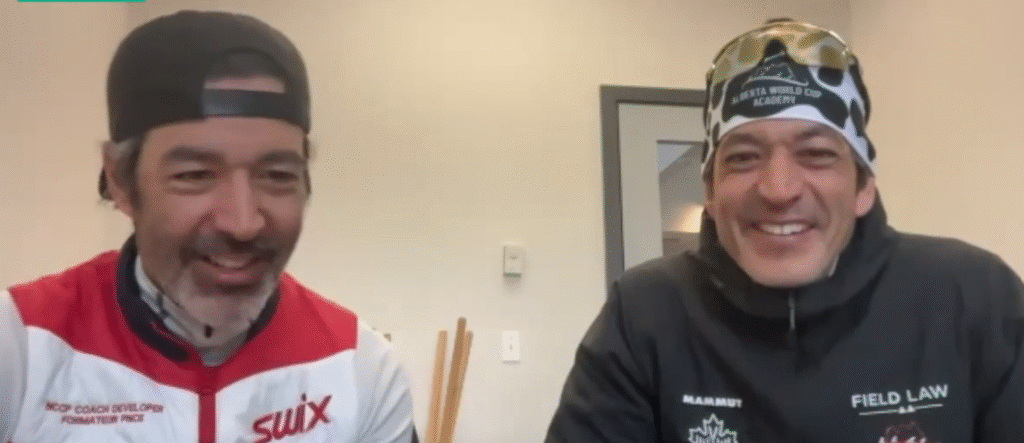

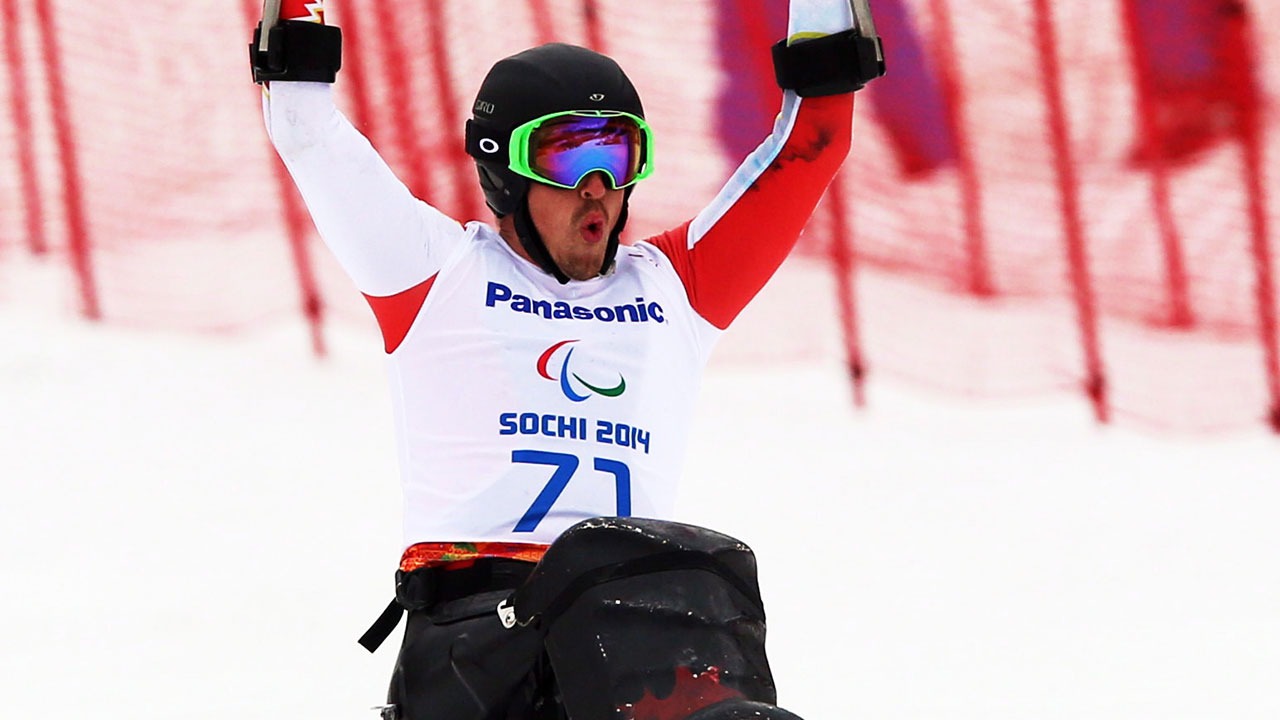

This article is part of Third Factor’s Story Behind the Story series, in which we unpack the stories behind both iconic and under-the-radar Olympic and Paralympic moments. In this feature, Third Factor CEO Dane Jensen speaks with alpine skier and Canadian Paralympic Champion Josh Dueck about the mindset that let him peak at the right time to win gold and silver at the 2014 Sochi Paralympic Games.
—
Josh Dueck has always sought out challenges that most people avoid. A competitive freestyle skier, he was paralyzed in 2004 while attempting a Superman front flip while coaching a group of kids. Rather than quit skiing, he returned to the mountains and became the first person to ever land a backflip on a sit-ski. The feat helped redefine what was possible in adaptive sport and established him as one of its most innovative athletes.
By the time he arrived at the Sochi Paralympics in 2014, he had already won a silver at the Vancouver Games in 2010 and was a sponsored athlete. But the season leading up to Sochi was difficult: He was inconsistent and barely qualified for the Paralympics.
“I was slumping pretty hard. Emotionally, physically, technically, I was not there,” he says.
Behind the scenes, however, his coaches had a plan. They structured his preparation so he would peak during the Games, not before.
To nearly everyone’s surprise, including his own, Josh won silver in the men’s downhill, the first alpine event of the Games. It’s a race where competitors can reach speeds of up to 140 kilometres per hour.
“I should have been so fired up with winning a silver. But I was actually a little bit let down … and it dawned on me that I wanted more.”
The surprise silver stirred his competitive spirit: “I should have been so fired up with winning a silver. But I was actually a little bit let down … and it dawned on me that I wanted more.”
The next chance for “more” came in the Super G race – Josh’s strength. “When I go fast on snow, everything is slow for me, and I’m actually quite relaxed.” He believed he had a good chance for a medal, and at one point during the race, he was tied for first. Then, near the finish, he lost control. “I did a 360 at 100 kilometres an hour,” he recalls.
After that near-miss for a gold medal, Josh’s next opportunity came in the Men’s Combined, a two-part event that blended both the Slalom and Super G.
At first glance, it wasn’t an obvious fit. The speed portion suited him. The technical slalom did not. “I’m a speed skier. I love going fast – and so downhill and Super G were really my best opportunities to be successful.”
And yet, the morning of the race felt different. “I woke up with a head full of steam,” he says. “I was like, ‘You know what? Today’s my day.’”
In speaking with Josh about that day, a day that ended with a gold medal, there were two lessons that stood out:
Lesson #1: Empty The Cup
Athletes are trained to process doubt – to learn from mistakes and let them go. What Josh discovered in Sochi is that managing the highs can be just as important as managing the lows.
On the morning of the Combined, he was riding a wave of anticipation. Then he spoke with his sports psychologist. “He said, ‘How are you feeling?’ and I said to him, ‘You’ll never guess – all night I just kept waking up with the anthem in my head. I’m feeling it. I’m ready.”
Instead of celebrating with him, his psychologist offered a reminder:
“You know the exercise of letting go of failure and what isn’t in your control? It’s equally applicable to let go of this anticipation, these good feelings … you need to empty the cup out so you can go out with open eyes, open heart and a curious mind.”
“… you need to empty the cup out so you can go out with open eyes, open heart and a curious mind.”
But letting go of positive emotion proved harder than letting go of failure.
“It’s not so hard to let go of failure when you do it all the time – that’s the nature of being an athlete,” Josh reflected, “but the positive moments, you want to ride that wave. It feels really good.”
To reset, he turned to breathing work and mindfulness. “I had to really go inside and just let it go… I started to let my heart fill with appreciation for my friends and family back home who had sacrificed so much to allow me to do what I do.”
He also thought about his mom and dad and what he learned from them. When Josh was young, his dad stressed to him the joy of effort, while his mom taught him to handle setbacks with grace and to see every step back as an opportunity to grow.
That shift reframed the moment. “I’d already realized that I was winning by being there. It wasn’t about crossing the line faster; it was about being open to the day.”
Emptying the cup didn’t diminish his intensity. It allowed him to stay present, adapt to conditions and execute. The result was Paralympic gold.
Listen to Josh describe how he let go of both positive and negative attachment:
Lesson #2: Replace Confidence With Assurance
During our conversation, I suggested that what Josh was describing sounded like replacing bravado with confidence. He pushed back. “I’m not a confident person, and I never was as an athlete. My superpower was probably that I’m incredibly insecure.”
Rather than trying to manufacture confidence, he focused on what he could control: effort. His approach was simple: outwork others, follow the plan, and measure readiness against preparation. He didn’t believe he was the most naturally talented athlete, but no one could take away his work ethic.
Before each race, the question wasn’t whether he felt confident. It was whether he had done the work. If the answer was yes, the result could unfold as it would.
“It wasn’t confidence. It was assurance,” he said. “I did my best, and if my best is good enough today, well, all right. And if it’s not, at least I did my best.”
In Josh’s view, confidence can rise and fall with circumstances. Assurance – built through disciplined preparation – remains steady under pressure. So, when a big moment arrives, he explains, you don’t need to feel confident. You need to know you’ve done the work and that you’re ready for the challenge ahead.
Listen to Josh talk about replacing confidence with assurance:
Putting It Together
From the outside, Josh’s Sochi performance looks like a story of momentum: a surprise silver followed by a gold medal finish. The story behind the story goes deeper.
His performance was grounded in preparation that built assurance and in training to let go of both disappointment and success, so he could stay present when it mattered most.
In business, high-stakes moments create similar emotional swings. When results falter, anxiety rises. When things go well, excitement and expectation can take over. Both can distort judgment.
Josh’s recipe is simple and can be applied in any domain:
- Do the work: Preparation is the foundation of assurance. When you’ve done the work, you don’t need to manufacture confidence – you can rely on what you’ve built.
- Let go of both negative and positive attachment: Don’t cling to mistakes, but don’t get caught up in hype either. Managing success can be just as important as managing failure.
- Enter the moment with an empty cup: Clear out expectation and ego so you can respond to what’s actually happening. Remember: open eyes, open heart and a curious mind.
—
Beyond being an incredible athlete, Josh is also a very captivating speaker. If you’re interested in bringing him in to speak at an event, you can find him at Talent Bureau here.