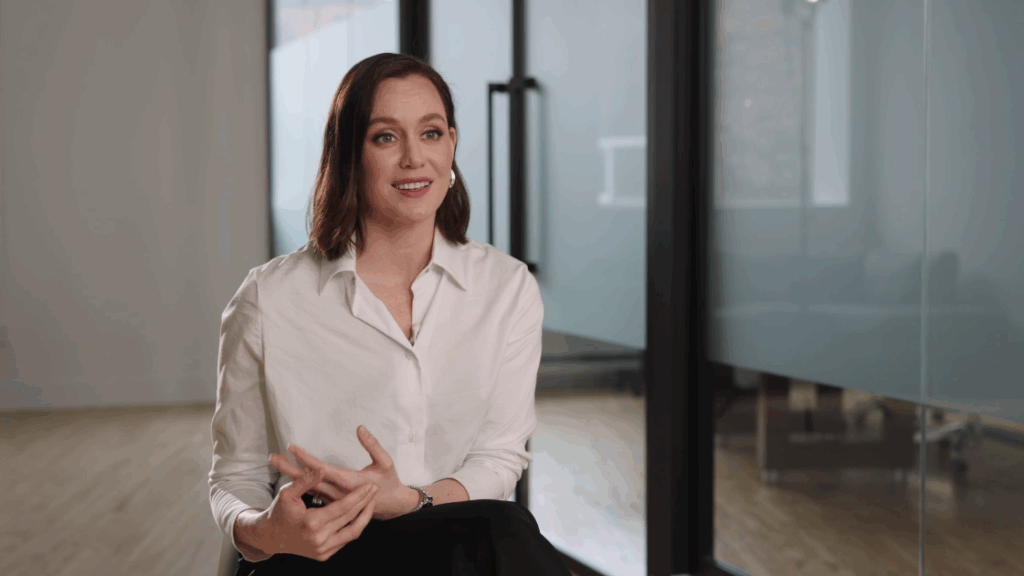


This article is part of Third Factor’s Story Behind the Story series, where we unpack both iconic and under-the-radar Olympic and Paralympic moments. In this feature, Monique Kavelaars, Director of Assessments & Team Coaching, reflects on lessons from the 2020 Tokyo Games, held at the height of the COVID-19 pandemic.
—
The plane to Tokyo was silent.
Back home in Canada, the Olympics would look the way they always do on polished TV broadcasts: sweeping shots of stadiums, stunning skylines, and close-ups of athletes at their best.
But inside the aircraft carrying Canadian athletes to the Games, the feeling was entirely different. There was no buzz. No joking. No shared anticipation. Just quiet. And with it, a growing awareness among everyone on board:
These Olympics would not feel like the Games we had all imagined.
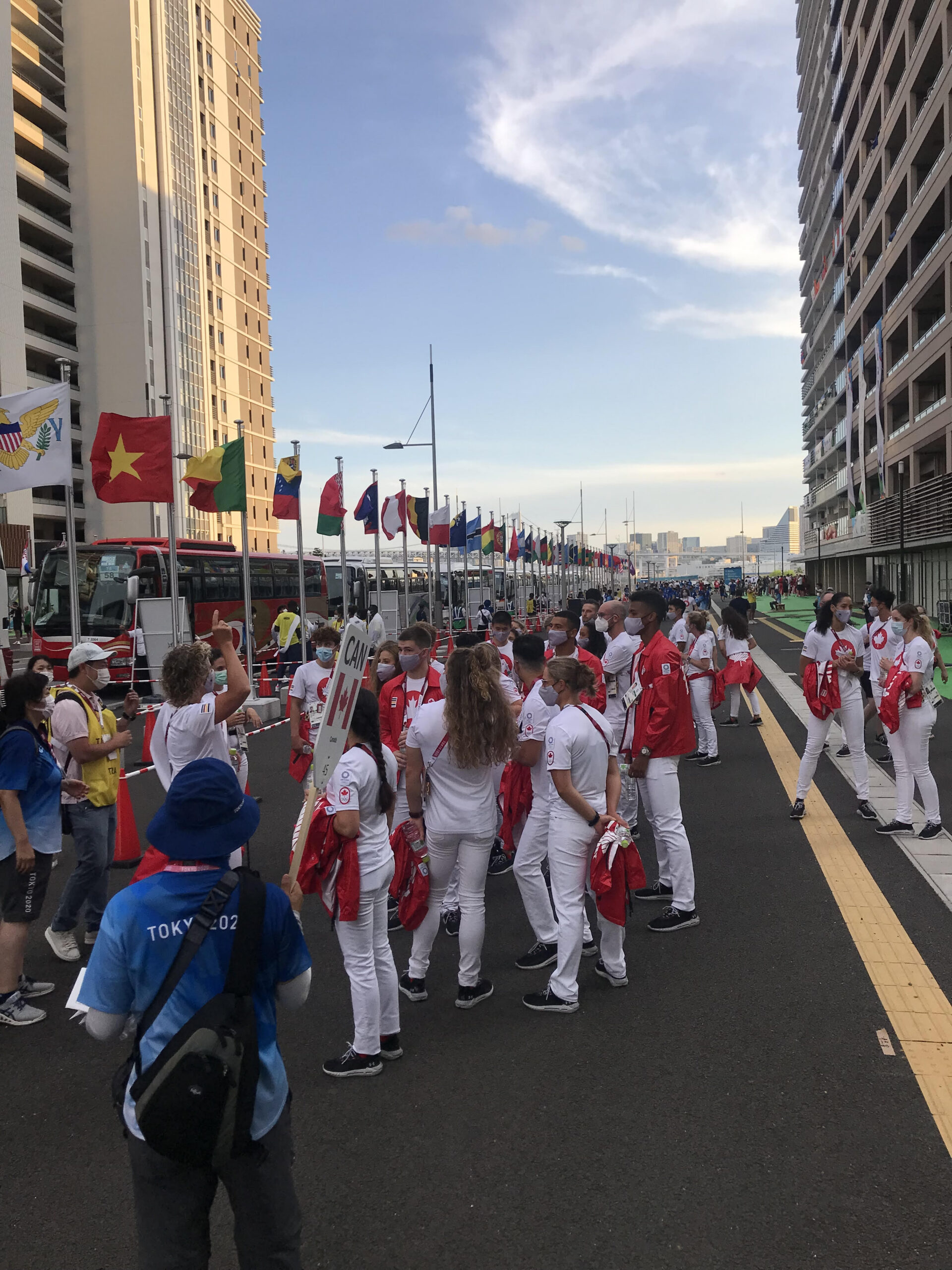
Normally, the Games are saturated with energy. The host city transforms. Flags line the streets. The weight and pride of representing your country hits the moment you step off the plane.
Tokyo was different. These were the Games of 2021, delayed by a year due to the pandemic. The virus was still sweeping the world, and strict health protocols shaped every aspect of the experience.
Athletes could arrive only days before their event and had to leave within 48 hours of competing. Movement was restricted. Social spaces were controlled. Spectators were absent. The usual swirl of family, friends, fans, and media simply wasn’t there.
What emerged instead was an intimacy that was both unexpected and unsettling.
For some athletes, the lack of external stimulation helped. Fewer distractions. Less noise. A clearer path to focus. For others – especially those in individual or multi-day events – the absence of atmosphere created a quiet, persistent question:
Is this really the Olympics?
At night, the stillness would occasionally break. Teams gathered inside their country residences, setting up projectors to watch events they would normally attend in person. When Italy’s Marcell Jacobs won the men’s 100 metres, the Italian residence erupted. No cameras captured it. The sounds of the celebration instead echoed through the village. The next day, that energy spilled into shared spaces in a way that rarely happens during the usual chaos of the Games.
Athletes had to deal with a lot of downtime. With fewer ways to decompress – no exploring the city, no meals with family, no spontaneous celebrations – athletes were left mostly with their thoughts. For those processing a performance, especially one that didn’t go as planned, that isolation could feel heavy. Normally, there is movement, distraction, and connection. In Tokyo, there was often just a quiet walk back to a room.
Coaches and federations worked hard to create some sense of normal. In many cases, their support was remarkable. But the conditions were far from ideal.
All this raises a deeper question that extends far beyond sport: What do you do when the conditions you prepared for no longer exist?
The lessons from Tokyo go well beyond the athletes to offices and boardrooms.
Lesson #1: Perfect Conditions Are a Myth
One of the clearest lessons from Tokyo is that “perfect conditions” are largely an illusion.
Athletes spend years preparing, yet competition is always uncertain. They never know exactly how their body will respond, how opponents will perform, or what the environment will deliver on the day that matters most.
Tokyo made that impossible to ignore. There were no guarantees. No familiar routines. No comforting rituals. Daily COVID testing became part of life. Every morning meant spitting in a tube and waiting. Stories circulated of athletes testing positive and being sent to the “fever clinic.” Each time, the village would ripple with silent worry.
And still, athletes showed up to compete.
I remember one athlete in an individual event whose entire Olympic experience lasted nine minutes. One performance. First round. Done. This was not the Games she had imagined. Within 48 hours, she was on a plane home.
When we spoke, she was heartbroken. Not just about the result, but about the experience she missed. She couldn’t explore Tokyo. She couldn’t soak up the atmosphere and carry it forward into the next four-year cycle. “I don’t want to go yet,” she said. “I still want to feel the Olympics.”
That moment captured the emotional whiplash of Tokyo. Years of preparation compressed into minutes, followed by an abrupt exit from a city she barely saw. And yet, she stepped in knowing this might happen.
That willingness to enter uncertainty is the essence of sport. It also mirrors leadership and business more than we wish to admit.
At work, we try to control what we can: plans, timelines, strategies, forecasts. We design “ideal conditions” in our heads and on our slides. But at some point, courage becomes simpler than that.
We need to ask: What is mine to control right now? Then commit to that fully, even when the picture is incomplete.
The bar shifts from “I will only perform if conditions are perfect” to “I will perform under the conditions that actually exist.”
Listen to Monique describe how perfect conditions are a myth:
Lesson #2: Self-Awareness Is a Performance Skill
When the external environment changes, self-awareness becomes non-negotiable. It becomes a performance skill.
Many athletes rely on specific conditions to bring out their best. Some feed off the energy of a crowd. Others depend on routines and rituals. Others draw strength from the presence of family or familiar faces.
In Tokyo, much of that disappeared. Athletes were forced to ask new questions:
- What actually fuels me?
- What drains me?
- How do my strengths show up when conditions shift?
- Which parts of my routine are essential – and which are habits I’ve never questioned?
These weren’t theoretical questions. You could see them play out in ordinary moments, like the dining hall.
One day, news spread that a Dutch rower had tested positive. Soon after, their delegation began eating in a cordoned-off section tucked into a corner, behind additional glass partitions. They were in the same room as everyone else, yet unmistakably separated.
The signal wasn’t just “they have COVID.” It was the uncertainty of not knowing who might be next. Everyone shared the same building, the same air. Suddenly, the invisible risk became visible.
For some athletes, it triggered anxiety. For others, it sharpened focus. Either way, it demanded awareness – and more questions:
- Do I spiral when I see this, or can I notice it and return to my routine?
- Do I absorb everyone else’s fear, or anchor to what I can control today – sleep, food, warm-up, mindset?
The same holds true for leaders.
In times of disruption, copying what works for others rarely works for us. The best coaches in Tokyo understood this. They protected individual performance needs rather than imposing a single approach on everyone.
Self-awareness isn’t introspection for its own sake. It’s knowing what you need to sustain performance when familiar supports disappear – and being honest enough to ask for, or build, those conditions.
Listen to Monique describe how self-awareness is a performance skill:
Lesson #3: Presence Calms the System
In Tokyo, just arriving felt like an achievement.
Between testing protocols, travel restrictions, health concerns, and constant logistical hurdles, getting to the Games was a maze. For many athletes, coaches, and staff, stepping into the village carried real emotional weight.
Thinking too far ahead—to medals, expectations, outcomes – only amplified anxiety.
Presence became more than a mindset. It became a stabilizer.
Staying anchored to the next task, the next decision, the next controllable action helped athletes manage fear, disappointment, and even success.
Because even success was disorienting.
Celebrations were brief. Support systems were limited. Within two days of competing, many athletes were back home, sitting on a familiar couch, trying to process an experience that ended almost as quickly as it began.
Uncertainty didn’t end with competition. It followed them home.
The parallel to today’s work environment is hard to miss. Markets shift. Plans change. AI is reshaping roles and workflows in ways we can see but not yet fully understand. Conditions are moving faster than our slide decks.
The leaders who navigate this best aren’t the ones who eliminate uncertainty. They’re the ones who stay present inside it.
Presence doesn’t mean pretending everything is fine. It means acknowledging what’s hard, then returning to a simple question:
Given everything going on, what matters most right now?
Listen to Monique describe how presence can help focus attention:
Beyond Tokyo: Adapting When the Script Changes
The Tokyo Games offered a powerful reminder: resilience isn’t about grinding endlessly. It’s about adapting intelligently when the script changes.
It starts with acceptance. Some conditions are out of your control. The first step is to separate what you can’t influence from what you can – and invest your energy there. It also requires honest self-recognition:
- Where do you get your energy from?
- What causes you to lose it?
- Which boundaries protect your ability to perform under pressure?
- How might those answers change when conditions do?
Finally, presence is a discipline. Returning attention to what matters now – not what you wish were different – creates space for better decisions and better performance.
The dining hall in Tokyo captured this paradox perfectly. Athletes moved through masked, partitioned spaces. Delegations like the Dutch, seated behind glass after a positive case, were a constant reminder that uncertainty was everywhere.
It was strange. At times chaotic. And undeniably real.
Performance didn’t stop because conditions weren’t perfect. It adapted.
And that may be the most enduring lesson of all.
Build Resilience In Your Organization
Bring the skills that elite athletes use to build resilience and perform under pressure to your organization. Contact us to learn more about our resilience programs.