
When Reading Nonverbal Cues, the Trigger and the Reason Are Not the Same Thing
Research from Dr. Paul Ekman, the psychologist behind the Facial Action Coding System (FACS), identifies seven universal emotions that we can read on the human face across cultures: anger, disgust, surprise, fear, contempt, sadness, and happiness. Each of these emotions has a universal trigger. Anger is triggered by the obstruction of a goal. Sadness comes from the loss of something we value: a job, our credibility, or an opportunity. Fear comes from a perceived threat. These triggers are reliable enough that behavioural analysts, credibility experts, and coaches use them as a framework for understanding what someone might be experiencing. But here’s what that research doesn’t tell you: why someone is feeling this emotion right now. Why is the person crossing their arms in your meeting? They could be angry because your idea threatens a project they’ve spent months building. They could be sad because you just reminded them of a missed opportunity. Their shoulder could be sore. They could have gotten a text from their vet this morning about their pet and be carrying grief they have nowhere to put. Or they might love what you’re saying and be comforting themselves because they wish they’d known it sooner. They might also just be cold! Physical reactions to emotions do tell you something. They just don’t tell you everything. And when we assume they do, we risk getting it wrong.Single Nonverbal Cues Are Routinely Misread, Even by Experienced Leaders
The crossed arms example isn’t hypothetical. It’s one of the most misread nonverbal cues in professional settings, largely because people feel so certain what it means. We’ve absorbed a cultural shorthand: arms crossed equals closed, resistant, defensive. But a self-hug (which is what crossing your arms actually is) is often a self-soothing response. We do it when we need comfort, when we’re processing something, or when we’re cold. Sometimes it can even signal confidence: I don’t need to open myself up to you. You need what I have. Other times, it may simply mean someone is deep in thought, taking in what you’re saying. Eye contact is another commonly misread nonverbal cue. Conventional wisdom says people avoid eye contact when they’re lying. Research suggests the opposite may be true. Skilled deceivers sometimes use more eye contact, watching your reaction carefully to calibrate their story. Meanwhile, someone avoiding your gaze might be doing so because they feel shame, they’re overstimulated, neurodiverse, or anxious for reasons that have nothing to do with you. A single cue tells you almost nothing. Behavioural analysts look for a cluster: multiple changes that deviate from what’s normal for that person. Not one crossed arm or one averted glance, but a constellation of variations that together suggest something worth paying attention to. That’s not because those cues clearly reveal what someone is experiencing. Instead, they signal that it’s time to ask questions and better understand what the person is experiencing in that moment.Why Baseline Is the Key to Reading Nonverbal Cues Accurately
This is where relationships matter. The better you know someone, the more useful nonverbal cues become. That’s not because you know what they mean, but because you know what’s different from that person’s normal, or baseline, behaviour. One example: an engineering supervisor with a prominent eye twitch. His team learned quickly that the twitch was simply part of who he was. It was his baseline, constant and unremarkable. What they eventually noticed was that when things weren’t going well, the twitch stopped. That departure from his norm became a meaningful signal. Not because they knew what was wrong, but because they knew something was wrong. That’s the distinction worth making. A variation from baseline is an invitation to ask a question, not a conclusion to jump to. It tells you something may be happening, not what that something is. Cultural, demographic, and individual differences matter here, too. Someone who grew up in a culture where sustained eye contact is considered disrespectful or confrontational will behave differently from someone for whom it’s expected. Someone who fidgets constantly isn’t displaying anxiety. That just may be how they regulate. Or it could be something else entirely. Learning someone’s baseline is an ongoing process, and it pays off most when a conversation is at its toughest.How Coaches Can Use Nonverbal Cues to Have Better Conversations
It’s easy during difficult conversations (giving feedback, talking about performance, or managing up) to make assumptions about why the other person is reacting the way they are. Their face flushes and you think: they’re angry at me. They go quiet and you think: I’ve lost them. They cross their arms and you think: they’re shutting down. Knowing that emotional triggers are universal and that a single nonverbal cue can have a dozen different causes gives you somewhere else to put your attention. Instead of monitoring yourself through their reactions, try becoming genuinely curious about them:- What are they experiencing?
- Where is it coming from?
- What does it mean for them?
This article draws on the work of Dr. Paul Ekman, the Emotional Intelligence Academy’s partnership with Manchester Metropolitan University, and former FBI investigator Joe Navarro.
Key Takeaways:
- A single nonverbal cue tells you almost nothing. Crossed arms, avoided eye contact, or a flushed face can mean a dozen different things — look for a cluster of changes, not one isolated signal.
- The trigger and the reason are not the same thing. Emotions like anger or sadness have universal triggers, but the specific reason behind someone’s reaction in the moment is almost never obvious.
- Baseline matters more than the cue itself. Knowing someone’s normal behaviour helps you notice meaningful deviations — it doesn’t tell you what those deviations mean.
- A variation from baseline is an invitation to ask, not a conclusion to jump to. Treat it as an opening for a neutral, curious question rather than a verdict.
- Curiosity is where coaching begins. Shift your attention from monitoring yourself through someone’s reaction to genuinely wondering what they’re experiencing and why.
Meet our expert: Monique Kavelaars, Director, Assessments & Team Coaching

“I know there’s a lot going on in people’s lives that I don’t see: personal challenges, cultural background, identity. How do I make space for that without making it awkward or overstepping?”
01. Get Curious About the Iceberg
You only ever see the tip. Don’t fill in the rest with guesses. I saw this most clearly when I was fencing at the World Cup. I was competing alongside a teammate from Algeria. It was Ramadan. She was fasting. That meant she had to be up before dawn to eat enough to carry her through the day – which could stretch to 12 hours if her results were good enough to keep her in the competition longer. To most of the room, she just looked a little quieter than usual and slower to warm up. A few competitors assumed she was having an off day. Our coach knew better, and so did the rest of us on her team. So we adjusted around her without making it a production: quieter check-ins, no unnecessary chatter before her matches, and extra time built into her breaks. Nobody outside our circle saw any of that. They just saw the tip of it, a fencer who seemed a little off. The rest – the fasting, the fatigue, the discipline it took to compete at that level while managing both – was entirely beneath the surface. This shows up in offices, too. If someone’s gone quieter lately, replies slower, seems distracted, don’t start with what you think is going on. (“You’re upset you didn’t get to lead the project.”) Ask something genuinely open instead: “I’ve noticed you’re a bit quieter lately. How are things landing for you this week?” You won’t get the full picture on the first question. But if you stay curious, you’ll be able to keep the conversation going until you actually start to understand what’s happening.02. Build Real Psychological Safety
Safety isn’t niceness. It isn’t a shield from accountability. It’s a pattern people can predict. The Swedish classroom built safety in the way that any team environment can. People admitted what they didn’t know without it costing them. (None of us knew the language, after all.) That’s what Harvard leadership professor Amy Edmondson calls psychological safety. It’s the belief that speaking up won’t get you punished or humiliated. Safety isn’t announced; it’s demonstrated. Naming your own mistake plainly (“I misjudged the timeline on the client deliverable last week. I should have flagged it two days earlier.”) teaches people more than any values deck. They calibrate their own willingness to take risks based on what leaders do, not what’s written on a wall.03. Balance Support and Accountability
Curiosity isn’t softness. It’s finding out what someone needs and still holding the line. Safety and standards aren’t a trade-off. They work as a pair. Without both, you get either comfort or anxiety, not real performance. When someone’s struggling to hit a deadline, keep the standard and the support as two separate moves. First, state the standard plainly: “This needs to ship Friday.” Then ask a separate question: “What would help you get there? More time, fewer meetings or something else?” Keeping those distinct means the bar doesn’t move; the support around it does. That’s what stops flexibility from quietly becoming a lowered standard. Nobody lowered the bar for my teammate at that World Cup. The standard never changed. What changed was the support around her, which allowed her to meet the standard. The iceberg doesn’t disappear because you ignore it either. It just keeps shaping what you see without you knowing why. Stay curious. Build safety as a pattern, not a policy. Coaching across differences isn’t about lowering standards. It’s about coaching the person who’s on your team.Key Takeaways:
-
What you see is the tip of the iceberg. Ask open questions that leave room for an answer you didn’t expect, instead of filling gaps with assumptions.
-
Safety is shown, not announced. Naming your own mistakes plainly teaches people more than any policy on the wall.
-
Keep the standard and the support separate. Set the bar clearly, then ask what would help your team member meet it. The bar doesn’t move. The support does.
01.
Start With Mindset. Then Respond.
02.
Prevent Isolation.
03.
Create A Culture Of Feedback.
01. Start With Mindset. Then Respond.
Nobel-prize-winning psychologist Daniel Kahneman observed something deeply human about surprise. When unexpected events occur, people tend to believe the lesson is that they now know what to do in similar circumstances in the future. We assume the mistake was a lack of information or insight. But this is the wrong conclusion. The real lesson is that the future is inherently surprising. No matter how prepared we are, some events will catch us off guard. That realization changes everything. When leaders shift from asking, “How did we miss this?” to saying, “Of course something unexpected happened,” they build resilience in their teams. They create space for response instead of reaction.Jocko Willink, a former U.S. Navy SEAL commander, trains his teams to respond to setbacks with a single word: “Good.” If a mission is delayed, good — there is more time to prepare. If resources are reduced, good — it forces simplification. “Good” is not meant to dismiss difficulty. It is meant to redirect energy toward action. Serial entrepreneur Brad Jacobs learned a similar lesson in his twenties. When he once presented his mentor, Ludwig Jesselson, with a long list of business problems, Jesselson responded bluntly: “If you want to succeed in business, you must get used to problems. That is what business is all about: solving problems.” Jacobs would later say that this advice shaped every leadership team he built. Still, mindset alone is not enough. Letting go of an outcome people were deeply invested in is not a purely intellectual act. It is emotional. Frustration, disappointment and fear surface quickly when plans unravel. That is why elite performers rely on ritual. Defensive backs in the NFL sometimes use a mental “20-second clock” to feel the impact of a play and then release it. NHL star Connor McDavid, after a difficult shift, removes his helmet, runs his fingers through his hair once, and resets. Performance psychologist Jim Loehr found that elite tennis players use the 25 seconds between points to perform deliberate physical and mental routines that lower their heart rates and restore focus. In business, the ritual will look different. But leaders who help their teams develop a deliberate reset — a clear transition from what just happened to what happens next — build resilience into their culture.“Over three decades of working in high-performance environments, I have learned that while we cannot control the waves, we can control how we respond to them.”
02. Prevent Isolation
When people struggle with change, they rarely announce it. More often, they withdraw. They stop asking questions. They avoid drawing attention to what they do not yet understand. They tell themselves they will figure it out before asking for help. Competent adults do not like feeling incompetent. When change triggers that feeling, the instinct is to work harder in private rather than admit their struggles in public.
Yet isolation slows learning. People move up learning curves faster when they receive feedback, hear about best practices and learn what to avoid. Progress accelerates when difficulties are shared.
A leader’s role, then, is not to rescue but to interrupt the silence.
When someone says, “I haven’t really started yet — there’s so much to learn,” the instinct may be to give them a pep talk. A better move is to ask, “Where could you start?”
That question helps identify a small, manageable step the individual could take. By breaking the overwhelming into bite-sized bits, something important will start to happen. Progress will become visible, and confidence will follow.
And confidence changes how people experience change itself.
Competent adults do not like feeling incompetent. When change triggers that feeling, the instinct is to work harder in private rather than admit their struggles in public.
Yet isolation slows learning. People move up learning curves faster when they receive feedback, hear about best practices and learn what to avoid. Progress accelerates when difficulties are shared.
A leader’s role, then, is not to rescue but to interrupt the silence.
When someone says, “I haven’t really started yet — there’s so much to learn,” the instinct may be to give them a pep talk. A better move is to ask, “Where could you start?”
That question helps identify a small, manageable step the individual could take. By breaking the overwhelming into bite-sized bits, something important will start to happen. Progress will become visible, and confidence will follow.
And confidence changes how people experience change itself.
03. Create A Culture Of Feedback
In The Culture Code, Daniel Coyle depicts one of the most remarkable examples of rapid team problem solving under pressure. On July 19, 1989, United Airlines Flight 232 suffered a catastrophic loss of hydraulic control over Iowa. The odds of that failure were estimated at one in a billion. There was no checklist for it. No training scenario had prepared the crew. The plane’s pilot, Captain Al Haynes, did something critical in that moment. He did not attempt to solve the problem on his own. First, he accepted help from an off-duty flight instructor who was a passenger. Then he asked his crew, “Does anyone have any ideas?” What followed was a real-time exchange of up to 60 pieces of information a minute among the crew – what was working, what was not, what they needed next – solving problem after problem to fly their dying aircraft to an airfield where they had a chance. Together, they crash-landed the aircraft in Sioux City. Of the plane’s 285 passengers, 185 survived. The accident could have been far worse if not for the crew’s actions. Later, experienced test pilots attempted to replicate the landing in simulators. None succeeded. The difference in the landing was not skill alone. It was communication. The crew members who survived weren’t more skilled than the test pilots. They had better information because they asked for it, shared it quickly with one another and integrated it into their operations.For leaders today, the lesson is clear. The familiar phrase, “Do not bring me problems; bring me solutions,” is largely obsolete. The challenges organizations face are too complex and too fast-moving for any one person to solve alone. The capability you need is already inside your team, your colleagues, your organization. As a leader, it’s your job to unlock it. Build a team where giving and receiving feedback is simply part of how work gets done – where people are comfortable bringing problems forward, knowing the group will help solve them.“The challenges organizations face are too complex and too fast-moving for any one person to solve alone.”
There’s only one certainty
We can be certain of one thing: the waves are not stopping. The shore will not always be close. Sometime over the next several months, something none of us anticipated will test our well-laid plans again. The question is not whether uncertainty will appear. It is whether we treat it as a temporary interruption or as the environment itself. Leadership in this era isn’t about having a better crystal ball. It’s about building habits that hold when predictions fail – the habit of coaching your team to reset quickly; helping your people to reach out instead of retreating; and building a culture where feedback and open idea exchange are the norm, not the exception. These practices do not eliminate uncertainty. But they change how we move through it. And sometimes that’s enough to keep us moving forward in turbulent seas.Key Takeaways:
-
Expect the unexpected. The lesson of surprise isn’t that we missed something. It’s that the future will always contain surprises. Build teams that respond quickly instead of searching for blame.
-
Shift to response mode. When plans break down, redirect attention to the next action. Progress starts the moment the team moves from reaction to response.
-
Reset quickly. Elite performers use small rituals to move on from mistakes. Leaders can help teams create deliberate resets that refocus attention on what happens next.
-
Interrupt isolation. Change often causes people to withdraw. Leaders accelerate learning by encouraging small starting points and open conversation.
-
Make feedback normal. Complex challenges require shared intelligence. Teams perform best when problems and ideas move quickly between people.
When people picture elite sport, they usually imagine the glory: the medals, the anthem, the moment everything comes together. What they don’t often see is the psychological turbulence underneath those performances – the doubt, fear, shame, and self-recrimination that show up when things don’t go according to plan.
Years ago, Third Factor founder Peter Jensen was working with a Canadian national team that was, by all measures, one of the best in the world. They were perennial contenders, a program with history and swagger. And yet, in the first days of a world championship, everything came undone. They lost to their arch-rivals badly, and the shock was devastating.
We’re always navigating the gap between what is and what ought to be. That gap hurts. But the hurt is meaningful. And if we can help people explore that meaning, we unlock the very thing that allows them to grow.
By the next morning, the athletes stood in the hotel lobby looking hollowed-out. Angry. Embarrassed. Anxious. They knew the tournament was short. They knew another loss could knock them out. And they knew they were at risk of spiraling.
This is the territory we work in every day – not just in sport, but in business, education, and leadership. People experiencing disappointment, failure, or the deep discomfort of not living up to their own expectations. As psychologist Kazimierz Dabrowski wrote, we’re always navigating the gap between what is and what ought to be. That gap hurts. But the hurt is meaningful. And if we can help people explore that meaning, we unlock the very thing that allows them to grow.
What follows is how Peter helped that team turn a moment of psychological crisis into the fuel that carried them to a gold medal, not despite their negative emotions, but because of them.
01.
Acknowledge the pain and help people observe it
02.
Move toward compassion, not criticism
03.
Help them find the meaning inside the pain
1. Acknowledge the pain and help people observe it
When Peter asked the players how they were feeling that morning, they didn’t hold back: awful, embarrassed, sad, angry. A typical response might have been reassurance: You’ll be fine, shake it off, don’t worry about it. But reassurance rarely helps; it often makes people feel more alone in their emotions. Instead, Peter simply said: “Yeah. You look awful.”
It may sound blunt, but it wasn’t judgmental. It was observational. It told the players: I see you. What you’re feeling makes sense. Let’s look at it together.
When the strength coach announced they’d be doing lunges at practice, Peter asked: “How are you going to look doing lunges? How will your teammates know you’re back?” These were reflective questions not about the loss, but about how they were showing up in response to it. They invited the players to step outside themselves and observe what was happening internally. This is the first job of a coach in hard moments: Help people dis-identify from the emotion without dismissing it and let them see the feeling rather than become the feeling.2. Move toward compassion, not criticism
Negative emotions become destructive not because they exist, but because we weaponize them against ourselves. We interpret them as proof: I’m not good enough. I’ll never perform. I don’t belong here. A coach must interrupt that spiral. Peter did this in an unexpected way. That morning, a staff member had told a long, mundane story about buying a T-shirt on sale. The players had zero patience for it. Peter asked the staff member to tell the story again to the entire team. Afterwards, he asked: “Why did he buy that T-shirt?”. Eventually someone answered: “Because he got a good deal.” Peter replied: “Right. He wasn’t going to overpay. He knows what shirts are worth. You guys are overpaying right now.” No judgment. Just compassion and perspective. The point was simple: Don’t pay more than the moment is worth. You lost a game. It hurts. But don’t add interest by beating yourselves up. A coach helps people see the whole truth, not the narrow, distorted version they’re stuck inside.3. Help them find the meaning inside the pain
That afternoon, the team played a weaker opponent and won only 2–0. Instead of relief, they felt further proof that they were failing. So Peter gathered them and asked each player to share what it meant to represent their country. What surfaced were stories of parents driving endless hours to practices, communities fundraising to support them, comebacks from injury, and dreams that had taken years to build. It was emotional. And it was clarifying. The problem wasn’t that they had lost a game. The problem was that they weren’t living up to what the opportunity meant to them. And when people reconnect with meaning, they reconnect with agency. They can choose how to move forward. From that point on, Peter reinforced that meaning daily: At practice: “An American player woke up today preparing to face you in the gold medal game. How are you preparing?” In the weight room: “Can you improve 1% today? What will you do to show you’re getting better?” By naming their pain and understanding its purpose the team turned the emotional energy inward, toward growth instead of self-attack. They never lost another game. They won the gold medal.When negative feelings become a weapon
Negative emotions are not the problem. What hurts performance is when people interpret those emotions as evidence of inadequacy: “I failed, therefore I’m a failure.” This is the voice of the critic – a destructive internal narrator that convinces us we’re incapable of growth or unworthy of success. A coach’s role is to challenge that voice by asking better questions:- What is this feeling signaling?
- What is the conflict between what is and what ought to be?
- And what does this moment make possible?
The takeaway for leaders and coaches
Whether you’re leading a national team or a project team, the principles are the same:- Acknowledge negative feelings without trying to eliminate them.
- Help people step back and observe their internal state.
- Guide them toward understanding what the discomfort is pointing to.
Confronting is a Coaching Conversation
Confronting is a coaching conversation. It doesn’t fit neatly with the popular notion that coaching is just about asking good questions, but watching Olympic coaches operate, as we have for 30 years, makes one thing very clear: having the courage to have a direct conversation when needed is vital to helping someone reach their highest potential. In fact, avoiding a difficult conversation about something that’s preventing a person’s success is the opposite of good coaching. That’s why confronting is one of the four core communication skills in our 3×4 Coaching model, and one that builds on the other three communication skills – questioning, listening, and feedback. It’s not the first or most frequent approach that coaches reach for, but it’s an important part of the overall coaching skill set. Knowing that you can navigate complex, high-stakes conversations is part of what underpins your confidence as a leader.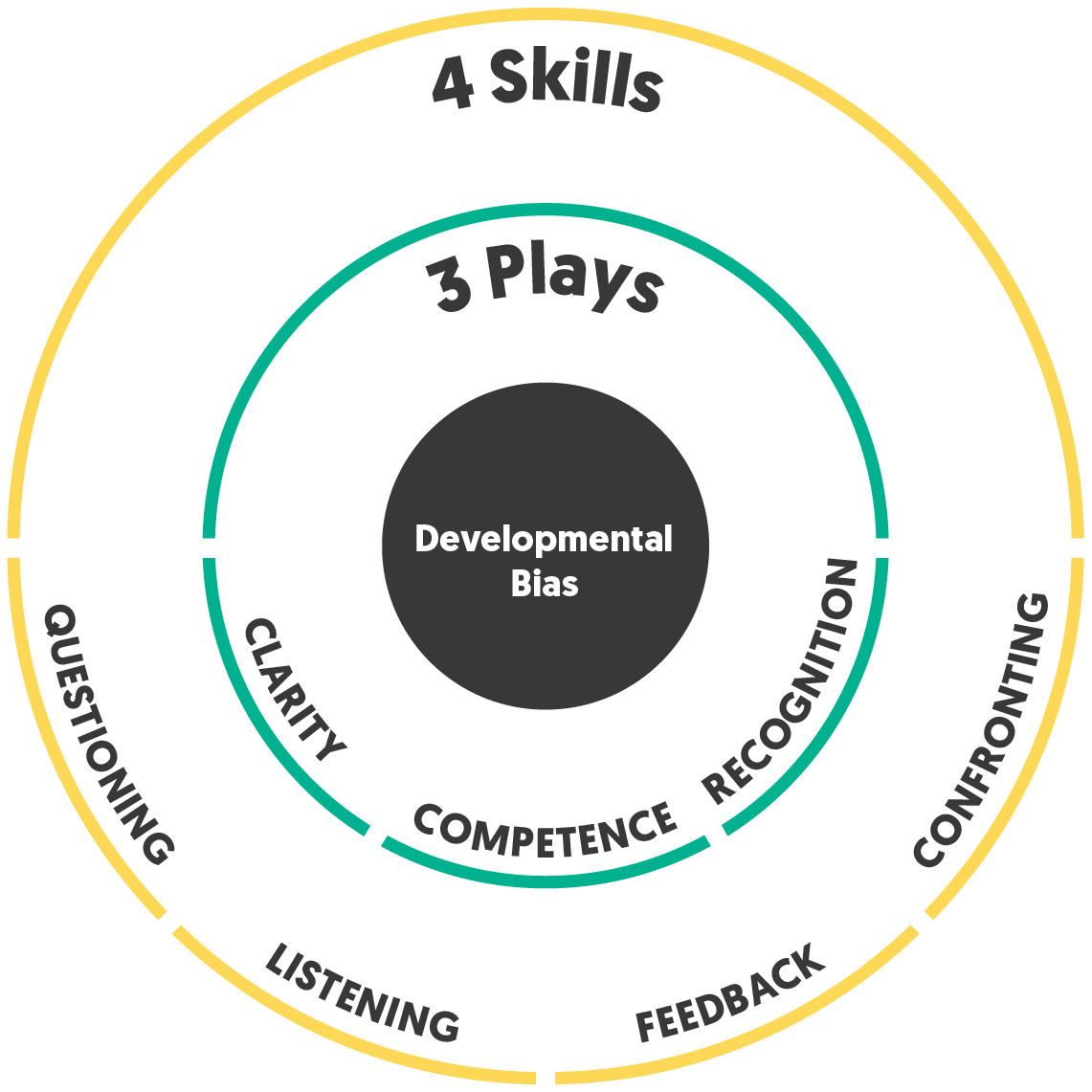
Choose Your Challenge
Having a confronting conversation with Leo is going to be challenging because I don’t want to damage our relationship. It doesn’t take tremendous courage to call up the airline after my flight was delayed and demand a refund because I only care about getting compensated, not my relationship with the customer service representative. But Leo is one of the strongest performers on my team and I want to have a good relationship after this conversation. It’s also going to be challenging because Leo has been resisting making this change and now it’s getting in the way of his success. This isn’t just a straightforward piece of feedback anymore. There are real stakes. If Leo’s behaviour continues, we could end up in the realm of more formal performance management channels.“When done effectively, these conversations can resolve the issue at hand, build the other person’s commitment to making progress, and strengthen the relationship.”It’s easy to see the threats in these conversations but there are also potential benefits. When done effectively, these conversations can resolve the issue at hand, build the other person’s commitment to making progress, and strengthen the relationship if they see you as someone who holds them to a high standard yet cares about them and respects them. So, I choose my challenge: I can avoid the conversation and deal with the fallout – Leo’s behaviour continues, our relationship becomes strained as my frustration seeps out, and I lose credibility with other people who see me allowing this behaviour to continue. Or I can face the discomfort of addressing the issue head-on and put my coaching skills to the test.
Connection Before Correction
Once I decide to address the issue, how do I have this conversation in a way that not only protects our relationship but gets Leo committed to making a change? It starts before I even enter the conversation. Often, we fall into the trap of thinking that we need to emotionally distance ourselves from the other person in order to be “tough” or objective. But it’s our relationship with the other person that’s the foundation for coaching them. I cannot coach Leo if I lose my connection to him. So rather than distancing myself, I start by strengthening my connection to Leo. I put myself in his shoes and explore the most generous, plausible story I can come up with for why he might be acting this way. Maybe he’s under a lot of pressure that is leaving him with little patience. Maybe I’m not aware of some underlying tension with his teammates. Or maybe Leo is so enthusiastic about his ideas that he doesn’t realize he’s shutting down other people. I choose the story that most strengthens my connection to Leo because it puts me in a mindset to engage in this conversation in a direct but caring way. I also need to get clear on the specific change I want to see – not all the ripple effects of Leo’s dismissive behaviour, or the fact that I’m also irritated because he was late for our team meeting yesterday – but the specific gap between what I need to see from him and what I’m currently getting.Open Strong
Next, I need to prepare my opening statement. This will set the tone and direction for the conversation. Without carefully crafting and practicing my opening, things can go sideways quickly. I could fall into the trap of starting with a sneak attack, “Well Leo, I guess you know why we’re having this conversation…” Or I might unleash my pent-up frustration and anger, leaving Leo like a deer in the headlights trying to respond. Or I might revert to the classic “feedback sandwich”, muddying my message and leaving Leo guessing at what I really mean. An effective opening is short – less than 60 seconds – and clearly articulates the specific behaviour that needs to change, the impact of that behaviour, what’s at stake if it doesn’t change, and my desire to work together to reach a resolution. “Leo, I want to talk to you about a pattern of dismissing input from your peers. For example, in yesterday’s meeting, Sarah raised a concern about the project timeline. You interrupted and said, ‘That’s not really an issue.’ I felt worried that you dismissed her question because I’ve noticed people hesitating to speak up in front of you. This can affect your ability to get the information needed to make good decisions and manage the concerns of staff. Advancing in this organization depends on your ability to build relationships and collaborate effectively. I haven’t been entirely clear on the importance of this, and that’s on me. I want to find a way to modify this behaviour. What are your thoughts?”Drop Your Agenda
After delivering my opening, it would be great if Leo said, “got it boss, no problem.” But that’s not what typically happens. I’m likely to get resistance – anger, excuses, deflection, or awkward silence. Counter-intuitively, that resistance is not something to fight against or try to “objection handle”; instead, I need to recognize that the path to a solution is through the resistance. So instead of defending my position, I drop my agenda and lean in to explore the resistance I’m getting from Leo. Questioning and listening are the critical coaching skills at this stage of the conversation. Questions to deepen and clarify my understanding of his story: Can you say more about that? Could you give me an example? What is significant about that? And active listening to draw the person out and check for understanding: So, what you’re saying is…, Let me see if I have this right… I stick with asking questions and listening until I can summarize what we call “the third story.” The third story represents all of what is true for me and what is true for Leo. It’s like I have a bucket, and I keep adding things into the bucket. I don’t take anything out and try to solve it yet. I just add things until we’ve collected all of what is true for both of us.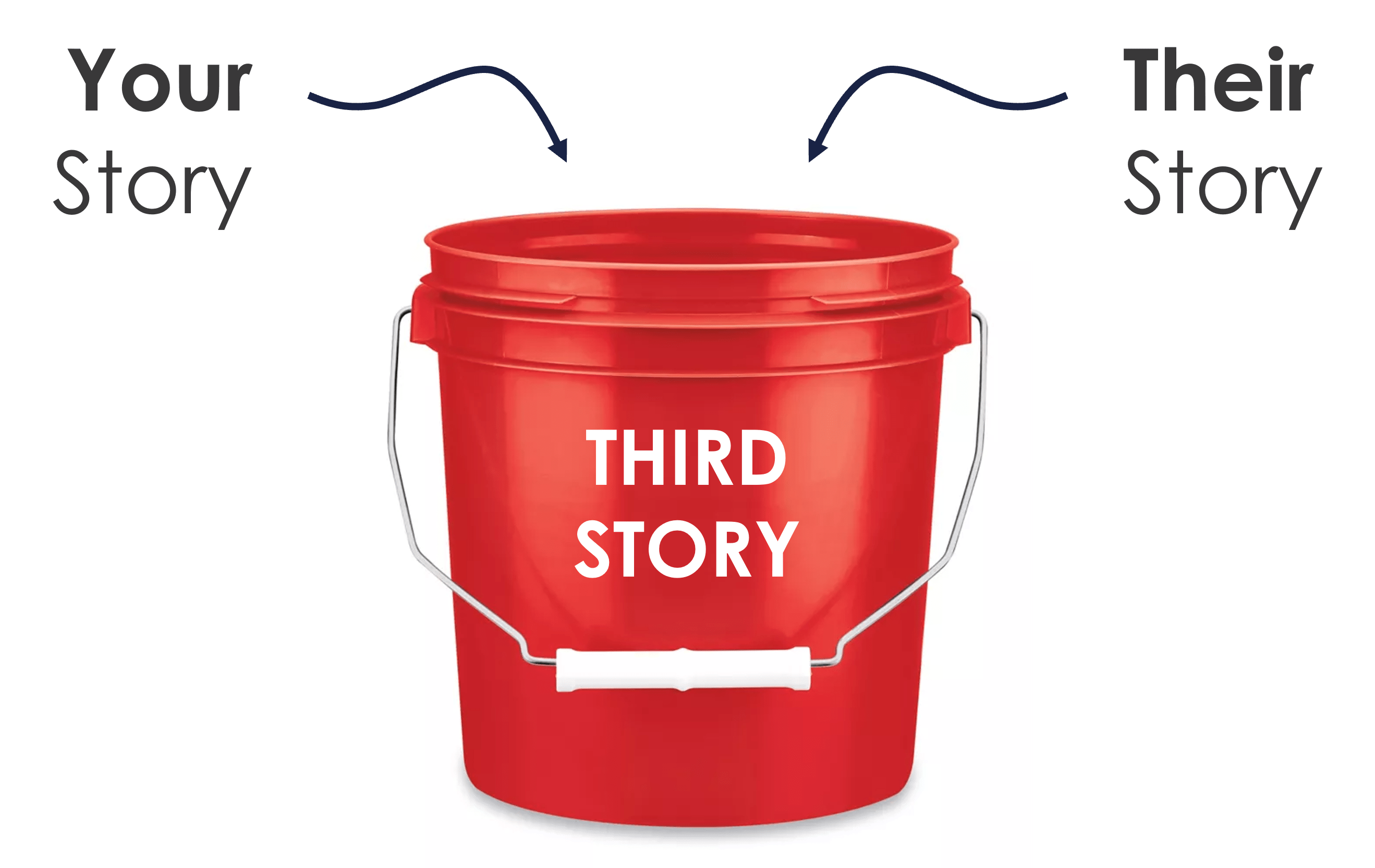 “So, to summarize, I need you to listen to the concerns and questions of your teammates and address them. It’s frustrating for you to have to consider other people’s concerns as you’ve already thought it all through. Further discussion is unnecessary, slows you down, and may interfere with you hitting your numbers. Do I have that right?”
I don’t necessarily have to agree with Leo’s perspective, but I need to get to a place where I understand him, where I can summarize his point of view in a way that he says, “yes, that’s it.” And if that’s not it, then I keep asking questions until we get to the core of the issue. It’s not until we reach that point that we can start problem solving.
It’s this final stage of the conversation that is often more comfortable and familiar – generating options and agreeing on a path forward. It’s best if most of the options come from Leo so that he owns how he wants to move forward but I can offer ideas as well. Together we can agree on a plan and next steps. Be sure to build in support and accountability. “What do you need from me to put this plan into action?” “Let’s schedule time to check-in and see how it’s going.”
“So, to summarize, I need you to listen to the concerns and questions of your teammates and address them. It’s frustrating for you to have to consider other people’s concerns as you’ve already thought it all through. Further discussion is unnecessary, slows you down, and may interfere with you hitting your numbers. Do I have that right?”
I don’t necessarily have to agree with Leo’s perspective, but I need to get to a place where I understand him, where I can summarize his point of view in a way that he says, “yes, that’s it.” And if that’s not it, then I keep asking questions until we get to the core of the issue. It’s not until we reach that point that we can start problem solving.
It’s this final stage of the conversation that is often more comfortable and familiar – generating options and agreeing on a path forward. It’s best if most of the options come from Leo so that he owns how he wants to move forward but I can offer ideas as well. Together we can agree on a plan and next steps. Be sure to build in support and accountability. “What do you need from me to put this plan into action?” “Let’s schedule time to check-in and see how it’s going.”
Manage Yourself
Now, is it ever that easy? Of course not. While it’s helpful to have a map for these conversations, no matter how prepared we are, it never goes exactly how we expect. People are complicated and will almost always throw a wrench into the conversation that we never saw coming. Or they’ll do something that seems perfectly designed to get under our skin – raise their voice, roll their eyes, or say that one thing that touches our most sensitive nerve And so, a big part of the discipline of these conversations is having a plan for how we will manage ourselves in the face of the triggers that could knock us off our game. First, we need to be aware that we’re triggered in the first place. Often, we become our irritation, or our anger. Instead, we need to notice it by tuning into our internal signals – I might notice myself thinking “here we go again with the excuses,” or that my breathing has accelerated, or that I’m starting to feel impatient. These signals are like lights on your car’s dashboard. When the “check engine” light comes on, you don’t smash the dashboard – you check under the hood. The same goes for triggers in tough conversations. Get curious about what the signal is telling you and take corrective action to get yourself back on track before you respond. If we don’t notice and manage our triggers, all sorts of unintended behaviours appear, and we can become the worst version of ourselves. Things start to escalate, or the other person withdraws, and we get further and further from a resolution.The Courage to Coach When it Matters Most
Being effective in these conversations requires the very best of us. It takes self-awareness and being a big person. But the 3×4 Coaching model provides everything we need to succeed. We need to enter the conversation with a generous mindset and clarity on our objective. We deliver a clear opening statement to get the conversation off on the right foot and then drop our agenda to explore the other person’s perspective before we jump into problem solving. It isn’t always comfortable, but the goal of coaching isn’t comfort. It’s about challenging someone to reach their highest potential. It requires the courage to speak up, the patience to wade through the discomfort, and the belief that the people you’re coaching are capable of more. Coaching is, at its core, a deeply human endeavor. It’s a skill that requires empathy, curiosity, and an ability to connect with others on a personal level. Effective coaching demands patience, insight, and adaptability, making it a uniquely human process. Yet, as artificial intelligence (AI) tools like Copilot and ChatGPT become increasingly advanced and widely used, the potential to integrate AI into the coaching process is becoming more apparent. Rather than viewing AI as a replacement for human coaches, we see it as a complement—a tool to augment the learning experience and extend the reach of coaching. Our approach, inspired by our company’s founder Dr. Peter Jensen, is rooted in the idea of AI as “the coach’s coach.” Instead of attempting to replicate the nuanced human interactions of coaching, we’re leveraging AI to sustain learning and assist leaders as they progress toward coaching mastery. AI becomes a tool that helps leaders get comfortable with coaching and sharpens their skills, rather than replacing the critical role of a human coach.Drawing inspiration from “The Coach’s Coach”
Dr. Peter Jensen has been known for decades as “the coach’s coach.” Over 35 years, his focus has been on empowering coaches rather than stepping into their shoes. He works to help them improve their craft and support their teams more effectively, offering guidance, insights, and tools to help them reach their potential. His role isn’t to be the head coach, but instead to act as a mentor and resource for those who are. This philosophy guided us as we considered the potential of AI in leadership and coaching development. What if every leader had access to an AI-powered coach in their pocket—one they could turn to for advice, guidance, and practice whenever they needed it? This vision drives our integration of AI as a tool that complements and supports, rather than competes with, human coaches.Understanding AI’s role in the learning curve
The learning curve is a familiar concept in skill development. It illustrates how people acquire new skills over time, beginning with an initial uncomfortable phase of struggle and slow gains, progressing through steady improvement, and then hitting the final grueling ascent to achieve true mastery. AI’s role is most valuable in the intermediate stages, where learners have built a foundation and consistent practice and support can help them to make big leaps up the curve.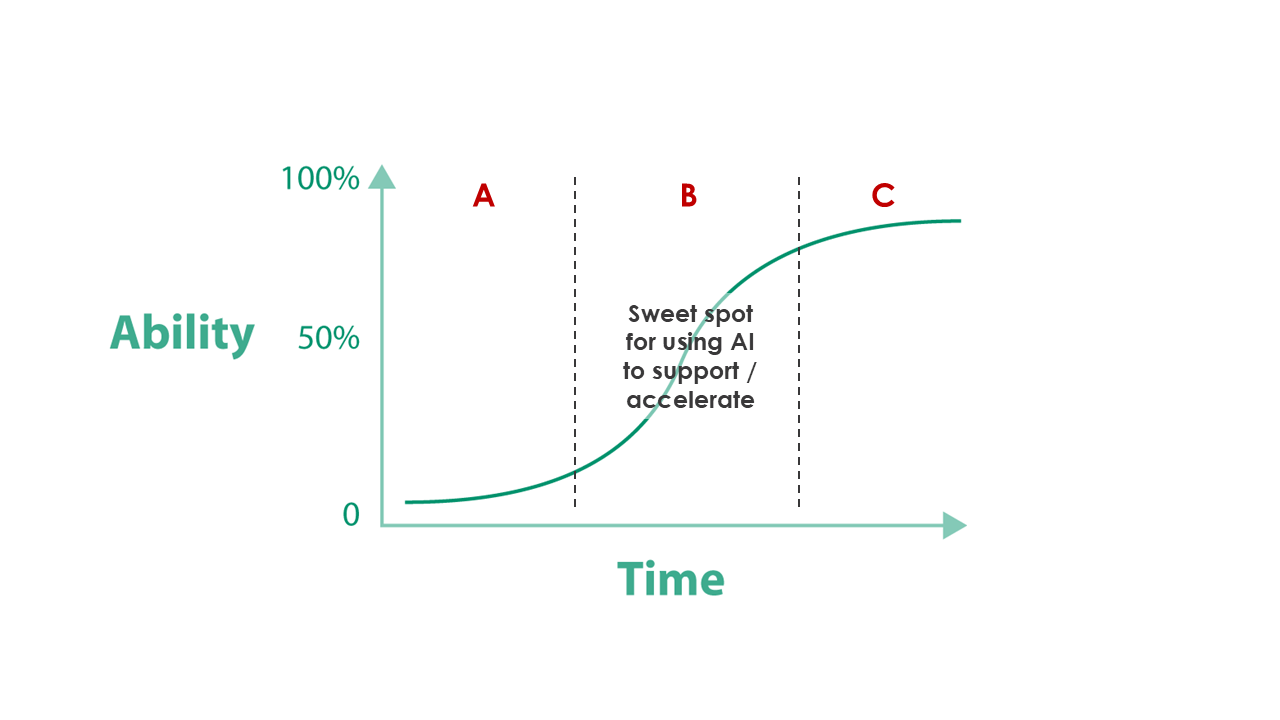
High touch to learn
At the beginning of the learning curve, learners are stepping into unfamiliar territory, and progress can be slow and frustrating. At this stage, motivation, encouragement, and a safe environment to make mistakes are critical. This is where the presence of a human coach is indispensable. Human interaction provides the emotional support and expert guidance that learners need to build confidence and take those first steps.“The goal of this high-touch phase is to equip learners with a solid foundation and prepare them to apply their new skills independently.”For example, in our 3×4 Coaching program, leaders regularly report discomfort with delivering corrective feedback and therefore delay or outright avoid it. In the classroom, we are able to set them up in pods with their peers and, through a triad exercise, show that giving “negative” feedback can be a positive, developmental experience. With the encouragement (and accountability) of their peers, participants take the first steps up the learning curve and start to build confidence. This is not much different than learning to ride a bicycle. Initially, the learner needs someone to hold the bike steady, provide feedback, and offer reassurance. This hands-on support is essential for achieving balance and overcoming the fear of falling. Similarly, in leadership development, learners benefit greatly from in-person workshops or coaching sessions where they can practice new skills, ask questions, and receive real-time feedback. The goal of this high-touch phase is to equip learners with a solid foundation and prepare them to apply their new skills independently.
High tech to transfer
As learners move past the initial hurdles, they enter the middle phase of the learning curve. This is the growth phase, where they’ve gained a basic understanding but need consistent practice to refine their skills and build confidence. At this stage, AI can play a crucial role in supporting learners’ development. AI tools excel at providing scalable, consistent support during this phase. They can simulate real-world scenarios, offer constructive feedback, and serve as a resource for learners to practice and refine their skills. Our pilot programs have confirmed the value of this approach. Leaders who have used our AI tools report that these tools help them apply what they’ve learned in their training programs. For example, our AI tools have been instrumental in helping leaders simulate coaching conversations, deliver feedback effectively, and prepare for performance reviews. By practicing in a non-judgemental, low-stakes environment, they gain confidence and improve their skills before applying them in real-world situations.AI as sustainment
AI is particularly effective at supporting sustainment. To understand this, it’s helpful to distinguish between two types of motivation in the learning process: the motivation to learn and the motivation to transfer.“People are motivated to learn when they encounter new ideas, engaging experiences, or compelling stories.”The motivation to learn is rooted in intellectual curiosity. People are motivated to learn when they encounter new ideas, engaging experiences, or compelling stories. This type of motivation often requires a human touch—someone who can inspire and captivate learners, sparking their interest in the subject matter. These are areas where human coaches excel. They can create dynamic, interactive learning experiences that draw learners in and motivate them to engage with new concepts. The motivation to transfer, on the other hand, is about applying what has been learned in a real-world context. This requires an environment where learners feel supported and confident in their ability to succeed. Motivation to transfer comes from having access to resources, someone to turn to for advice, and a sense of accountability. These are areas where AI shines. By providing tools and guidance for application, AI helps learners bridge the gap between theory and practice. AI can simulate coaching conversations, offer tailored feedback, and provide reminders to keep learners accountable to their goals. It creates an environment where learners can experiment, refine their skills, and build confidence in their abilities—all while supporting their long-term growth.
The future of coaching
The integration of AI into coaching enhances rather than replaces the role of human coaches. While human coaches inspire curiosity, build foundational skills, and connect on a personal level, AI excels at providing scalable, consistent support during the critical growth phase of skill development. This complementary relationship allows learners to benefit from both personalized guidance and accessible tools for practice and refinement. By blending the strengths of human connection and technological capability, we create a sustainable, accessible coaching model. Human coaches can focus on motivation and expertise, while AI supports learners in applying and mastering new skills. This balanced approach ensures coaching remains effective and widely available, fostering a culture where both learners and coaches thrive in an evolving landscape. What could you achieve if every leader in your organization had a coach in their pocket – one they could access at any time to craft the perfect piece of feedback, prepare for a difficult coaching conversation, or get personalized advice for coaching their team? “PJ” is our AI coaching companion that helps leaders apply their coaching skills by offering customized support whenever needed. Developed in partnership with The Modern Office Company, this intuitive and friendly chat bot is the latest advancement in sustainment for our flagship 3×4 Coaching program.What is PJ?
We’re calling PJ The Coach’s Coach. It’s a tool designed to help leaders work through coaching challenges and get advice on applying the 3×4 Coaching model, our framework of 3 plays and 4 skills that exceptional coaches use to deliver results and build commitment.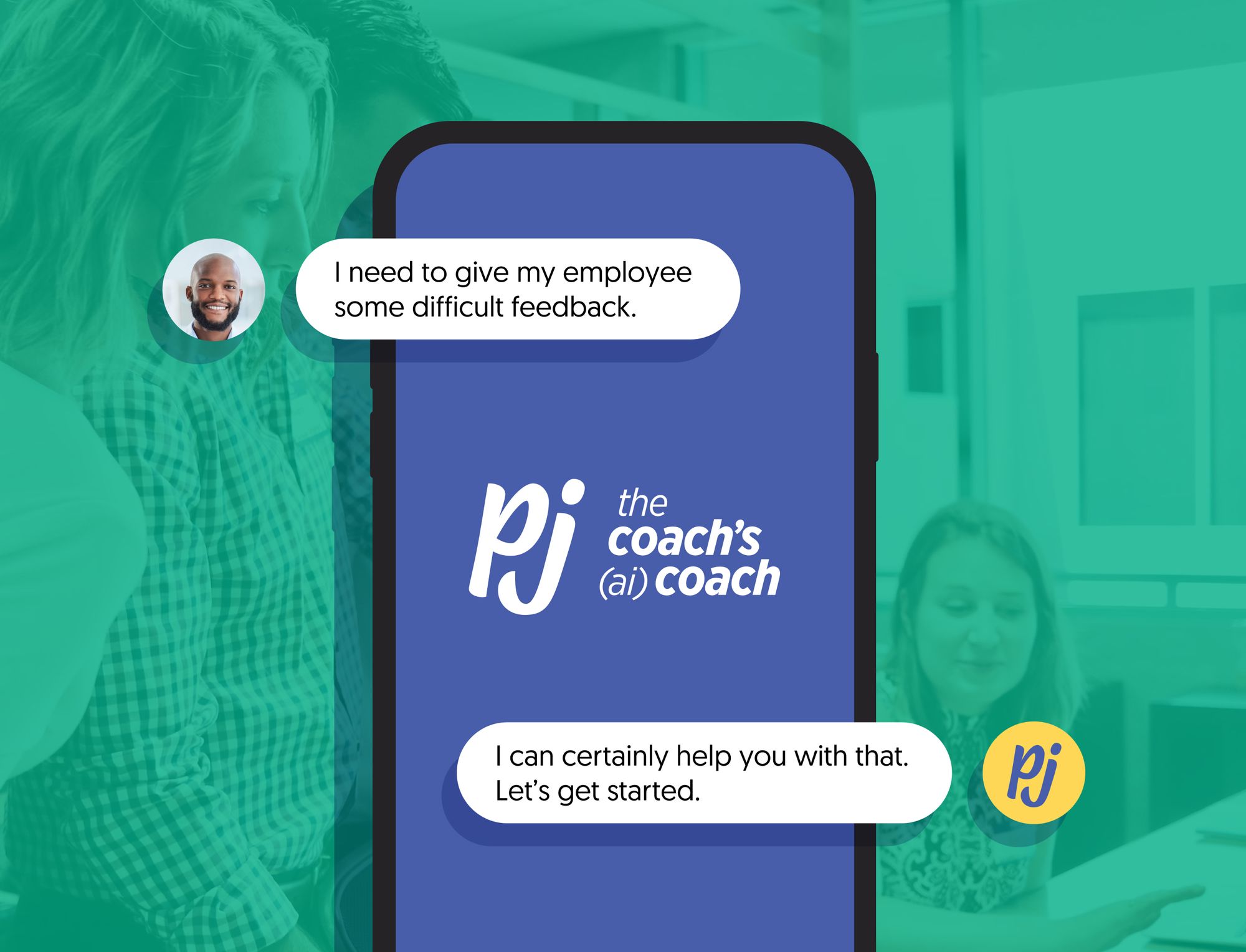 At its heart, PJ is an AI chat bot developed by Third Factor and The Modern Office Company. With a license, you can ask PJ questions and discuss just about anything related to coaching. PJ has been trained in the 3×4 Coaching model and can help you use questions, listening, feedback and confronting to build clarity, improve competence or give recognition.
What really excites us is that PJ is a true coach. Unlike other chat bots that jump straight into giving advice, PJ first listens to understand and asks clarifying questions to get to the heart of every issue. A conversation with PJ flows like a conversation with a real coach – acknowledging the very real challenges of leadership, building clarity about what’s really going on, and generating practical strategies for applying the coaching skills.
At its heart, PJ is an AI chat bot developed by Third Factor and The Modern Office Company. With a license, you can ask PJ questions and discuss just about anything related to coaching. PJ has been trained in the 3×4 Coaching model and can help you use questions, listening, feedback and confronting to build clarity, improve competence or give recognition.
What really excites us is that PJ is a true coach. Unlike other chat bots that jump straight into giving advice, PJ first listens to understand and asks clarifying questions to get to the heart of every issue. A conversation with PJ flows like a conversation with a real coach – acknowledging the very real challenges of leadership, building clarity about what’s really going on, and generating practical strategies for applying the coaching skills.
What can PJ help with?
PJ is designed to help with just about any coaching challenge. Whether you need help building clarity around an issue, delivering difficult feedback, or finding the right way to recognize a team member’s efforts, PJ is there to help. Here is a list of sample prompts you might give PJ across a variety of categories:Work through challenges
- My direct report seems unmotivated and I’m not sure why
- I’m struggling to build a relationship with a new team member
- I’m not sure how to best coach someone with more experience than me
Prepare for a Conversation
- Help me prepare for a challenging conversation with my direct report
- I need to have a team discussion to clarify performance expectations
- How should I deliver feedback on something that I didn’t directly observe?
Enhance skills
- Give me a scenario to practice using the BID feedback model
- What are strategies for improving my active listening?
- How can I get more comfortable with having tough conversations?
Generate ideas
- What are some simple but personalized recognition ideas for my team?
- What are approaches to identify my team’s strengths and weaknesses?
- I’d like ideas for quickly building relationships with new team members
Coach in different contexts
- How do I coach someone from a different generation than me?
- What are strategies for coaching someone who doesn’t report to me?
- How do I adjust my coaching for in-person vs. remote team members?
Deepen coaching knowledge
- Can you explain the concept of ‘developmental bias’ in more detail?
- Does the BID model work for both reinforcing and corrective feedback?
- What does it mean to use emotion as a fuel for change?
See PJ in action
PJ is trained to coach you through problems rather than just giving answers. After you explain what you need, PJ will ask clarifying questions to understand the nature of the coaching challenge. It will then help you discover how to apply the coaching plays and skills to address the issue and help you create a detailed action plan. Here’s a real conversation with PJ about a team member’s punctuality to give you an idea of just what PJ can do.How do I get access to PJ?
PJ is currently in a closed Beta and not available to the general public. If you want to try PJ and give us feedback on how to improve, send us an email explaining your coaching challenge and why you think PJ could help.Hybrid work can be a great model for people who are established in their careers, but it presents unique challenges for those just starting out. Early career employees don’t have the same opportunities to observe the workplace culture and leaders often struggle to provide frequent, specific feedback when not working in the same physical space.
So how will we lead this generation just entering the workforce, for whom “hybrid work” is not even a relevant term because it is the only style of work they know? Effective coaching needs to be part of the DNA of how we lead people now. In practical terms, it involves making the culture visible, creating opportunities to observe performance, and establishing systems to bridge the gap between in-person and remote work in a way that builds trusting relationships.
Make the culture visible
George Bernard Shaw famously noted “the single biggest problem in communication is the illusion that it has occurred.” Early in our careers, workplace culture and the nuances of professional life were communicated to us mostly by simply being in the office. We saw how people interacted outside of meetings and we overheard the words they used with their leaders. Through observation we formed images in our minds that we could then emulate.
It is easy to expect that employees entering the workforce today will similarly absorb these indirect messages. But with fewer opportunities to observe how things work, early career employees are left to make many assumptions about how to successfully navigate a new organization. Compound this with the tremendous ambiguity that remains around so many aspects of hybrid work, and you are likely to run into issues.
One of the greatest coaches we worked with, Jack Donohue, spoke of the need to build sharp clarity before we can offer effective feedback. People cannot do things that they cannot imagine. We need to break down vague concepts such as “flexible work,” “professionalism,” and “remote collaboration” into specific behaviours that people can see in their mind. Perhaps on your team “flexible work” really means that all team members are online and available between the hours of 10am and 3pm, their MS Teams status is always kept up to date, and the entire team is together in the office between 9am and 5pm on Wednesdays. Drilling down to this level of specificity is necessary to build the clarity that will enable early career employees to succeed.
Create opportunities to observe performance
When I was on my first project as a new management consultant, I was tasked with completing the analysis of a large data set. It was a steep learning curve, but I was eager to prove myself. I would continually tell my manager that everything was going well when I was actually working late nights scouring the internet to troubleshoot Excel errors.
My manager eventually called a time-out when she glanced over my shoulder and found me manually moving data around a spreadsheet. While she commended my eagerness to learn, she also pointed out the people sitting beside me who could teach me a much faster approach. “Might it be better to ask one of them for help and then you will know how to do it too?” she asked. A wild idea, I know.
In a hybrid world, we must intentionally create opportunities to observe performance.
It is never easy to teach early career employees everything they need to know in their first job. But it is even more complicated when we do not have opportunities to glance over their shoulder and directly observe their work. In a hybrid world, we must intentionally create these opportunities to observe performance. Working alongside new employees on early projects and joining them in as many meetings as possible is critical to see them in action and identify behaviours to reinforce or adjust.
A leader in one of our coaching workshops liked to regularly use screen sharing capabilities. This allowed her to see the steps that her team member was following and quickly identify process steps that she wanted to either reinforce or adjust. By sharing her own screen, she normalized the practice so that her team was comfortable with the approach. It also made her own work more visible and surfaced process steps that had become so automatic for her that she wouldn’t have otherwise thought to teach them.
When it is not possible to see the person in action, questions are a valuable tool to gain insight into their thinking. One leader we worked with likes to use questions such as “how would you approach this task” or “can you walk me through your thinking” so that he can offer adjustments or additional information before getting started on the task. During regular check-ins, questions such as “what are you most proud of this week” or “what would you like some feedback on” can provide jumping off points to understand how the person is working. The key is to continue asking questions and actively listening until you get below the surface-level responses and uncover specific behaviours to reinforce or adjust through feedback.
Build systems to bridge the gaps
Our Principal Trainer, Garry Watanabe, says issues with early career employees also often arise because they do not yet have mental maps for how things get done in the organization. In the office, getting quick answers is as easy as asking someone who does not look too busy. But when everyone is remote, it is impossible to see who might be warm for an interruption.
Garry suggests pairing early career employees with a peer-level buddy or more experienced mentor who they can go to for help. Providing a dedicated resource empowers them to find the answers they need and removes some of the barriers to seeking help. It also offers a safe way to ask for quick feedback and build confidence, all while freeing up your time together for more meaningful interactions.
Connecting early career employees with other team members in this way provides the added benefit of building relationships across the team, which is the ultimate system for bridging the gaps between in-person and remote work.
Start your people on a path to success
There is no doubt that leading early career employees in a hybrid world introduces new complexities and challenges. But by making the informal aspects of work more explicit, creating opportunities to observe performance, and building systems to bridge the gap, leading in this environment can be just as effective and fulfilling for both leaders and employees.