The Power of Pressure: Read the First Chapter
Enter your name and email address to get access.

“We can BE the best, even when we’re not AT our best.”At PyeongChang in 2018, on the other hand, “before our music even started, I felt different. I felt like a high performer, and I didn’t feel like I needed the judges’ results to prove that for me.” And contrary to the feeling after the 2010 Games, after 2018, “there was real joy and satisfaction that came from the hard work, from the pressure, from all of the things that I would’ve found totally depleting two, four, eight or 12 years earlier.” So what changed? In our conversation with Tessa, three evolutions stood out: embracing discomfort rather than focusing on the number of hours spent in training; a deliberate shift in mindset from chasing perfection to pursuing excellence; and – above all else – a reclamation of personal power.
Bring the skills that elite athletes use to build resilience and perform under pressure to your organization. Contact us to learn more about our resilience programs.
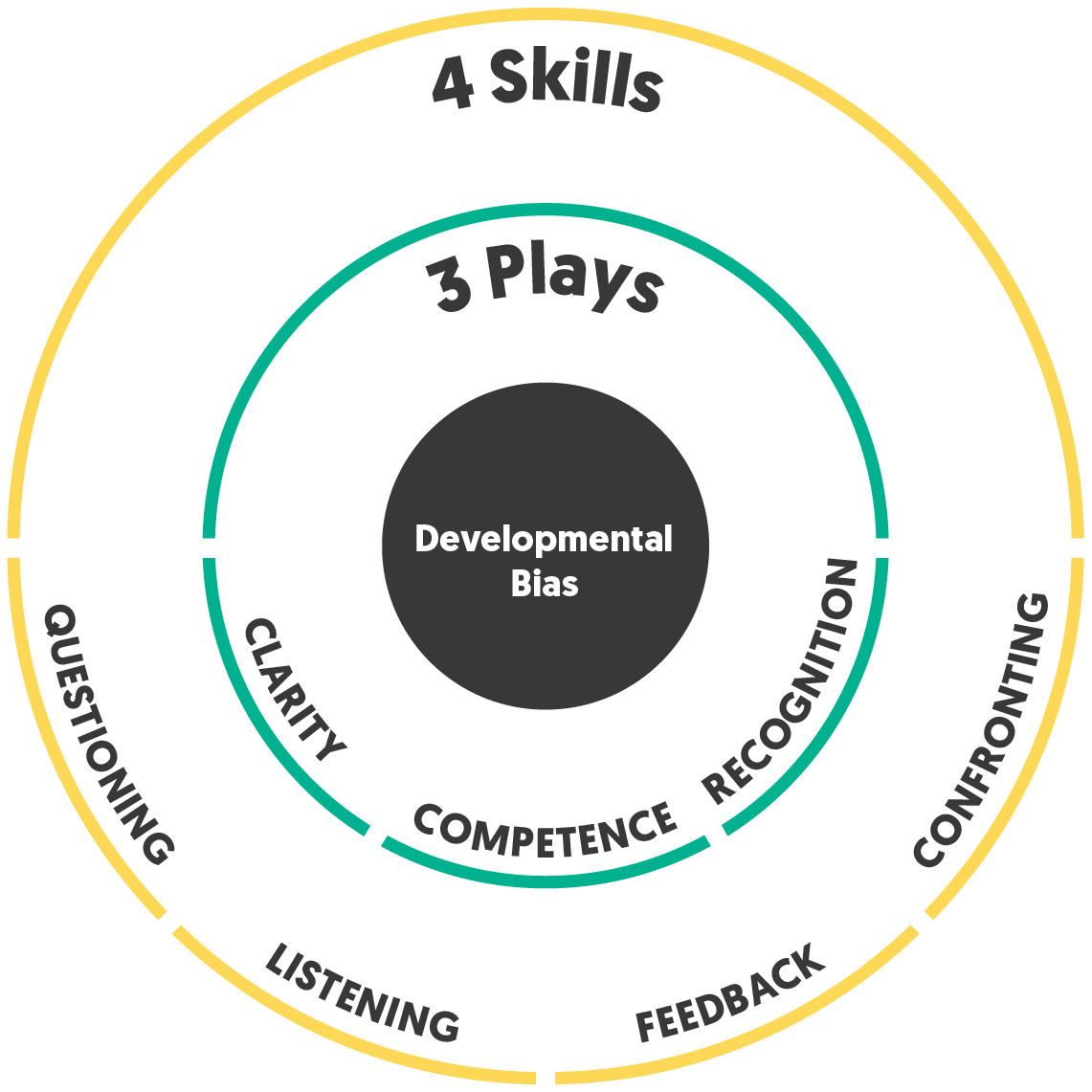
“When done effectively, these conversations can resolve the issue at hand, build the other person’s commitment to making progress, and strengthen the relationship.”It’s easy to see the threats in these conversations but there are also potential benefits. When done effectively, these conversations can resolve the issue at hand, build the other person’s commitment to making progress, and strengthen the relationship if they see you as someone who holds them to a high standard yet cares about them and respects them. So, I choose my challenge: I can avoid the conversation and deal with the fallout – Leo’s behaviour continues, our relationship becomes strained as my frustration seeps out, and I lose credibility with other people who see me allowing this behaviour to continue. Or I can face the discomfort of addressing the issue head-on and put my coaching skills to the test.
 “So, to summarize, I need you to listen to the concerns and questions of your teammates and address them. It’s frustrating for you to have to consider other people’s concerns as you’ve already thought it all through. Further discussion is unnecessary, slows you down, and may interfere with you hitting your numbers. Do I have that right?”
I don’t necessarily have to agree with Leo’s perspective, but I need to get to a place where I understand him, where I can summarize his point of view in a way that he says, “yes, that’s it.” And if that’s not it, then I keep asking questions until we get to the core of the issue. It’s not until we reach that point that we can start problem solving.
It’s this final stage of the conversation that is often more comfortable and familiar – generating options and agreeing on a path forward. It’s best if most of the options come from Leo so that he owns how he wants to move forward but I can offer ideas as well. Together we can agree on a plan and next steps. Be sure to build in support and accountability. “What do you need from me to put this plan into action?” “Let’s schedule time to check-in and see how it’s going.”
“So, to summarize, I need you to listen to the concerns and questions of your teammates and address them. It’s frustrating for you to have to consider other people’s concerns as you’ve already thought it all through. Further discussion is unnecessary, slows you down, and may interfere with you hitting your numbers. Do I have that right?”
I don’t necessarily have to agree with Leo’s perspective, but I need to get to a place where I understand him, where I can summarize his point of view in a way that he says, “yes, that’s it.” And if that’s not it, then I keep asking questions until we get to the core of the issue. It’s not until we reach that point that we can start problem solving.
It’s this final stage of the conversation that is often more comfortable and familiar – generating options and agreeing on a path forward. It’s best if most of the options come from Leo so that he owns how he wants to move forward but I can offer ideas as well. Together we can agree on a plan and next steps. Be sure to build in support and accountability. “What do you need from me to put this plan into action?” “Let’s schedule time to check-in and see how it’s going.”
 Here are three lessons from Rosie’s talk that can help anyone striving for their own version of a gold-medal performance.
“By confronting the possibility of failure, you can free yourself from its grip.”In partnership with her mental performance coach, Rosie sat down and played out two scenarios: what if things go well and I win? And, what if I stumble and fail? With these two scenarios in mind, she vividly worked through how she would feel and what her life would be like: 1 day after, 1 week after, 1 month after, 1 year after, and, eventually, 5 years post-Olympics. Rosie’s realization? Ultimately, the outcome at the Games would have little impact on her life 5 years down the road. Regardless of the outcome she would be okay. This mental exercise allowed Rosie to remove the distraction of fear from her preparation. By confronting failure head-on, she could redirect her energy from worrying about what could go wrong to focusing on what she could control. Whether you’re preparing for a major presentation, launching a new business venture, or pursuing a personal goal – instead of trying to avoid thinking about failure, take the time to visualize the negative scenario. When we “play out the full movie” what we often find is that the fear comes from the fact that we are just imagining a moment in time – an incomplete thought or image that doesn’t reflect the fullness of time. By confronting the possibility of failure, you can free yourself from its grip and focus entirely on performing at your best.
“When we imagine something with enough vivid detail – to our body, it’s real.”Rather than letting this setback derail her preparation, Rosie turned to the power of imagery and visualization. Unable to train physically, she trained mentally. This started with simply imagining herself bouncing on the trampoline again. She shared that, initially after the injury, every time she would close her eyes and visualize jumping on the trampoline – she would see herself falling. With effort and (mental) practice, she was able to start to imagine herself jumping with confidence, and eventually to visualize her entire routine in vivid detail. Remarkably, Rosie finished 4th at the Tokyo Olympics— less than a single point off of the podium featuring the best athletes on the world, all of whom had been training regularly, despite having been unable to physically practice until a single day prior to travel. When we imagine something with enough vivid detail – to our body, it’s real. Some studies estimate that for elite athletes, mental rehearsal delivers roughly 85% of the benefits of physical rehearsal. Rosie’s experience certainly backs up that research. Visualization isn’t just for elite athletes. It’s a tool anyone can use to prepare for high-stakes situations —whether it’s a speech, negotiation, or exam—spend time visualizing your performance. Imagine every detail: the environment, your actions, and the desired outcome. This mental preparation can help you feel more confident and prepared when the moment arrives.
Enter your name and email address to get access.
🏷 Label the negative emotion and engage. Right or wrong, giving it a name helps uncover important information that can be used for moving forward. 👏 Feed the self-coach, not the self-critic. Encourage them to look for the opportunity in the crisis. 🛴 Channel energy to action. Use the moment to build a vision of a better future and build clarity around what it takes to get there.
Strong leaders don’t shy away from negative emotions. They lean into them and help their people use them to recover and grow. Click here to read the article on hbr.org.