
Meet our expert: Peggy Baumgartner, Chief Learning Officer

“How Do I Keep My Team Focused and Engaged When Change Won’t Stop And We Are at Capacity?”
Building, maintaining, and deepening relationships
The deeper your connection with your team, the greater your influence. That relationship is the pipeline through which all communication flows. If that pipeline is clogged or doesn’t exist, it means that when you need strong communication the most, it won’t happen. Which brings me to energy. We often frame the feeling of being overwhelmed as a time management problem. And so we ask ourselves: Where do I find additional time? But many leaders are already great at time management, and that question won’t get you far. The better question is: Where can I find the energy? Pay attention as you move through your day. When does time seem to fly? What fills you up? What are your strengths? You will have far more energy working on things you feel you do well, and it’s remarkable how much gets done when energy is high and how little when it’s depleted. And this isn’t just about you. A big part of your job right now is making sure your people have the energy to do what they need to do. They need to believe in themselves and believe they have the trust and relationship with the person who matters most to them: their leader. And finally, when things do get hard, here is the one habit worth picking up: Stop listening to yourself and start talking to yourself. During hard times, the inner critic gets loud. This is so hard. I’m not on top of things. I can’t do this. The best performers don’t silence that voice by ignoring it. They pause and ask: Is it true? Yes, work is often hard. But does hard mean you’re not good at it? No. It might mean a task is new or difficult. It might mean you’re doing something no one has figured out yet. Get clear on what’s actually true and lead from there.Sustainable leadership for the long haul
Leading through relentless change is genuinely hard. And somewhere in the middle of keeping your team focused, your strategy on track, and your organization moving, it is easy to forget that you are also a person who needs to take care of themselves. The most effective leaders right now are not the ones who have it all figured out. They are the ones who stay honest with themselves, invest in the relationships that matter, manage their energy with the same intention they bring to their calendar, and extend to themselves the same patience and encouragement they would offer anyone on their team. Change will keep coming. The question is not whether you can outrun it. The question is whether you are leading in a way that is sustainable for you and the people counting on you. Be kind to yourself. That is not soft advice. It is how you stay in the game.This question and answer are adapted from a webinar hosted by Queen’s Executive Education featuring a panel led by Dr. Laurence Ashworth (Chair of Queen’s Executive Education), and panelists Peggy Baumgartner (Chief Learning Officer, Third Factor), Dr. Julian Barling (Smith School of Business Professor and Borden Chair of Leadership), and Dr. Lobna Chérif (Royal Military College’s Chair in Resilience). To watch the full Queen’s Executive Education Webinar, click this link.
Key Takeaways:
-
Vulnerability is a leadership tool, not a weakness. When leaders model honesty about what they’re experiencing, they give their teams permission to do the same.
-
Overwhelm is an energy problem, not a time management problem. Ask where you can find energy, not where you can find more hours.
-
Relationships are your pipeline. The deeper your connection with your people, the more effectively communication flows when it matters most.
-
Stop listening to yourself and start talking to yourself. When the inner critic gets loud, pause and ask: is it true? Get clear on what’s actually true, and lead from there.
-
Sustainable leadership requires caring for yourself, not just your team. The leaders who last are the ones who manage their own energy with the same intention they bring to everything else.
From the outside, Karyn and Rod Garossino’s ice dancing performance at the 1988 Calgary Olympics looked like a hometown dream. A brother and sister from rural Alberta. Competing for Canada. An Olympics on home ice. Five flawless performances on the biggest stage in sport. What people saw was excellence. What they did not see was how hard it was to stay steady enough to deliver it. For Karyn, the Olympics were shaped by two moments she could never have predicted. One came before the competition even began, while athletes waited to enter the opening ceremonies. The other came standing at centre ice, when a roaring hometown crowd would not stop cheering. Together, these moments revealed something essential about high performance: preparation matters, but so does an ability to adapt when things do not go as planned.“In high-performance sport, and in fact much of all high performance, consistency is the holy grail.”
–Karyn Garossino
From Carstairs to the Olympic Stage
Karyn and her brother Rod grew up in Carstairs, Alberta, where skating was simply part of Prairie life. What started as a love of the sport became a serious pursuit, supported by strong coaching, family commitment, and years of disciplined training. In 1981, the pair won junior ice dance gold at the Canadian National Skating Championships, and throughout the decade, they competed at the highest level in Canadian, international and World Championships. Then Calgary won the bid to host the 1988 Olympic Games. Suddenly, the idea of competing at a hometown Games became real. As that moment got closer, so did the pressure. Like many athletes facing a once-in-a-lifetime moment, Karyn prepared not only physically but mentally for what it would feel like to perform under a global spotlight.Different Fabric. Same Cloth.
One of Karyn’s most vivid Olympic memories came before the competition started. Athletes from around the world gathered in a staging area ahead of the opening ceremonies. Each team was dressed in its country’s colours. But as the wait stretched on, things got a little playful: jackets were briefly traded, hats and scarves were exchanged, and the differences between teams started to fade.What Karyn felt in that moment was a deep sense of connection and the awe of belonging to the historic Olympic movement. These athletes represented different nations, but they shared similarities – years of sacrifice, discipline, routine, and the pursuit of excellence. In her words, “we were wearing different fabric, but were cut from the same cloth.” One by one the nations left to join the ceremonies saving the host country to march in last. Then Team Canada entered the stadium. The sound of 85,000 people thundered through the building. In that instant, she realized something else: This was not just her Olympics, or even just the athletes’ Olympics It was our Games. The moment belonged to everyone who had made it possible: athletes, coaches, families, volunteers, organizers, sponsors, and an entire country. What she expected to feel as an individual competitor became something much bigger: the incredible honour of wearing red and white and representing the extraordinary collective effort of a nation.“We were wearing different fabric, but were cut from the same cloth.”
The Crowd Wouldn’t Stop Cheering
If the opening ceremonies created awe, the competition brought a different kind of pressure. When Karyn and Rod were announced onto centre ice, the crowd erupted. That part was expected. What was not was that the cheering didn’t stop. Normally, once skaters take their position, the arena quiets and the music begins. But this audience kept cheering, waving flags, and feeding even more energy into the building. The music could not start until the arena settled, so Karyn and Rod stood in position and waited. And waited. For a brief instant, they felt the weight of what was happening. They exchanged a smile and a shared realization: Oh my God, we’re at the Olympics. It was a deeply human moment. But it was also risky. Because even positive energy can get in the way of performance. The challenge was not only handling fear or adversity. It was managing excitement, emotion, and the significance of the moment. Karyn knew they had to get back to what they had trained for. They turned to breathwork, a skill they had practised for years to steady themselves under pressure. Within three exhales, they were back in form. Their activation level dropped. Their focus returned. Their physiology settled. The crowd eventually quieted, the music began, and they performed brilliantly. They achieved a 12th-place Olympic finish. The next year, they would win gold at the senior Canadian Championships. Looking back, what lessons did Karyn learn from her Olympic experience that are helpful to anyone facing high-performance situations? Here, she helps us understand three practical takeaways:Lesson #1: Consistency Is Built Before the Moment
Karyn describes consistency as the holy grail of high performance: the ability to deliver what you are capable of in any condition, not just ideal ones. That consistency was built long before the moment arrived. Karyn and Rod prepared not only their skating but also their mindset. Through imagery and planning, they anticipated the noise, emotion, and pressure of the Games so they would not be overwhelmed. That is a critical lesson for any high achiever – whether in sports or business. The goal is not to hope everything goes perfectly. It is to be ready when it doesn’t. Consistency is not about controlling the environment. It is about training how to respond to it. Listen to Karyn describe how consistency is built before the moment:Lesson #2: Control What You Can Control
One of Karyn’s clearest lessons from Calgary is simple: high performers must learn to distinguish between what they can control and what they cannot. She could not control the crowd. She could not make the audience quiet down. She could not change the scale of the moment. What she could control was her own internal state. That distinction matters because pressure grows when we fixate on things we cannot change. Recovery begins when we return to what we can manage: our breathing, our attention, our preparation, and our next move. In that moment on the ice, the solution for Karyn was not to fight the environment. It was to return to the training that brought her to the Games. Listen to Karyn distinguish what you can control and what you cannot:Lesson #3: Breathwork Is a Performance Skill
Karyn is clear that the breathing exercise she used in Calgary was not improvised. She had practised it for years. Its purpose was to manage the body when the outside world became overwhelming. Slow, controlled breathing gave her a direct way to regulate her physiology and recover focus. Her method was simple: breathe low and breathe slow. Under pressure, breathing rises high into the chest and speeds up. But when breathing starts lower in the body, from the diaphragm, and the exhale lasts longer than the inhale, the body begins to relax. That matters because physiology drives performance. If your body is overstimulated, thinking narrows and execution suffers. When your physiology settles, your trained skill improves. In Calgary, three breaths were enough because Karyn and Rod’s skills were already there. That is what makes breathwork so powerful: it is not just a calming technique; it is a trained performance tool. Listen to Karyn provide insight into how breathwork is a performance skill:Practical Tool: Return to Centre in Three Breaths
When pressure rises unexpectedly, use this simple reset:- Notice the surge: Pay attention to the moment when your energy starts to spike. Maybe your chest tightens, your focus narrows, or your thoughts speed up.
- Breathe low: Drop the breath lower into your body rather than keeping it high in the chest.
- Breathe slowly: Lengthen the exhale so it is longer than the inhale.
- Repeat for three breaths: Use three deliberate breaths to regain control.
- Return to the task: Ask: What can I control right now? Then put your attention there.
Build Resilience In Your Organization
Bring the skills that elite athletes use to build resilience and perform under pressure to your organization. Contact us to learn more about our resilience programs.
Behind the Scenes: When Effort Becomes the Problem
The start of a bobsleigh race creates a paradox. Athletes must be aggressive and explosive. But if they try to force the moment — if adrenaline turns into tension — they slow down. Timing slips. Co-ordination breaks down. The extra effort meant to improve performance actually hurts it. This became even clearer to Lumsden in Olympic sport. In professional football, games happen weekly. In the Olympics, pressure builds for four years toward one moment. That long buildup can either sharpen performance or overwhelm it. “If you’re not mentally prepared,” he explains, “if you haven’t done the work between the ears as much as you have in the gym, your mind is going to break before your body does.” The answer isn’t to remove pressure or hope it feels manageable. The answer is to make sure pressure never feels new.Lesson #1: Pressure Shouldn’t Be Saved for Game Day
In Olympic bobsleigh, the start is critical. A bad start can cost the race. It also happens in the most intense environment athletes face all year. If that intensity appears for the first time on race day, the nervous system reacts as if it’s under threat. Muscles tighten. Timing speeds up. Focus shifts from execution to survival.So teams train for it. “On the bobsleigh side, we manufacture adversity in our training environment,” Lumsden says. “We’ll throw metaphorical sticks in the spokes to see how people respond. We’ll put a hold on the track and turn the noise up really loud. Manufacturing some adversity in the training environment helps build that resilience.” Unexpected delays. Loud noise. Compressed timelines. Sudden changes. These are added on purpose. The goal isn’t to make practice harder just for the sake of it. The goal is to make high-pressure conditions feel normal. On competition day, the body recognizes the intensity. But instead of reacting to it, athletes focus on execution. So the real danger isn’t pressure. It’s surprise pressure. Listen to Jesse describe how pressure shouldn’t be saved for game day:“We’ll throw metaphorical sticks in the spokes to see how people respond… Manufacturing some adversity in the training environment helps build that resilience.”
Lesson #2: Manufacturing Adversity Builds Confidence
When pressure rises, confidence doesn’t come from positive thinking or motivation. It comes from evidence. Athletes need proof they can perform when things aren’t perfect. In high-performance sport, problems are guaranteed. Equipment fails. Schedules change. Mistakes happen. If athletes only train under perfect conditions, any disruption feels like a threat. Manufacturing adversity changes that, Lumsden says. “You do it not because it’s going to happen, but if it does, you’re more prepared … it becomes not a panic moment, but a moment of ‘I’ve been here. Let’s go do our job.’” When athletes practice amid noise, fatigue, uncertainty, and disruption, competition feels manageable. Emotions stay steadier. Decisions stay clear. Execution stays sharp. That’s real confidence. Not the belief that everything will go well, but the knowledge that you can perform even if it doesn’t. Listen to Jesse describe how manufacturing adversity builds confidence:Lesson #3: Optimal Performance Comes from Controlled Intensity
Under pressure, most people try to push harder. More effort. More urgency. More control. In bobsleigh, that backfires. The start of a race requires maximum power, but it also demands rhythm and coordination. When athletes tighten up or force the moment, their speed drops.The same thing happens in business and leadership. High-stakes moments often cause people to rush, over-control, or narrow their focus too much. They try to raise performance but end up lowering clarity instead. As Lumsden says: “If you’re not mentally prepared… your mind is going to break before your body does.” Elite performers learn to operate with high intensity and low tension. Aggressive but composed. Urgent but controlled. That ability doesn’t come from trying to relax in the moment. It comes from repeated exposure to pressure until the body learns how to stay loose at full speed. Listen to Jesse describe how optimal performance comes from contolled internsity:“If you’re not mentally prepared… your mind is going to break before your body does.”
Practical Tool: Manufacture Adversity
One of the most useful lessons from Jesse Lumsden’s experience is simple: Don’t wait for high pressure to show up. Introduce it on purpose. Manufacturing adversity means building controlled challenges into your preparation. Instead of always practicing in calm, predictable settings, recreate the stress you might face later. For example:- Rehearse with background noise or interruptions to strengthen focus
- Shorten preparation time to simulate urgency
- Ask a colleague to introduce unexpected questions or changes
- Practice recovering from mistakes instead of stopping
The surprise silver stirred his competitive spirit: “I should have been so fired up with winning a silver. But I was actually a little bit let down … and it dawned on me that I wanted more.” The next chance for “more” came in the Super G race – Josh’s strength. “When I go fast on snow, everything is slow for me, and I’m actually quite relaxed.” He believed he had a good chance for a medal, and at one point during the race, he was tied for first. Then, near the finish, he lost control. “I did a 360 at 100 kilometres an hour,” he recalls. After that near-miss for a gold medal, Josh’s next opportunity came in the Men’s Combined, a two-part event that blended both the Slalom and Super G. At first glance, it wasn’t an obvious fit. The speed portion suited him. The technical slalom did not. “I’m a speed skier. I love going fast – and so downhill and Super G were really my best opportunities to be successful.” And yet, the morning of the race felt different. “I woke up with a head full of steam,” he says. “I was like, ‘You know what? Today’s my day.’” In speaking with Josh about that day, a day that ended with a gold medal, there were two lessons that stood out:“I should have been so fired up with winning a silver. But I was actually a little bit let down … and it dawned on me that I wanted more.”
Lesson #1: Empty The Cup
Athletes are trained to process doubt – to learn from mistakes and let them go. What Josh discovered in Sochi is that managing the highs can be just as important as managing the lows. On the morning of the Combined, he was riding a wave of anticipation. Then he spoke with his sports psychologist. “He said, ‘How are you feeling?’ and I said to him, ‘You’ll never guess – all night I just kept waking up with the anthem in my head. I’m feeling it. I’m ready.” Instead of celebrating with him, his psychologist offered a reminder: “You know the exercise of letting go of failure and what isn’t in your control? It’s equally applicable to let go of this anticipation, these good feelings … you need to empty the cup out so you can go out with open eyes, open heart and a curious mind.”But letting go of positive emotion proved harder than letting go of failure. “It’s not so hard to let go of failure when you do it all the time – that’s the nature of being an athlete,” Josh reflected, “but the positive moments, you want to ride that wave. It feels really good.” To reset, he turned to breathing work and mindfulness. “I had to really go inside and just let it go… I started to let my heart fill with appreciation for my friends and family back home who had sacrificed so much to allow me to do what I do.” He also thought about his mom and dad and what he learned from them. When Josh was young, his dad stressed to him the joy of effort, while his mom taught him to handle setbacks with grace and to see every step back as an opportunity to grow. That shift reframed the moment. “I’d already realized that I was winning by being there. It wasn’t about crossing the line faster; it was about being open to the day.” Emptying the cup didn’t diminish his intensity. It allowed him to stay present, adapt to conditions and execute. The result was Paralympic gold. Listen to Josh describe how he let go of both positive and negative attachment:“… you need to empty the cup out so you can go out with open eyes, open heart and a curious mind.”
Lesson #2: Replace Confidence With Assurance
During our conversation, I suggested that what Josh was describing sounded like replacing bravado with confidence. He pushed back. “I’m not a confident person, and I never was as an athlete. My superpower was probably that I’m incredibly insecure.” Rather than trying to manufacture confidence, he focused on what he could control: effort. His approach was simple: outwork others, follow the plan, and measure readiness against preparation. He didn’t believe he was the most naturally talented athlete, but no one could take away his work ethic. Before each race, the question wasn’t whether he felt confident. It was whether he had done the work. If the answer was yes, the result could unfold as it would. “It wasn’t confidence. It was assurance,” he said. “I did my best, and if my best is good enough today, well, all right. And if it’s not, at least I did my best.” In Josh’s view, confidence can rise and fall with circumstances. Assurance – built through disciplined preparation – remains steady under pressure. So, when a big moment arrives, he explains, you don’t need to feel confident. You need to know you’ve done the work and that you’re ready for the challenge ahead. Listen to Josh talk about replacing confidence with assurance:Putting It Together
From the outside, Josh’s Sochi performance looks like a story of momentum: a surprise silver followed by a gold medal finish. The story behind the story goes deeper. His performance was grounded in preparation that built assurance and in training to let go of both disappointment and success, so he could stay present when it mattered most. In business, high-stakes moments create similar emotional swings. When results falter, anxiety rises. When things go well, excitement and expectation can take over. Both can distort judgment. Josh’s recipe is simple and can be applied in any domain:- Do the work: Preparation is the foundation of assurance. When you’ve done the work, you don’t need to manufacture confidence – you can rely on what you’ve built.
- Let go of both negative and positive attachment: Don’t cling to mistakes, but don’t get caught up in hype either. Managing success can be just as important as managing failure.
- Enter the moment with an empty cup: Clear out expectation and ego so you can respond to what’s actually happening. Remember: open eyes, open heart and a curious mind.
Meet our expert: Peter Jensen, Founder
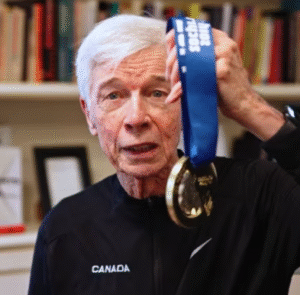
“What Is The Olympic Experience Really Like Behind The Scenes?”
The Games begin before the Games
One of the biggest misconceptions is that pressure suddenly appears for athletes at the Olympics. It doesn’t. It accumulates long before. I used to tell athletes that the start of an Olympic year feels like walking around with an empty backpack. As the year progresses, they start putting things into it without realizing it. Expectations. Hopes. Comments from others such as “You’re the favourite” or “Don’t let us down.” None of it is meant to be harmful, but it all adds mental weight to the backpack. If athletes don’t learn how to empty that backpack, they won’t perform well when it matters. That’s why preparation must include simulation. Before major championships, we would recreate the full competition environment – crowds, judges, uniforms, even the order in which athletes compete – and then debrief it together. One of the most powerful moments for me was watching younger athletes realize that even world champions get nervous. Experience doesn’t remove pressure. It changes how you respond to it.Arrival: awe, structure, and distraction
Arriving at the Olympic Village feels a lot like taking a child to university for the first time. You step off the bus, people help with your bags, you’re shown where you’ll stay, eat, and where everything else is. Then comes the flag-raising ceremony: your anthem, your team, the first moment you fully register that you are at the biggest sporting event on the planet: the Olympics. That moment matters. It grounds you. It also amplifies everything you’re carrying. The village itself is extraordinary. You eat meals with athletes from all over the world. In the Summer Games especially, the scale is overwhelming. It’s inspiring and distracting at the same time. Learning what to engage with, and what to tune out, is part of performing well.Walking into the opening ceremonies
One of the most formative experiences I’ve had was walking into the opening ceremonies. I did it first in Calgary in 1988, and later again in Vancouver in 2010. Walking into the Games in your own country is unlike anything else. The roar of the crowd isn’t just loud – it’s personal. These are your people. The support is energizing, but it also adds another layer of expectation. My experience at the Olympics has caused me to change how I work with athletes. When I talk about the Games with them, I’m not describing something abstract. I know what it feels like in your body to be there: the adrenaline, the noise, the pride, and the responsibility, all at once. It has reinforced something I’ve believed for a long time: preparation isn’t just about skill. It’s about knowing how to respond when emotions are high and attention is pulled in every direction.The reality of daily performance
Most days at the Olympics look nothing like television. They’re built around routines: meals, practices, travel, waiting, and adjusting to constant change. Schedules shift. Buses run late. Events are delayed. Ice gets damaged mid-competition and must be resurfaced. Competing at the Olympics is largely about learning how to manage time and how to return to your routine when that time is disrupted. When delays happen, the question I always ask athletes is simple: Where would you normally be in your preparation right now? Then we go back there, mentally and physically, and continue as planned. Consistency creates stability when conditions aren’t stable.Moments you never forget
Some of the most powerful Olympic moments never make the broadcast. One that has stayed with me happened late at night in Calgary after Elizabeth Manley won her silver medal. Hours earlier, the crowd had been deafening. Now it was just the two of us walking through an underground residence tunnel. Two cleaners looked up, saw her medal, stepped aside, and quietly clapped as she passed. No cameras. No noise. Just recognition. That moment captured the Olympics better than any podium moment ever could.What leaders can learn from the Games
Behind the scenes, the Olympics are not polished or predictable. They’re demanding, human, and full of disruption. The athletes who thrive aren’t the ones who wait for perfect conditions. They’re the ones who know their routines, understand themselves under pressure, and can return to what matters when things go sideways. That lesson applies far beyond sport. High-stakes moments rarely unfold as planned. Performance, whether on the ice or in an organization, comes down to preparation, adaptability, and the ability to stay grounded when the noise gets loud. That’s the part of the Olympics you won’t see on TV. This article launches Third Factor’s Story Behind the Story series, in which we unpack the stories behind both iconic and under-the-radar Olympic and Paralympic moments. For our first feature, Third Factor CEO Dane Jensen sat down with Tessa Virtue – two-time Olympic champion and, with her partner Scott Moir, the most decorated Olympic figure skaters of all time. — From the outside, the story of Tessa Virtue and Scott Moir’s career is simple: show up every four years and win. Gold in Vancouver, silver in Sochi, then, after retiring and un-retiring in spectacular fashion, gold in PyeongChang via one of the Winter Olympics’ all-time iconic performances. But the story behind gold in 2018 is strikingly different than gold in 2010. The lead-up to 2010 in Vancouver was marked by overcoming both injury and conflict: “I had surgery to combat an overuse injury in my legs, and throughout the recovery process Scott and I stopped speaking. We just lost trust.” At the Olympics, Tessa was “counting the number of steps it would take to get to the cafeteria because I knew if I walked those 300 paces, I wouldn’t be able to practise or compete. And so, it felt like the ultimate Hail Mary just worrying about making it to the end of a program.” In the end, talent and hard work – on both recovery and the relationship – aligned to produce one shining moment. Tessa and Scott were crowned the youngest ice dance champions in Olympic history. It was an incredible performance – and one that felt like it would be hard to repeat. “Stepping off the podium in 2010 … I’m not sure I really felt like a winner, if I’m honest,” she says. “There were a lot of factors that had to come together for us to win, and I’m not really sure if I knew stepping off the podium in 2010 that I could replicate that.”“We can BE the best, even when we’re not AT our best.”At PyeongChang in 2018, on the other hand, “before our music even started, I felt different. I felt like a high performer, and I didn’t feel like I needed the judges’ results to prove that for me.” And contrary to the feeling after the 2010 Games, after 2018, “there was real joy and satisfaction that came from the hard work, from the pressure, from all of the things that I would’ve found totally depleting two, four, eight or 12 years earlier.” So what changed? In our conversation with Tessa, three evolutions stood out: embracing discomfort rather than focusing on the number of hours spent in training; a deliberate shift in mindset from chasing perfection to pursuing excellence; and – above all else – a reclamation of personal power.
01. Creating discomfort vs. over-training
After the over-use injuries and surgeries that characterized 2010, the comeback in 2018 was built on less training time – three hours a day instead of 12 – more recovery time, and using the limited training hours to deliberately create imperfect conditions to sharpen their resilience. Whether it was leaving the ice unflooded and chipped, pumping in crowd noise, or falling on command to practise recovery, each practice built confidence that, as Tessa says, “we can BE the best, even when we’re not AT our best.” Here’s Tessa discussing that process:02. Pursuing excellence vs. chasing perfection
In Tessa’s words, “We needed to stop chasing perfection and instead pursue excellence … and once we took perfect off the table, we thought excellence was possible.” Their daily goal became showing up at an “8 out of 10”; not in effort, but in execution. Reframing their approach unhooked them from the impossible standard of perfection and freed them to connect with the joy and challenge of consistent excellence. Listen to Tessa talk about this shift:03. Becoming drivers vs. passengers
At the heart of Tessa and Scott’s story behind the story is reclaiming a sense of agency and self-efficacy. After years of being “good little soldiers,” for their 2018 comeback, they stepped into the driver’s seat: assembling their own team, setting their own standards, and “operating as if we were the CEOs of our own business,” she says. “We had agency and autonomy, we really were steering the ship.” That changed their experience leading up to the Games and, she believes, made the ultimate win more fulfilling. Listen to Tessa talk about this shift: Of course, the effectiveness of these shifts is not limited to sports. We can all benefit from:- Increasing short-burst intensity and building time for recovery instead of focusing on hours worked or busyness as a proxy for effectiveness.
- ‘Roughing up the ice’ to build resilience into our projections, targets, pilots, and project plans instead of making plans that rely on perfect conditions.
- Embracing ‘8 out of 10’ efforts that will produce more from consistency over the long haul instead of aiming for the impossibility of perfection.
- Seeing ourselves as the author of our stories instead of allowing ourselves to fall into the mindset of being characters.
Build Resilience In Your Organization
Bring the skills that elite athletes use to build resilience and perform under pressure to your organization. Contact us to learn more about our resilience programs.
 John Wooden with Lew Alcindor, Lynn Shackelford, Kenny Heitz, and Lucius Allen; Los Angeles Times, CC BY 4.0, via Wikimedia Commons.
Wooden was coaching basketball, but he was also dispensing essential career advice. What he understood was that if you want to be future-proof, the steady refinement of one set of skills isn’t enough.
As Kelly Bradley, the CHRO of RBC, Canada’s largest bank, recently shared: “we talk about [acquiring new skills] as building range. Expanding skills and experiences gives individuals more options and the organization more flexibility. In a world where change is constant, range becomes a strategic advantage.”
John Wooden with Lew Alcindor, Lynn Shackelford, Kenny Heitz, and Lucius Allen; Los Angeles Times, CC BY 4.0, via Wikimedia Commons.
Wooden was coaching basketball, but he was also dispensing essential career advice. What he understood was that if you want to be future-proof, the steady refinement of one set of skills isn’t enough.
As Kelly Bradley, the CHRO of RBC, Canada’s largest bank, recently shared: “we talk about [acquiring new skills] as building range. Expanding skills and experiences gives individuals more options and the organization more flexibility. In a world where change is constant, range becomes a strategic advantage.”
“In a world where change is constant, range becomes a strategic advantage.”Now more than ever, a future-proof career hinges on the ability to acquire new skills that allow you to adapt to a new reality. So, can you get better at building range? Well, that’s where meta-skills come into play.
Skills and Meta-Skills in Action: The Pharmacist
Consider someone who has been a pharmacist for the past 20 years. They came out of University with a Chemistry degree and started working in a job that required two primary skills: chemistry to compound the medication and math to count pills and work the cash register. As technology advanced, the compounding and dispensing part of the role became more automated, and the role of pharmacists expanded greatly to include services like medicine reviews for Seniors, diabetic counseling, celiac counseling, flu shots, diagnosing and prescribing, and more. Suddenly, being a pharmacist also required customer service (or even sales) skills, and the process savvy to manage an automated dispensing process. Fast forward, and we can easily imagine the role evolving to require mental health counseling skills, tech savvy to perform diagnostics to deliver personalized medicine, and more.Figure 1 – A Pharmacist’s Journey: Skills vs. Meta-Skills
 These different sets of skills anchor execution at different points in time – but what enables our pharmacist to evolve from one set of skills to another and remain successful over time are meta-skills. These are the capabilities that allow someone to consistently and repeatedly let go of old skills that have anchored their success and acquire and learn new ones.
Getting Better at Building Range: Three Imperatives
The discipline of evolving and building range can be broken down into three imperatives: see clearly, move quickly, and stay the course.01.
See clearly Build self-awareness and empathy.
02.
Move quickly Strengthen flexibility, creativity, and learning capacity.
03.
Stay the course Cultivate resilience
01. See Clearly
Acquiring new skills starts with developing a great radar: Where am I strong? Where am I falling behind? What do I need to work on developing? Self-awareness is half of the battle, but an under-appreciated meta-skill is honing the ability to listen to critique with empathy rather than resistance. When someone points out a gap or limitation in your skill-set – instead of pushing back, consider “what are they seeing that I’m not? How could that help me identify a skill I need to build?”02. Move Quickly
Strengthening learning capacity is at the heart of moving more quickly to build range. The faster you can move up learning curves, the easier it is to acquire new skills. There are many great resources that can help you get better at learning – but one of my favourites (which also happens to be free) is the Learning How to Learn course taught by the wonderful Dr. Barbara Oakley.03. Stay the Course
Finally, the journey of evolution is not a straight line. Adults hate being at the bottom of learning curves, and the journey up those curves is fraught with pressure, discomfort and setbacks. It is much more comfortable to refine one skill set over time than it is to build range. One of the most effective ways to build resilience is to focus on relationships: who else is working towards the same goals as you? Who can you learn alongside? Who will push you, support you, and absolve you of the guilt we all feel from not being enough? Identifying 2-3 people who can be in your ‘training group’ can be a well-spring of resilience.Meta-Skills: Crystal Ball Optional
Jeff Bezos famously said that he built Amazon around the belief that at no point would people want to pay higher prices or have worse product selection. As he stated at the time: “I very frequently get the question: ‘What’s going to change in the next 10 years?’… I almost never get the question: ‘What’s not going to change in the next 10 years?’ And I submit to you that that second question is the more important of the two.” Meta-skills are that rare example of something that will not change. There is no crystal ball required to see that the future will be different than the present, success in that future will require new and different skills, and an ability to spot critical skills, rapidly learn, and stay the course through the learning curve will be an advantage.“Individuals who invest in strengthening their awareness, learning capacity and resilience can become irreplaceable”Investing in meta-skills will pay a guaranteed return for both organizations and individuals. Organizations that invest in building meta-skills at scale will be rewarded with a talent pool that can adapt to new requirements and deploy new capabilities with greater ease and speed. Individuals who invest in strengthening their awareness, learning capacity and resilience can become irreplaceable. Rosie MacLennan is a powerhouse: she was the first Canadian athlete to defend a gold medal at a summer Olympics by winning back-to-back golds in trampoline in 2016 and 2020, she served as the Chair of the Athletes Commission at the COC and fought tirelessly for safe sport, and she has an MBA from Stanford. We were fortunate enough to have Rosie join us at our annual Third Factor client dinner a short time ago, where she shared a behind-the-scenes look at her path to Olympic triumph, the significant challenges she faced on the journey, and the tools she used to help overcome them.
 Here are three lessons from Rosie’s talk that can help anyone striving for their own version of a gold-medal performance.
1: Confront failure head-on
One of Rosie’s most interesting insights was slightly counter-intuitive: when the fear of failure is strong, don’t shy away from it – lean into it. Ahead of the Olympics, Rosie consciously worked to confront the possibility of failure directly, and work through her worst-case scenario in vivid detail.“By confronting the possibility of failure, you can free yourself from its grip.”In partnership with her mental performance coach, Rosie sat down and played out two scenarios: what if things go well and I win? And, what if I stumble and fail? With these two scenarios in mind, she vividly worked through how she would feel and what her life would be like: 1 day after, 1 week after, 1 month after, 1 year after, and, eventually, 5 years post-Olympics. Rosie’s realization? Ultimately, the outcome at the Games would have little impact on her life 5 years down the road. Regardless of the outcome she would be okay. This mental exercise allowed Rosie to remove the distraction of fear from her preparation. By confronting failure head-on, she could redirect her energy from worrying about what could go wrong to focusing on what she could control. Whether you’re preparing for a major presentation, launching a new business venture, or pursuing a personal goal – instead of trying to avoid thinking about failure, take the time to visualize the negative scenario. When we “play out the full movie” what we often find is that the fear comes from the fact that we are just imagining a moment in time – an incomplete thought or image that doesn’t reflect the fullness of time. By confronting the possibility of failure, you can free yourself from its grip and focus entirely on performing at your best.
2: Embrace direct feedback
Rosie’s coach, Dave Ross, is known for a style that is extremely candid. While some athletes balked at his bluntness, Rosie saw something deeper: a genuine commitment to helping her succeed. She understood that behind his straightforward critiques was a profound belief in her potential. Instead of resisting his feedback, she consciously worked to lean into it, using it as information to unlock higher levels of performance. This ability to harness the value in blunt feedback came from her taking the time to understand Dave as a person. She took the time to look beyond personality and style to understand his values and ultimately his character. These insights didn’t just unlock her own performance, they also allowed her to help other athletes shift their perspective on Dave’s feedback by sharing her insights into what was behind his style. When you find yourself chafing at direct feedback, consider the intent of the person delivering it. Where are they coming from? What are they trying to help you accomplish? Often, others are trying to help – even when their wording or approach might trigger some reactivity.3: Use visualization to overcome obstacles
In the lead-up to the Tokyo Olympics, Rosie faced a daunting challenge: a series of serious ankle injuries that left her unable to perform her trampoline routine for weeks. In fact, she was unable to practice her full routine until one day before leaving for the Games.“When we imagine something with enough vivid detail – to our body, it’s real.”Rather than letting this setback derail her preparation, Rosie turned to the power of imagery and visualization. Unable to train physically, she trained mentally. This started with simply imagining herself bouncing on the trampoline again. She shared that, initially after the injury, every time she would close her eyes and visualize jumping on the trampoline – she would see herself falling. With effort and (mental) practice, she was able to start to imagine herself jumping with confidence, and eventually to visualize her entire routine in vivid detail. Remarkably, Rosie finished 4th at the Tokyo Olympics— less than a single point off of the podium featuring the best athletes on the world, all of whom had been training regularly, despite having been unable to physically practice until a single day prior to travel. When we imagine something with enough vivid detail – to our body, it’s real. Some studies estimate that for elite athletes, mental rehearsal delivers roughly 85% of the benefits of physical rehearsal. Rosie’s experience certainly backs up that research. Visualization isn’t just for elite athletes. It’s a tool anyone can use to prepare for high-stakes situations —whether it’s a speech, negotiation, or exam—spend time visualizing your performance. Imagine every detail: the environment, your actions, and the desired outcome. This mental preparation can help you feel more confident and prepared when the moment arrives.