Register for updates
Enter your information below to be notified when this breakfast event is rescheduled.

What can you expect at this event? Take a look at this recap from our last executive breakfast.
 Olympian Karyn Garossino, BA, M. Ed., brings a combination of insight and grit from 40+ years of being coached and coaching others. Her experience at the highest levels of elite sport, Master’s Degree in psychology and adult education, and experience working with thousands of leaders in business and government bring huge depth to her understanding what it takes to thrive under pressure—and to lead others to do the same.
 Just minutes from Union Station on Toronto’s waterfront, OCAD U CO is a state-of-the-art 14,000 square foot studio designed specifically for collaborative innovation work. The space features is home to 20 resident design-led startups, a suite of formal and informal meeting spaces, and is the setting for our program, How To Lead Innovation, which we run in partnership with OCAD U CO and the Smith School of Business at Queen’s University.
This event has been postponed. Be the first to know when it’s rescheduled by entering your information below.
“We realized that a lot of what was happening was the blame game.”Through a frank, players-only discussion the team was able to come together, but the conversation could have gone a number of different ways. It stayed on track because the team was prepared – mentally and emotionally – to have performance conversations under pressure and surface a number of issues the team needed to resolve. And that preparation turned out to be an important stepping stone to winning gold in Salt Lake City.
“The biggest opportunity for meaningful growth is often to increase self-awareness and strengthen their ability to communicate productively when under pressure.”We’ve worked with hundreds of teams in elite sport and business, including the last four medal-winning Canadian women’s hockey teams. One of the things we’ve learned is that when teams are already operating at a high level, the biggest opportunity for meaningful growth is often to increase their self-awareness and strengthen their ability to communicate productively when under pressure. To support this, we’ve developed a process to help teams become more aware of their tendencies, develop systems and practice performance conversations anytime. At the heart of this process is a tool called the TAIS – The Attentional and Interpersonal Styles inventory. The TAIS was developed for use by Navy SEALs and Olympic athletes, and we’ve found it to be an incredibly valuable tool for diagnosing communication challenges on all kinds of teams. When the pressure is on, when teams are in the midst of setbacks and failure, individuals will fall back on their default communication styles.
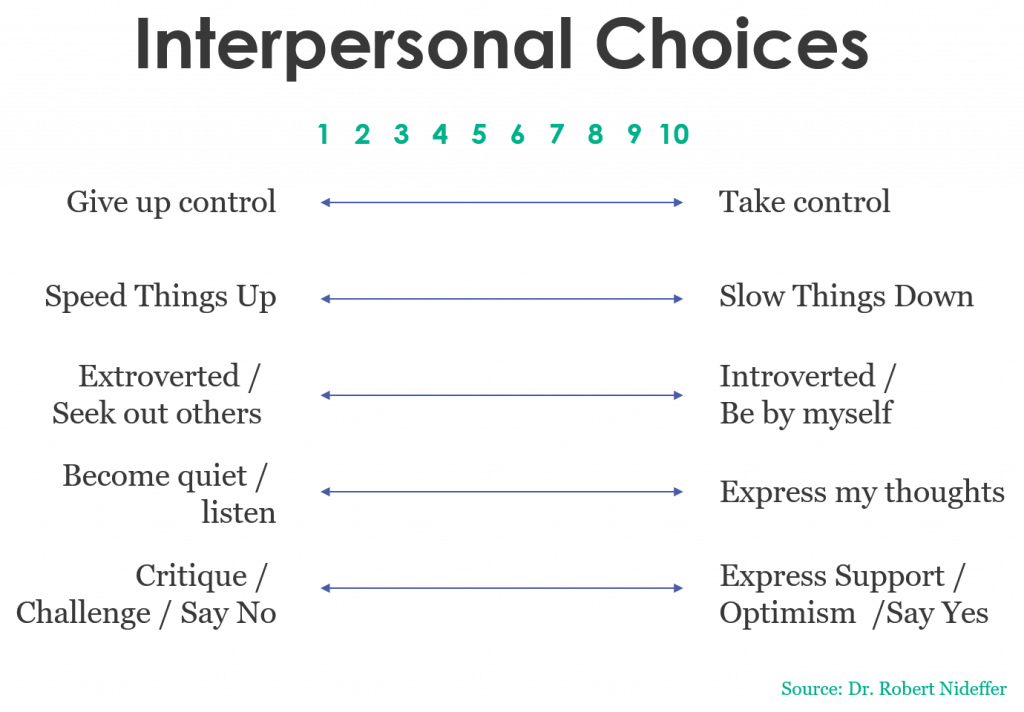
The next time you’re headed into a potentially high stakes conversations, use the five choices below to carry out a short 3-step preparation exercise:
1. Plot your default tendency on each of the five scales – given your past history, where are you most likely to fall?
2. Where would you ideally like to be as you head into this specific interaction?
3. What are the gaps between your ideal and default style? What actions will you take to ensure you are at your ideal?
Brian Orser describes the media frenzy and inescapable layers of pressure he felt leading up to the ‘Battle of the Brians’ on home ice at the 1988 Calgary Olympics.“There was a media frenzy”
Tracy Wilson shares how she practiced the emotional moments in advance of competition at the 1988 Olympic Games in Calgary.“What got me so excited was representing Canada”
Brian Orser talks about how he established and practiced routines for any situation, whether he had to skate first or wait around to skate 6th.“We were prepared for any scenario”
Tracy Wilson explains how leaning into emotions can help performers diffuse tension and how coaches can use communication to help their team members perform at critical moments. We all know that we need to move our training focus beyond simply acquiring knowledge; success in training is about the application of new knowledge and skills – it’s about behaviour change. Unfortunately, right now we are failing in this mission: only 10-20% of what people learn in a training session is transferred back to the workplace. The reason? Recent research shows us that there is a distinction between a ‘motivation to learn’ and a ‘motivation to transfer’, and while most organizations are good at tapping into the first source of motivation, the second is often left unaddressed. Drawing on her 20+ years of experience in the corporate training world, Peggy Baumgartner debunks two common fallacies surrounding what it takes to tap into this ‘motivation to transfer’ – and highlight a strategy that we use at Third Factor to close the gap between learning and doing, and ensure successful application of the knowledge gained in learning events. Click here to download the whitepaper. For many of us, our role as manager does not end in the workplace – we are also managers of our household. Our greatest responsibility in life is to support the healthy growth and development of our children. Just as managers devote time towards guiding and mentoring their talent, as parents we can play a similar role in our children’s lives to help ensure healthy high performance. Garry Watanabe provides advice on how to best support your children as they pursue expertise in a certain domain. The advice given is based on Third Factor’s extensive work with high performers, whether they be Olympic athletes or top business executives. Overall, developing expertise is a journey –one in which you and your children should not be alone on. Click here to download the whitepaper. Sport can be a positive source of growth in our children’s lives, but can also do great damage. As a parent, you can make the difference. We all want our children to excel in the sports that they’re engaged in, however, we have a much greater role: to ensure that our children succeed in life. This means that it is more worthwhile to focus on building skills like teamwork and confidence than it is to focus on the win itself. Sandra Stark, having been exposed to the worlds of both motherhood and coaching, reflects on her experience so that you can be a ‘positive participant’ in your child’s athletics. Click here to download the whitepaper.“I hate this part”