If you’ve read Dane Jensen’s book, The Power of Pressure, you may have enjoyed the title of Chapter 9: Sleep and Other Inconvenient Necessities.
Like it or not, downtime is essential for performance under pressure over the long haul. High performers prioritize sleep, nutrition, and breaks to stay fresh and energized. That’s why we’re always excited to share our summer reading list: there’s no better break than some time off over the summer with a good book.
Whether you want to learn something new or veg out with an easy read, you’ll find your perfect summer book on this list. Here’s what our team recommends for 2022.
Peggy Baumgartner, Chief Learning Officer
The Power of Regret by Daniel Pink
When people ask me what about my regrets in life, I always say I have none. Yet Daniel Pink's research points to regret bringing clarity, meaning and focus to all that is important to a person. My flip answer of ‘no regrets’ reflects my optimistic personality, and this summer I will get a little more curious about the value of digging a little deeper to see what I can learn. I would love to hear from others who explore this ‘new to me’ emotion.
Easily my most gifted book of the past year, Why We Sleep is a tour de force exploration of the nature, benefits, and challenges of sleep. The research Walker cites is profound and varied, and the way he presents it is engaging, accessible and actionable. Whether you are looking for the motivation to commit to more sleep or strategies to sleep longer or better, you’ll find it in here. Plus, as a bonus, it’s the only book I’ve read where the author actually encourages you to fall asleep while reading.
While it appears to be a book about finance, this book uses stories about people and money as a way of illustrating the real world dynamics of human behaviour. The content is entertaining, the writing clear and the insights well worth pondering.
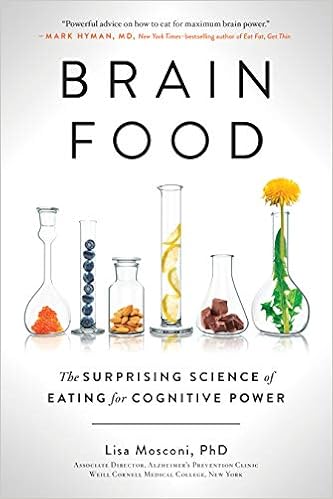
While this book has Alzheimer’s prevention at its heart, it’s a powerful read for anyone who wants to “do good” for their brain to improve memory, prevent cognitive decline, and eliminate brain fog. Packed with tons of practical information backed by research, this is an easy-to-read perspective on how we help our most vulnerable organ (the brain) by digging deep into the fat, protein, carbs, sugars, vitamins, and minerals it needs to function optimally.
I borrowed this book from a friend around a decade ago and never gave it back, with good reason. Dr. Posen breaks down stress using simple stories, relevant information, and a few hard truths. The book is divided into 52 (mercifully short) chapters, each ending with a highly actionable "prescription" to help you convert the concepts into action and make small changes that add up to a much healthier relationship with life's demands.
Where the Crawdads Sing (Recommended by Reese’s Book Club and my Hockey Moms Book Club) is about Kya Clark, an isolated, abandoned “Marsh Girl” who is educated in the swamps of North Carolina living deep with nature. A coming-of-age novel that covers prejudice, friendship, solitude, desertion, and education, the narrative is as rich as the setting Owens describes. Make sure to read it before the motion picture comes out this summer.
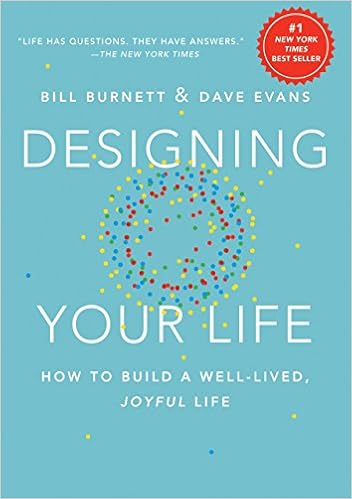
My pick provides a fascinating look at how you can apply design thinking to your own life to create options, possibilities, and a mindset that allows you to craft a life well-lived. Haven’t been to design school? Don’t see yourself as a creative person? No problem. Get this book, grab a notepad, and be ready to think outside the box, because Bill and Dave will take you step by step through a series of exercises that will get you thinking like a designer to solve problems and mental blocks, brainstorm the “many lives” you could live productively and happily, then choose the one that speaks to you most. Happy summer reading!
This is a fun history book about film, music, sports, politics, culture, global events, and the momentum of the internet. If you are interested in reliving the nineties in an unconventional manner, this is a terrific read. Chuck Klosterman writes with engaging insight and humor that will evoke both memories and questions and explains things I wasn't able to explain for myself.
For those who love historical novels with a twist, this is a fabulous read. It is the story of a young, bright woman with a restless spirit who rebels against the mores of her time. Sue Monk is a daring woman herself as she introduces Jesus who meets up with this young woman when they are both older teenagers and marries her. It is a marriage of convenience that serves both well. The writing is grounded in meticulous research and written with a reverential approach to Jesus’ life that focuses on his humanity. And it is an inspiring and unforgettable account of one woman’s bold struggle to realize her own potential in a dangerous time for women to speak up. More than that, it is just great story telling and good writing. I love learning about historical periods in this way. Enjoy.
Alexis Ullerick, Program Logistics Lead
The Productivity Project by Chris Bailey
My pick synthesizes the findings of the author’s year long project to become as productive as possible. Grounded in the concept that productivity comes from managing your time, attention, and energy, Bailey shares his year long journey of productivity experiments like getting up at 5:30 every morning, cutting out caffeine, becoming more intentional and deliberate in his work, and so many more. Each chapter includes a challenge to implement his insights into your own life. Chris Bailey’s writing is fun and witty! When I finished the book I felt like I’d gained a year’s worth of knowledge in just a few days, which already had me feeling pretty productive!
Many websites use affiliate links to make money when you buy something from Amazon – we don’t. Feel free to follow the links provided or pick up the book you want from your favourite local bookseller.
How Leaders Enable High-Performing Hybrid Teams
The transition to a hybrid work model is replete with hazard and risk: Can our people adapt to yet another major change in the way we do business?
It also presents a unique opportunity to create new systems that work for companies and people – a culture of high performance in which people are truly committed. To capitalize on this opportunity, organizations need leaders who are motivated by a compelling vision of what’s possible and can adapt their skills to shape their environment.
In this webinar, Third Factor Principal Trainer,
Garry Watanabe, will uncover the opportunity present in the transition to hybrid work and showcase how leaders can get the most from it. The session will explore the challenges and advantages of hybrid work from a leader’s perspective, present an approach for building consensus and commitment in the face of novel problems, and introduce strategies to overcome some of hybrid work’s biggest challenges.
You’ll leave with an exciting vision for a high-performing hybrid culture, a clear understanding of your people leaders’ assets and challenges in a hybrid environment, and insight to how leadership competencies can be adapted for hybrid teams.
You should attend if:
- You’re responsible for maintaining employee engagement in the transition to a hybrid work environment
- You’re responsible for developing leadership competency for a hybrid model of work
- You’re a senior leader concerned about hybrid work’s impact on performance
- You want new ideas and practical tools for leading your own hybrid team
How Leaders Enable High-Performing Hybrid Teams
Sorry we missed you
This event has passed, but it won’t be the last. Be the first to know about future webinars from Third Factor by entering your information below.
 About the presenter:
Garry Watanabe
About the presenter:
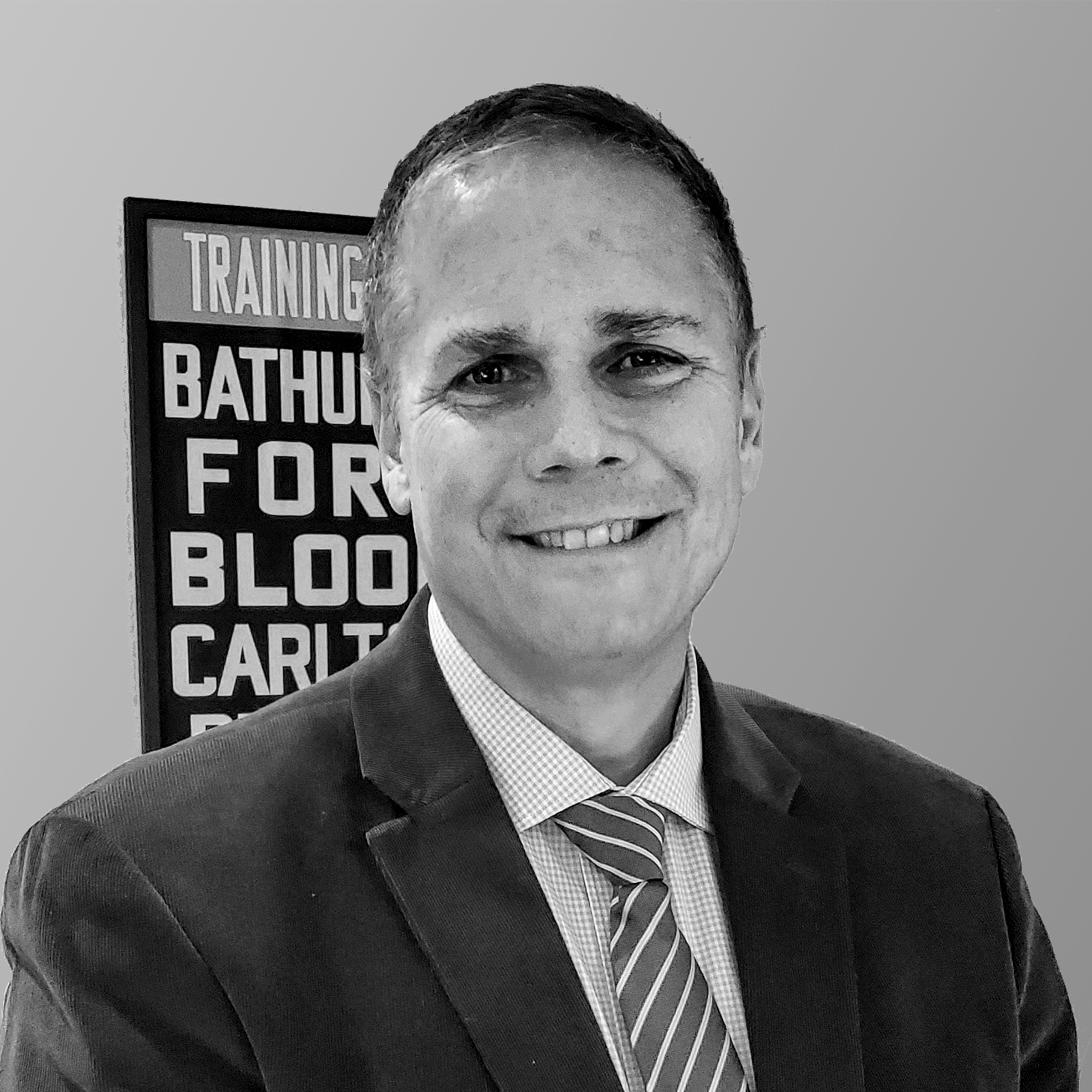
Garry Watanabe is a lawyer, an instructor at the Smith School of Business at Queen’s University, an inspirational speaker, and holds a Masters Degree in Sport Psychology. Whether he’s on the pool deck, in the classroom, or at the lectern, Garry is the consummate coach.
Our company’s roots go back to the 1988 Olympic Games in Calgary, Alberta. Our founders, Peter Jensen and Sandra Stark, were mental performance coaches to Canada’s figure skating team – a team that won 3 out of Canada’s 5 medals on home soil. The business community took notice, and Peter and Sandra were soon working with organizations across the country to apply the principles they used in sport to a wide variety of other settings.
Fast forward to 2022 and Olympic Sport is still our top R&D lab. We work with athletes and coaches at the highest level to understand how they perform, collaborate and lead, and synthesize their best practices for use across disciplines – from business, to academia, industry, philanthropy and beyond.
We’ve had the privilege of working with dozens of athletes and coaches who are representing Canada at the Beijing Games. Here’s a roundup of who we’ll be cheering for this February.
The Canadian Ski Team
Ski Cross is one of the most exciting freestyle skiing events at the Games. We’ve been proud to work with the athletes and coaches on both the men’s and women’s teams to help them build self-awareness, leverage their strengths, and perform under pressure. We’ll be cheering them on in the Ski Cross events on February 17th & 18th.
Our work with Alpine Canada has also taken us to the downhill skiing events. We’ll be keeping a close eye on Team Canada at the men’s and women’s Slalom, Giant Slalom, and Super-G events.
Figure skaters from around the world
Brian Orser and Tracy Wilson are not just Olympic medallists, but widely regarded as the top coaches in the sport. They’ve shared their perspectives on performing in critical moments with us, and we’ll be cheering on their skaters as they compete for the podium in Beijing.
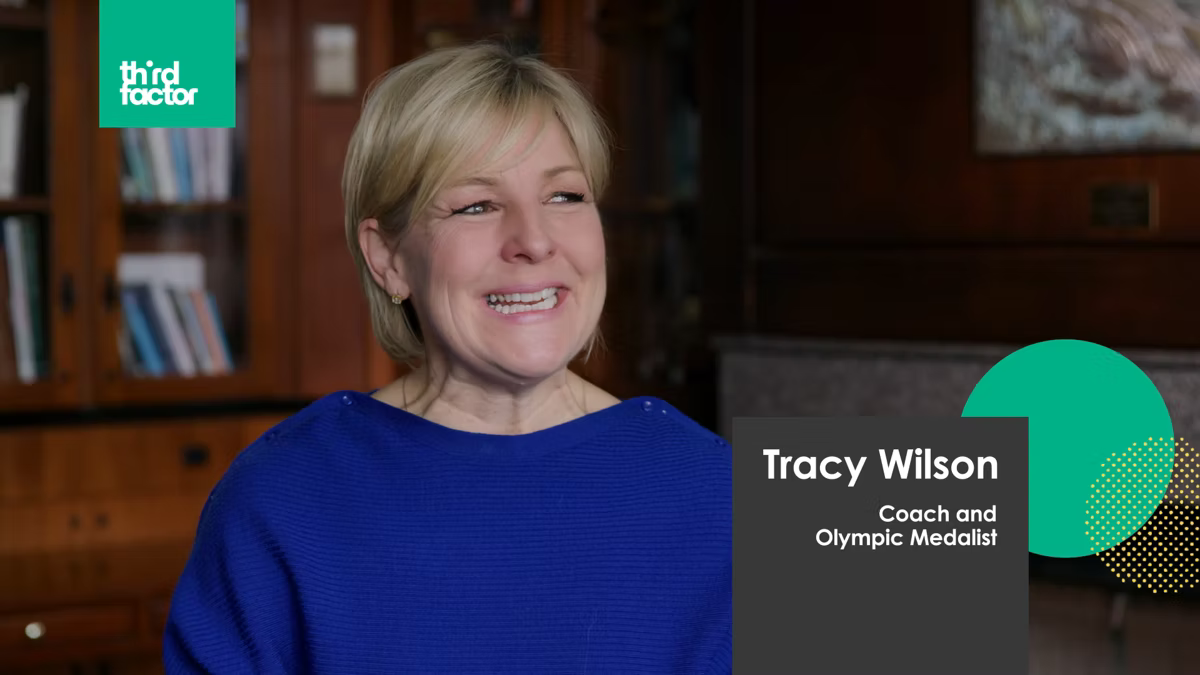 Tracy Wilson is an Olympic Medallist and 7-time Canadian champion
The Canadian Women’s Hockey Teams
We’ll be staying up late to watch Team Canada battle to reclaim Gold. We’ll also be keeping our eye Marie-Philip Poulin who is not just one of the best pressure performers in the world, but the best hockey player in the world, full stop according to our co-founder Peter Jensen.
3×4 Coaching
As supply chain issues and staffing challenges continue to hammer organizations, there are two critical moments that determine whether people will stay committed and rise to the challenge: The crisis of engagement, when people realize their path forward is harder than they thought it would be; and the crisis of meaning, the emotional low that makes them question whether to continue.
To stay committed and see the journey through, people need three things from their leader: clarity on what they’re supposed to be doing and why it matters; the skills and abilities to be confident in their job; and a sense that they’re seen and appreciated.
In this webinar, Third Factor Principal Trainer,
Garry Watanabe, will synthesize our 30 years of experience working with world-class coaches and reveal a simple framework to give leaders the mindset, skills and tools to keep people committed – and ultimately drive results.
You’ll leave inspired with fresh ideas for addressing problems caused by the “great resignation” and other pandemic-related disruption, and a clear image of how you can use coaching at all levels of your organization to fight burnout and keep people engaged.
You should attend if:
- You’re responsible for maintaining employee engagement and retention despite serious disruption
- You’re an L&D practitioner frustrated by other coaching programs that deliver poor results
- You’re a senior leader looking to drive performance without sacrificing a positive culture
- You want a new approach for getting commitment and results from the people you lead
Coaching in Critical Moments
Sorry we missed you
This event has passed, but it won’t be the last. Be the first to know about future webinars from Third Factor by entering your information below.
About the presenter:
Garry Watanabe is a lawyer, an instructor at the Smith School of Business at Queen’s University, an inspirational speaker, and holds a Masters Degree in Sport Psychology. Whether he’s on the pool deck, in the classroom, or at the lectern, Garry is the consummate coach.
Imagine you’re organizing an in-person learning event for a group of 30 senior leaders. You’ve spent weeks getting the details just right. It’s the first time this group will be getting together in over two years, and you can’t wait for two days of interactive, collaborative learning.
And then, the calls start to come in. One week out from the event, the head of marketing tells you there is a case of Covid-19 in her daughter’s classroom, and she will need to attend the session remotely to keep her in self-isolation. Then, three days before, two more calls come from sales leaders who need to travel to meet with clients and will need to participate remotely.
In a matter of days, 10% of your group needs to attend remotely. More requests are sure to come in, and your team now needs to come up with a way to accommodate both in-person and remote learners on short notice.
This is the new reality. The question is no longer whether to deliver learning remote or in-person – but rather whether to be fully remote or to host a hybrid learning experience. By assuming all in-person events will need to accommodate remote participants – and planning accordingly – you can create learning experiences that are ready to adapt to whatever may come.
Hybrid is to Netflix as in-person is to Blockbuster
Hybrid learning events struggle to achieve their goals when they’re treated as an in-person experience first. But as many industries have learned the hard way when undergoing disruption, you can’t do what you’ve always done and expect the same results. Much as Blockbuster failed to recognize Netflix as a serious disruptor, learning organizations stand to fail by ignoring the importance and permanence of hybrid learning.
Much as Blockbuster failed to recognize Netflix as a serious disruptor, learning organizations stand to fail by ignoring the importance and permanence of hybrid learning.
When L&D professionals do as Blockbuster did and try to carry on with business as usual, the result is a poor experience. The overarching problem is the lack of interactivity between in-person and remote participants, resulting from poorly adapted technology and resources, limited opportunities for participants to connect with each other, and a failure of the event organizers and facilitators to understand participants ahead of time.
At the heart of solving these problems before they happen is a focus on creating a unified experience for all learners. Successful hybrid learning events do this by giving careful consideration to how technology is used, creating opportunities for participants to connect, and getting to know participants ahead of time. In delivering hybrid learning to our clients, we’ve observed some innovative practices that exemplify this philosophy.
Adapt technology to the human experience – not vice-versa
Inequality in hybrid learning environments often results when the human element is considered secondarily to technology. For example, remote participants suffer when their experience is made possible by a laptop placed near the front of the room. Thoughtful hybrid learning design considers the desired experience first and then uses technology to build quality and efficiency, creating a “one-classroom” model where all participants feel included and barriers to communication are removed.
Bring the online experience into the room
One of our clients, a major quick-service restaurant chain, added a screen at the front of the room displaying the online experience. This ensured everyone in the room, including the facilitator and participants, were constantly aware of the people who weren’t physically present.
Create a screen-friendly experience for online participants
In early 2020, our partners in the Full-Time MBA program at the Smith School of Business at Queen’s University found a way for remote learners to experience the class in the same way as the in-person cohort by hiring a full-time videographer. As the approach has proven successful, the program is now leveraging technology to deliver the experience more efficiently with an automated system.
As a low-cost alternative, the quick-service restaurant chain asked in-person participants to bring their laptops and join the online meeting, keeping their cameras on so remote participants could see faces and hear comments. An AV support team set up microphones at every table to ensure remote participants could hear discussions clearly and both the in-person and remote conversations were moderated. We like this approach enough that we’ve adopted it for our own hybrid staff meetings – with great success.
Have support to bridge the gap
The Smith MBA program addressed cross-medium communication challenges by placing a staff member in each classroom to act as a moderator, managing the incoming Zoom information and filtering it to the faculty to ensure the remote participation was managed efficiently.
Create opportunities for participants to connect with each other
What we know as we gain more experience through this hybrid world is that people are craving more opportunities to connect on both a personal and professional level with their colleagues – a part of the experience that’s often neglected for online participants.
At larger events, we’ve seen this solved with formalized “brain dates” in which participants have scheduled time to meet one-on-one or in a small group, and indicate their preference to meet live, online, or hybrid. Meetings can be on a subject relevant to the event or less-formal opportunities for networking.
Our team at Third Factor has addressed this by scheduling a regular meeting with cameras on to share from our learning experiences and connect about what’s happening at a personal and professional level. We don’t just stop there though, many of us set up informal coffee chats to reconnect with each other, have a laugh, and sometimes we actually have a coffee!
Understand the field before playing the game
In our 3×4 Coaching program, we teach that people can’t commit without having clarity on what’s expected and why it matters. Successful hybrid learning events require the organizers and facilitators to have clarity on who the participants are and what their needs are.
One of our favorite ways of building clarity comes from the legendary basketball coach Jack Donohue, who would ask: “what would you see,” and “what would you hear.” I.e., what would you see and hear if you were a remote participant having a positive, engaging experience?
The Smith MBA Program called this “understanding the field before playing the game.” The instructor got to know remote participants’ names and locations ahead of time, and was able to use that information to engage them – acknowledging them personally and asking questions of them throughout the session.
Keep your eyes wide open
As Albert Einstein said, “you can’t use an old map to explore a new world.” To execute successful hybrid learning events, learning & development teams need to recognize that the choice isn’t between remote and in-person learning; it’s between remote and hybrid.
Every in-person event will inevitably need to accommodate remote participants, at least in the near-future. To ensure your next learning event is successful, this shift in designing your learning experiences will require thoughtful planning to put the human experience ahead of technology, create opportunities for participants to connect with each other, and get to know your participants ahead of time so everyone can be included.
As people leave their jobs in record numbers, organizations are facing two urgent challenges: increase engagement to reduce churn; and prepare those who stay to adapt to the rapidly changing needs of the business.
The solution to both of these challenges is to invest in people and get them excited about their own growth and development. People are more likely to stay – and more resilient to changing demands – when they feel a sense of growth, contribution and connection. But with 40% of employees saying they’re likely to leave their job within 6 months1, time is running out.
Career Conversations is a highly interactive one-hour session that puts people leaders at the centre of a strategy for helping employees develop a clear and compelling view of their path forward in the organization. Leaders are introduced to the “why,” “what,” and “how” of career conversations, and begin engaging with their people before the hour is up. The program can be quickly implemented and scaled to the entire organization, effecting rapid, positive change.
In this 60-minute webinar, Third Factor Associate Trainer Rishi Behari will introduce the Career Conversations program and unpack the leader’s toolkit for holding effective developmental conversations with their people. You’ll leave with a compelling image of what effective career conversations look like, new skills for converting that image into action, and a plan for holding career conversations with clear goals and accountability built in.
You should attend if:
- You are in an HR role and have an urgent need to build employee engagement
- You are a senior leader looking for strategies to adapt to a rapidly changing workforce
- You are responsible for leadership development and need scalable ideas for creating a culture of development
- You want to build your own ability to hold effective career conversations with the people on your team
SORRY WE MISSED YOU
This event has passed, but it won’t be the last. Be the first to know about future webinars from Third Factor by entering your information below.
 About the presenter:
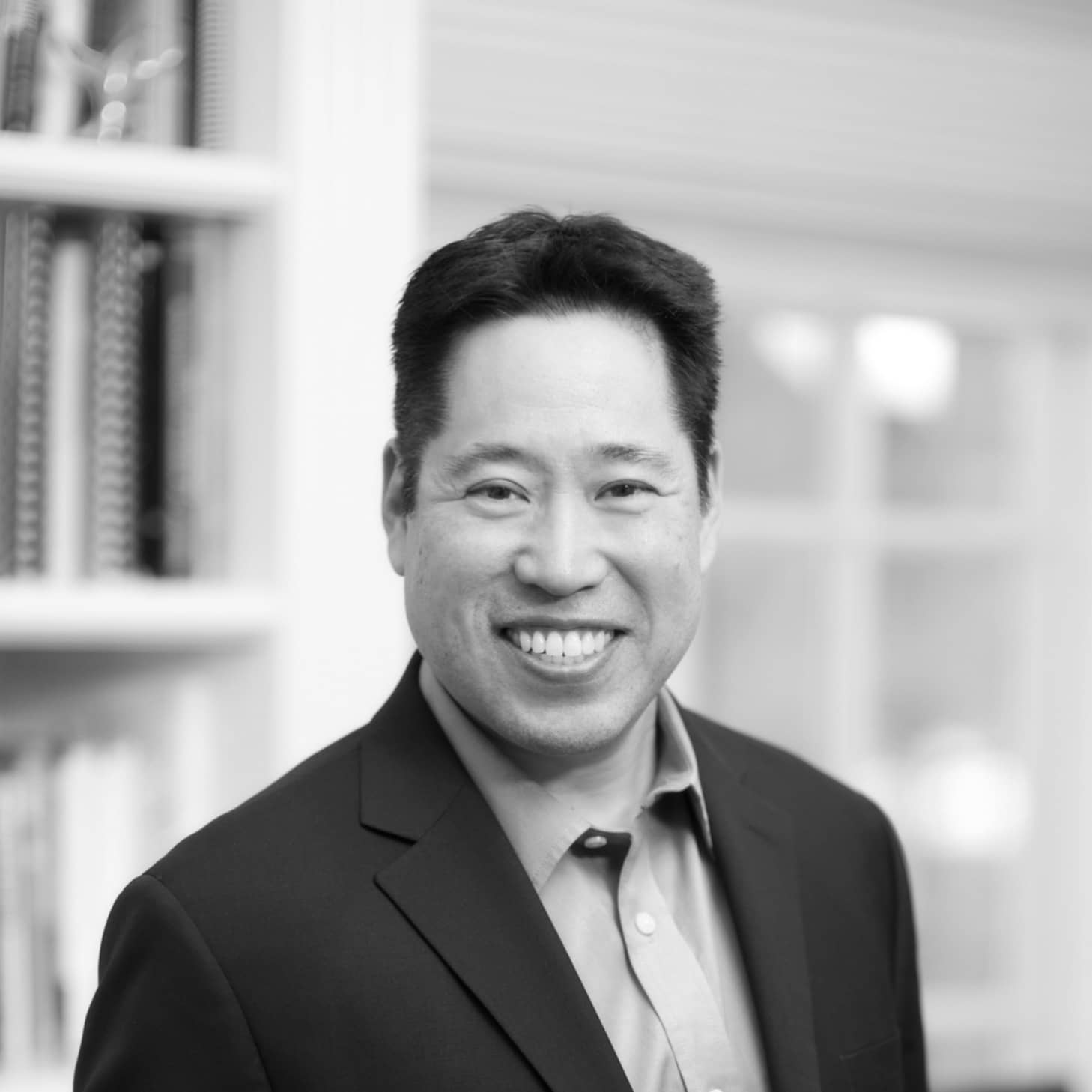
Rishi Behari is a professional coach, consultant, teacher, facilitator and speaker who has carved out an unlikely career path amidst adversity, pressure, and uncertainty, having grown up in an interracial family in the heart of the Canadian prairies.
Rishi has dedicated his professional life to helping others discover and realize their passions, dreams, and potential. He is known for injecting personality, humor, wit and infectious energy into his work and teaching. He draws from his and his students’ personal experiences in order to create an open, engaging and safe environment for leaders at all levels. His relentless desire to explore, innovate and challenge the status quo have made him a multidisciplinary force for igniting positive change in people and organizations.
Rishi comes to the Third Factor team with an impressive and eclectic background across industries, having worked with some of the top schools, businesses, and organizations in the world. His range of experiences include raising ten thousand dollars at the age of nineteen to fund his first entrepreneurial venture, appearing as a business expert on live international television, helping to establish the world’s first premier business program in artificial intelligence, sitting on the advisory board for Canada’s first student-run AI startup incubator, working in the not-for-profit sector to fight systemic inequality and discrimination, teaching in academia and over five years as the VP of a multinational consulting firm.
Rishi is a former university athlete in soccer, and an avid sports and travel enthusiast, having traveled to two World Cups of Soccer, the European Cup of soccer, and the Winter Olympics. His academic credentials include BAs in psychology and sociology and an MBA from the Smith School of Business at Queen’s University and IE Business School in Madrid, Spain.
1 Source: McKinsey What’s the most pressure you’ve ever been under? Dane Jensen joins CTV’s Your Morning to discuss what he learned by asking this question and share his advice for how you can use the energy that accompanies pressure to thrive.
As we anxiously await the launch of Dane Jensen’s new book, The Power of Pressure, the Summer Reading List has arrived just in time to give us the distraction we need.
This is our favourite summer tradition, in which members of the Third Factor team offer their best picks for your summer. Diverse as always, this list includes novels, nonfiction, a collection of short stories, and even an audiobook about dragons. Whether you want something lighthearted or something to chew on, your next favourite book is in this list.
Here are this year’s picks.
Peggy Baumgartner, Chief Learning Officer
Think Again by Adam Grant
One book I am eager to dive into this summer is Adam Grant’s Think Again. For me, learning to stay curious longer and being less certain that I already have the answers will allow me to approach whatever the post-Covid world throws my way. Grant is an amazing storyteller with a great analytical mind so I am sure it will be an amazing read.
A bit of a departure from my previous picks, The Vanquished is a thoroughly researched, thought-provoking, and highly readable look at the period of upheaval, bloodshed, and social re-ordering that followed WWI in the defeated countries. It upended my understanding of the inter-war period and, as one reviewer put it, “makes it easier to understand why order came to be a supremely desirable objective in 1930s Europe, trumping freedom.” If you’re a history buff, this is a book that will give you a ton of new insight without putting you to sleep.
Garry Watanabe, Principal Trainer & Sport Lead
The Wizards of Once by Cressida Cowell
I purchased the audiobook for longer car rides as a way to entertain my kids that did not involve staring into a screen, and I ended up getting drawn into the story along with them. As a parent, I loved the imaginative storytelling and positive messages. As a person, I was thoroughly entertained. An unexpected bonus: the audiobook is brilliantly narrated by Scottish actor David Tennant, who seamlessly switches between over a dozen distinct characters. Just a heads up – this is a 4 volume series but it flies by. We are (sadly) on the fourth and final volume.
Cyndie Flett, Principal Trainer
Lifespan by David A. Sinclair
This is a great opportunity to rethink a lot of what we think we know about our health. Sinclair really challenges many of the traditional notions about health and backs it all with stellar evidence. This is a great summer read – if you don’t mind digging into the science of things! Incredible insights, research simplified, great stories and some very practical advice. I particularly enjoyed the Longevity Now chapter. All told, I’ve made a few key changes since reading this book that has put a bounce back in my step, has me sleeping better, and more energized for the coming pivot back to whatever our new normal is.
In this book, the economists Milton and Rose Friedmen promote (very eloquently) the idea of free market economy, originally introduced more than 200 years ago by Adam Smith. They discuss how the idea of a free market economy clearly manifested itself in a rapid and unprecedented development of countries like Great Britain and the United States in the 19th century – and how later, unwise interference of government bodies into the process caused more damage than help.
Jordan Lavin, Marketing Lead
The Witches by Roald Dahl
Over the past few years, most of my reading time has been spent sharing children’s books with my two young boys. As they’re starting to get to an age where they’re interested in novels, Roald Dahl’s The Witches has been a standout favourite. The story follows a young boy who falls victim to real witches – and exacts his revenge. The story is brilliant, the imagery fantastic, and the characters voices make it extra fun to read aloud. Bonus points for the many adaptations including the movies and graphic novel the kids will read to themselves.
From the first page, the imagery, so eloquently described, becomes reality to my senses. I see, feel and smell the sweetgrass. The meaning and symbolism shared are the first of many lessons in life that grace the pages that follow. As I continue to read the stories, I accept Kimmerer’s invitation to understand the world from a different perspective. Not a new one. An old one, ancient in fact, almost erased. The remarkable transfer of knowledge on botony, language, culture and history flows easily and beautifully. Part wonderment, part awe become woven into painful reality as I try to comprehend the injustices on our Indigenous peoples. This book is a gift to the soul and a tender reflection on what needs to be understood by all who share this earth. As we come out of the pandemic and look to restore the lives we love I clutch my heart and hope that our future is informed by the hope of braiding sweetgrass.
Carrie Drybrough, VP of Operations
Anxious People by Fredrik Backman
Eight people. A failed robbery. An open house. Anxious People centres on how a shared event can change the course of many lives. I found this novel a bland read for the first 95 pages as the writing did little to draw out the characters. But the story gains momentum as the captives’ lives and their relationships with the outside world and one another blend together. Backman’s philosophical insights and humour make the book worth a summer read.
This is a fantastic read if you’ve ever wanted practical strategies to help you manage stress and perform at your best (and, really, who hasn’t?!). In Heart Breath Mind, Dr. Lagos clearly explains her practical, 10-week breathing training protocol, which is based on the science behind heart rate variability (HRV). Your heart muscle is in a constant, two-way conversation with your brain and body via the vagus nerve. This book helps you learn to take better control of that conversation in stressful moments. I am 7 weeks into the 10-week training protocol, and I can feel the physical, mental, and emotional impact that resonant frequency breathing can have when practiced consistently over time. You may not give your breathing a second thought in everyday life, but this book shows you that it can be a powerful tool for better performance, stress management, and increased mental clarity!
This book offers great insight into the history of American music between 1950 and 1970. It’s about ingenuity, hard work and perseverance. Learn about the rivalry between polar opposites, Leo Fender and Les Paul, while enjoying the joy ride of rock music. Lots of great stories about the humble origins of the tools that allowed rockers & blues players to get loud. We know the music – here is how it got there.
This author is a great writer, researcher and story teller. The Book of Longings is a historical novel taking place in the first century during Jesus’ time. To read a book about this time period, that involves Jesus but is not about him, was really interesting. The protagonist is a bright, inspiring woman engaged in a bold struggle to realize her own potential in a time and culture where she has no power. Her life in intertwined with Jesus life in a completely unexpected way. Jesus is portrayed here from a very humanistic perspective rather than a spiritual one. Reading about their parallel journeys was fascinating. I thoroughly enjoyed this book. It was definitely a page turner.
Alexis Ullerick, Program Logistics Lead
Divisadero by Michael Ondaatje
My pick for the summer reading list follows the lives of three people, all on very different p aths but still intertwined. One becomes a con artist, so you know it’s good!
I’ve enjoyed Linwood Barclay’s novels for a number of years, and his latest is no exception. He weaves great character development (including a ripped from the headlines rather despicable villain) with interesting plot twists and lots of action. As with most of his novels, this is a great blend of mystery and thriller.
I really wanted to recommend Transcend, which is a revisitation of Abraham Maslow and his hierarchy of needs but that might be a bit heavy for summer reading! Not that Adam‘s book is light, but rather it’s a wonderfully easy read given his style and sense of humor. It’s basically encouraging us to keep an open mind and that if we have some humility and curiosity and reconsider our beliefs we can always reinvent ourselves. He’s a wonderful storyteller which makes for a great summer read. He and Brené Brown have a wonderful podcast that covers off some of the content as well.
Many websites use affiliate links to make money when you buy something from Amazon – we don’t. Feel free to follow the links provided or pick up the book you want from your favourite local bookseller.