Hybrid work can be a great model for people who are established in their careers, but it presents unique challenges for those just starting out. Early career employees don’t have the same opportunities to observe the workplace culture and leaders often struggle to provide frequent, specific feedback when not working in the same physical space.
So how will we lead this generation just entering the workforce, for whom “hybrid work” is not even a relevant term because it is the only style of work they know? Effective coaching needs to be part of the DNA of how we lead people now. In practical terms, it involves making the culture visible, creating opportunities to observe performance, and establishing systems to bridge the gap between in-person and remote work in a way that builds trusting relationships.
Make the culture visible
George Bernard Shaw famously noted “the single biggest problem in communication is the illusion that it has occurred.” Early in our careers, workplace culture and the nuances of professional life were communicated to us mostly by simply being in the office. We saw how people interacted outside of meetings and we overheard the words they used with their leaders. Through observation we formed images in our minds that we could then emulate.
It is easy to expect that employees entering the workforce today will similarly absorb these indirect messages. But with fewer opportunities to observe how things work, early career employees are left to make many assumptions about how to successfully navigate a new organization. Compound this with the tremendous ambiguity that remains around so many aspects of hybrid work, and you are likely to run into issues.
One of the greatest coaches we worked with, Jack Donohue, spoke of the need to build sharp clarity before we can offer effective feedback. People cannot do things that they cannot imagine. We need to break down vague concepts such as “flexible work,” “professionalism,” and “remote collaboration” into specific behaviours that people can see in their mind. Perhaps on your team “flexible work” really means that all team members are online and available between the hours of 10am and 3pm, their MS Teams status is always kept up to date, and the entire team is together in the office between 9am and 5pm on Wednesdays. Drilling down to this level of specificity is necessary to build the clarity that will enable early career employees to succeed.
Create opportunities to observe performance
When I was on my first project as a new management consultant, I was tasked with completing the analysis of a large data set. It was a steep learning curve, but I was eager to prove myself. I would continually tell my manager that everything was going well when I was actually working late nights scouring the internet to troubleshoot Excel errors.
My manager eventually called a time-out when she glanced over my shoulder and found me manually moving data around a spreadsheet. While she commended my eagerness to learn, she also pointed out the people sitting beside me who could teach me a much faster approach. “Might it be better to ask one of them for help and then you will know how to do it too?” she asked. A wild idea, I know.
In a hybrid world, we must intentionally create opportunities to observe performance.
It is never easy to teach early career employees everything they need to know in their first job. But it is even more complicated when we do not have opportunities to glance over their shoulder and directly observe their work. In a hybrid world, we must intentionally create these opportunities to observe performance. Working alongside new employees on early projects and joining them in as many meetings as possible is critical to see them in action and identify behaviours to reinforce or adjust.
A leader in one of our coaching workshops liked to regularly use screen sharing capabilities. This allowed her to see the steps that her team member was following and quickly identify process steps that she wanted to either reinforce or adjust. By sharing her own screen, she normalized the practice so that her team was comfortable with the approach. It also made her own work more visible and surfaced process steps that had become so automatic for her that she wouldn’t have otherwise thought to teach them.
When it is not possible to see the person in action, questions are a valuable tool to gain insight into their thinking. One leader we worked with likes to use questions such as “how would you approach this task” or “can you walk me through your thinking” so that he can offer adjustments or additional information before getting started on the task. During regular check-ins, questions such as “what are you most proud of this week” or “what would you like some feedback on” can provide jumping off points to understand how the person is working. The key is to continue asking questions and actively listening until you get below the surface-level responses and uncover specific behaviours to reinforce or adjust through feedback.
Build systems to bridge the gaps
Our Principal Trainer, Garry Watanabe, says issues with early career employees also often arise because they do not yet have mental maps for how things get done in the organization. In the office, getting quick answers is as easy as asking someone who does not look too busy. But when everyone is remote, it is impossible to see who might be warm for an interruption.
Garry suggests pairing early career employees with a peer-level buddy or more experienced mentor who they can go to for help. Providing a dedicated resource empowers them to find the answers they need and removes some of the barriers to seeking help. It also offers a safe way to ask for quick feedback and build confidence, all while freeing up your time together for more meaningful interactions.
Connecting early career employees with other team members in this way provides the added benefit of building relationships across the team, which is the ultimate system for bridging the gaps between in-person and remote work.
Start your people on a path to success
There is no doubt that leading early career employees in a hybrid world introduces new complexities and challenges. But by making the informal aspects of work more explicit, creating opportunities to observe performance, and building systems to bridge the gap, leading in this environment can be just as effective and fulfilling for both leaders and employees.
Imagination, belief and energy are precious resources that need to be carefully nurtured when high performance is the goal. At the same time, saddling someone with an unattainable target because you don’t want to dampen their enthusiasm risks a catastrophic failure that can destroy self-confidence and trust in the coach.
An ambitious but naïve performer setting an unrealistic goal for themselves is commonplace: a direct report applies for a role where they are unlikely to be the successful candidate; an individual you coach sets a performance target for themselves based on their best year ever when headwinds are coming on strong; or your team is running a pilot project that’s very unlikely to get the green light to proceed.
How can you communicate belief in the performer, while at the same time protecting them from experiencing what could be a devastating setback?
A moment of insight
One such moment for me happened over 20 years ago when I was working as a swimming coach in Thousand Oaks, California. I was coaching an adult swimming group – or as we called them, “Masters Swimmers” – to prepare them for the first competition of the summer.
Masters swimming competitions are interesting events: the beer tent opening is as big a deal as the performances in the pool. But, make no mistake, the performances matter to the athletes.
“I immediately realized I had made a mistake”
I was doing some goal-setting work with an athlete who had recently taken up the sport and asked her what she thought would be a good goal time for her 100-meter freestyle. Her answer was completely unrealistic, so I suggested a much more attainable goal. The smile vanished from her face, her shoulders slumped, and I immediately realized I had made a mistake.
In my well-intentioned effort to save this performer from disappointment, I had limited what she could imagine for herself, communicated a lack of belief in her capabilities and cut off a key source of energy.
Don’t fear negative emotion
In that moment, my gut reaction was to spare this person from setting herself up for failure. What I’ve learned is exceptional coaches know that negative emotion is an inherent part of the journey of growth and development. Progress isn’t linear.
When people are testing their limits and doing things that they’ve never done before they will experience setbacks from time to time. And when those setbacks occur, they will experience negative emotions such as frustration or disappointment. But people can survive frustration and disappointment.
On the other hand, if you encourage them to set safe goals that you know they will achieve, you limit the powerful “pull forward” that comes with imagining what might be possible.
Frame a range of outcomes
While negative emotion is a powerful tool, the coach still needs to prevent a devastating failure. Where I suggested a new goal in place of the one my swimmer had set, I could have included it in a range of possible outcomes that framed a realistic performance as a level of success.
In practice, this looks like a series of goals that includes the most ideal outcome and also a few other outcomes that are more realistic and attainable.
- Goal “A” might represent a nearly perfect result where they execute flawlessly and all the breaks fall their way.
- Goal “B” might represent a good result where they execute relatively well, but not perfectly, and 50% of the breaks fall their way.
- And finally, Goal “C” might represent a result they can live with where they make a few execution mistakes and experience some bad luck in the process.
Framing targets in this manner helps performers to dream about what might be possible while at the same time preparing them for when the ideal outcome does not occur. This approach is also a useful way to help a perfectionist objectively assess their performances.
“Perfectionists often evaluate any imperfect performance as failure”
Perfectionists often evaluate any imperfect performance as failure. By working with the performer to set a range of target outcomes in advance, the coach is then in a position to help them evaluate their performance against objective criteria.
This often results in the perfectionist being forced to admit that their “failure” was in fact a “good performance” or at worst “one they can live with.”
Blend empathy and accountability
If the performer doesn’t achieve their ideal outcome, help them harness the negative emotion and use it to fuel growth rather than rushing in to try to make them feel better.
Do this by first allowing them to sit with the emotion of the moment. Be there to help them process the experience by providing a listening ear. And then, when the performer seems ready, ask them for their thoughts on how to move forward. And then work with them to create a plan to increase the likelihood of an improved result next time.
Re-writing history
If I could go back in time and revisit that moment on the pool deck when that athlete suggested an unrealistic goal, what would I do?
I would have accepted that negative emotion is a natural part of the growth process. And rather than trying to shield them from the possibility of failure, I would have allowed them to dream about what might be possible.
I would have helped them set a range of goals. And if they failed to achieve their ideal outcome, I would have helped them process the disappointment and then channel that energy into the process of getting better.
Of course it was that moment of less than stellar coaching, and the resulting disappointment I felt with myself, that ultimately helped me find a better way forward. At Third Factor, we’ve made it our job to learn as much as we can from top performers in sport, government, academia, industry, business and share their best practices with people like you. It should come as no surprise that this group of lifelong learners loves to read, and our deep curiosity leads us in some unexpected directions.
Because reading is no fun if you can’t share it with others, we’ve made it an annual tradition to share our top picks in a Summer Reading List. Whether you want to learn something new or lose yourself in a story, these are the books our team recommends for Summer 2023.
Titan is an incredible book that chronicles a remarkable life. Neither celebrating nor condemning Rockefeller, author Ron Chernow delves deeply into the inherent contradictions of a deeply religious man who amassed the greatest fortune in history, a robber baron who ruthlessly accumulated capital and also revolutionized science, medicine and education through his unprecedented philanthropy. It is a biography that provides a wealth of lessons on leadership (my copy is full of dog-eared pages on communication, delegation, and management), a reflection on ethics, a cautionary tale on the inter-generational challenges of wealth, a rollicking account of the dawn of industry in the late 19th and early 20th century, and an intimate survey of a 98-year life that is unlikely to ever be duplicated. I cannot recommend it highly enough.
Let me start by telling you what this is not. It is not a traditional time management book. We are mortals and assuming you live to 80 years of age you have roughly 4000 weeks. The human lifespan is observably, terrifyingly, insultingly, short.
When you get efficient at managing your tasks, you actually end up with more of them and many of them will not be what you really want to do. In other words when you get efficient at using your time, time ends up mastering you, and you end up with more demands that will offset any benefits.
In the appendix, at the end of the book, Brukeman includes 10 tools for embracing your finitude. That list alone is worth the price of the book.
This is an easy book to read, light in tone, and very practical on a philosophical level. I highly recommend it!
Peggy Baumgartner, Chief Learning Officer
Nothing but the Truth by Marie Henein
Nothing but the Truth is the memoir of Canadian lawyer Marie Henein and is an inspiring example of an authentic leader amidst numerous obstacles. Breaking away from the confines of a male-dominated system, Henein fearlessly embraces her true self and values. Through her actions and choices, she demonstrates the power of staying true to oneself rather than conforming to societal norms. “Nothing but the Truth” is a surprisingly brilliant read that will leave you motivated and empowered.
Our modern approach to work looks radically different than the hunting and gathering work that our brains evolved to do – it’s no wonder burnout, disengagement, and unhealthy work cultures are so prevalent across our organizations today. In Tomorrowmind, Gabriella Rosen Kellerman and Martin Seligman explore our changing workplaces through the lens of behavioural science and offer practical solutions for fostering resilience, creating meaning, navigating change, and tapping into creativity to build the mindsets needed for the workplaces of today and the future.
Kevin Kelly is the former editor of “The Whole Earth Catalog”, the Chief Maverick at Wired Magazine and dubbed “the real life world’s most interesting man.” His book, Excellent Advice for Living, is essentially a collection of quotes or mottos to help guide practical action and decision making in everyday life. For example: “That thing that made you weird as a kid could make you great as an adult – if you don’t lose it.” While you can read it in an hour, its insights are worth practicing for a lifetime. I wish I had picked it up earlier.
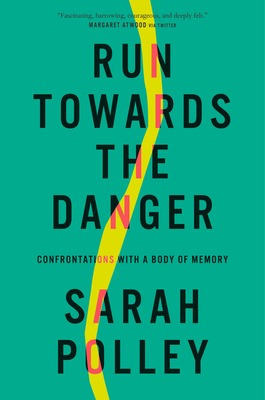
With a long history of studying and teaching resilience I’m drawn to life stories that demonstrate conscious reflection and balanced perspective. Run Towards the Danger is a collection of 6 essays that bring an insightful voice to adversity and the inner dialogue that occurs while navigating challenging times. Award winning actor, screenwriter and director Sara Polley reveals intimate details about work, family, and health that represent the complexity and humanity that surrounded her. As Polley makes sense of her own life experiences one cannot help but think more deeply of one’s own. There is tremendous vulnerability and pain, curiosity and humour on these pages and much inspiration to live fully with courage and understand the past with compassion.
This is a beautifully written story of family with five boys, the youngest of whom begins to voice thoughts and feelings about being a girl at a very young age. What unfolds is an insightful and enlightening exploration of how the family, the parents and the brothers, manages the challenges presented for the child and themselves. There are so many layers morally, practically and emotionally that inspired and challenged me as I reflected on how I would respond as a parent. While this sounds like a dark and psychologically dense topic the book is written with a beautiful lightness that captures the chaos and joy endemic in a family with two good parents and 4 boisterous, kind young men and one young woman in the making. Reading this book was an enjoyable and mind broadening exercise complete with hope. It evoked deep empathy and great respect in me for any family or individual who must make this journey.
Chris Farris Zabaneh, Associate Trainer
The Art of Learning by Josh Waitzkin
This inspiring and thought-provoking book was my intro to performance psychology. In this captivating memoir, former child chess prodigy and martial arts champion Josh Waitzkin shares his insights on achieving excellence in any field. This taught me all about the concept of the learning process as an art form, emphasizing the importance of mindset, adaptability, and resilience. It’s a great way to enjoy a read while in the pursuit of mastery in any field (from leading in an organization to simply tending to your summer garden).
Alexis Dawson, Program Logistics & Materials Lead
Essentialism by Greg McKeown
Essentialism is about eliminating the non-essentials from your life to make more room for doing less, but better. I chose this book because it inspired me to make small changes to how I prioritize my life at home and work that have really made a difference. Some tips I took to heart were if something isn’t a clear yes, it’s likely a no – and how to say no gracefully, yourself. It also emphasizes the importance of sleep which is key to getting everything else right.
Lori Quinn, Senior Account Executive
A Life in Parts by Bryan Cranston
I love a good memoir and this book did not disappoint. A Life in Parts is a story about the joy, necessity and the transformative power of simple hard work. It’s a wonderful and inspiring story of how we can tap into some skill or natural talent when we have the single-mindedness and fortitude to commit. If you’ve watched and enjoyed Bryan Cranston’s work, you will enjoy this book.
This summer I’ll be reading Nudge: The Final Edition by Richard H. Thaler and Cass R. Sunstein, whose work has helped governments and businesses around the world achieve better outcomes not through force or persuasion, but using environmental design. The Final Edition promises to incorporate new stories and insights learned from the frenzy of activity the first edition initiated when it was published in 2008.
Many websites use affiliate links to make money when you buy something from Amazon – we don’t. Feel free to follow the links provided or pick up the book you want from your favourite local bookseller.
The Meta-Skilled Organization: Building the Capability to Evolve
Skills allow us to execute. Meta-skills like empathy, resilience, creativity, and self-awareness allow us to evolve.
As organizations and industries face increasingly rapid change and disruption, in which job descriptions are fluid and agility is essential, these meta-skills are increasingly at the heart of sustained success.
The ability to adapt is what makes us future-proof, and what separates individuals and teams that
endure from those who are replaced.
In this webinar, Third Factor CEO and author of The Power of Pressure,
Dane Jensen, will illustrate how the capability to evolve can be broken down into six core meta-skills and outline practical skills and strategies you can use to cultivate your own ability to adapt.
You’ll gain new insights into what’s really required for future-proofing yourself and your organization, and discover six core meta-skills across three categories that foster personal evolution.
You should attend if:
- You want to build your team or organization’s resilience to rapid change
- You’re responsible for change management at a project or organizational level
- You’re charged with building competencies of adaptability, flexibility, innovation, or problem solving
- You want to build your own capability to adapt to an uncertain future
The Meta-Skilled Organization
Sorry we missed you
This event has passed, but it won’t be the last. Be the first to know about future webinars from Third Factor by entering your information below.
 About the presenter:
Dane Jensen
About the presenter:
Dane Jensen is the CEO of Third Factor, the author of
The Power of Pressure: Why Pressure Isn’t The Problem, It’s The Solution, an acclaimed speaker, an instructor at Queen’s University and the University of North Carolina, and a regular contributor to Harvard Business Review.
How do you make a leadership development program stick at a time when there are so many competing priorities?
This is the problem Renee Landry, Bayer’s U.S. Learning Lead, and Rachel Lamb, Bayer’s Senior Leadership Expert, set out to solve. The solution was Rise & Thrive, an innovative microlearning experience developed in partnership with SweetRush and Third Factor.
Approximately half of Bayer’s US leaders voluntarily participated in the program, which has received outstanding quantitative and qualitative feedback from participants as well as attention from the broader learning industry. The program has also been recognized with four Brandon Hall Group Excellence Awards.
Click here to read the case study.
 We are thrilled to announce that we have been awarded four Brandon Hall Group Excellence Awards alongside our partners, Bayer and SweetRush.
The awards are a result of our participation in Bayer’s innovative Rise and Thrive program, a microlearning experience based on the idea that if you have two minutes, you have enough time to become a stronger, more empathetic, more inclusive leader. The experience comprises bite-sized content including short videos, curated articles, and 2-minute “dares.”
Rise and Thrive was pioneered by Bayer’s U.S. Learning Lead, Renee Landry, and Senior Leadership Expert, Rachel Lamb. The interactive experience was developed by e-learning development company SweetRush and supported with video and learning content by Third Factor.
Approximately half of Bayer’s 4,000 US leaders voluntarily participated in the program, which has received outstanding quantitative and qualitative feedback from participants as well as attention from the broader learning industry.
The awards include:
We are thrilled to announce that we have been awarded four Brandon Hall Group Excellence Awards alongside our partners, Bayer and SweetRush.
The awards are a result of our participation in Bayer’s innovative Rise and Thrive program, a microlearning experience based on the idea that if you have two minutes, you have enough time to become a stronger, more empathetic, more inclusive leader. The experience comprises bite-sized content including short videos, curated articles, and 2-minute “dares.”
Rise and Thrive was pioneered by Bayer’s U.S. Learning Lead, Renee Landry, and Senior Leadership Expert, Rachel Lamb. The interactive experience was developed by e-learning development company SweetRush and supported with video and learning content by Third Factor.
Approximately half of Bayer’s 4,000 US leaders voluntarily participated in the program, which has received outstanding quantitative and qualitative feedback from participants as well as attention from the broader learning industry.
The awards include:
- Gold: Best Advance in Custom Content
- Gold: Best Unique or Innovative Learning and Development Program
- Gold: Best Use of Video for Learning
- Silver: Best Unique or Innovative Leadership Program
Brandon Hall Group is a research and analyst firm with a mission to empower excellence in organizations around the world. The Excellence Awards recognize the best organizations that have successfully deployed programs, strategies, modalities, processes, systems, and tools that have achieved measurable results. All of this year’s winners can be found on the Brandon Hall Group website. If you’ve read Dane Jensen’s book, The Power of Pressure, you may have enjoyed the title of Chapter 9: Sleep and Other Inconvenient Necessities.
Like it or not, downtime is essential for performance under pressure over the long haul. High performers prioritize sleep, nutrition, and breaks to stay fresh and energized. That’s why we’re always excited to share our summer reading list: there’s no better break than some time off over the summer with a good book.
Whether you want to learn something new or veg out with an easy read, you’ll find your perfect summer book on this list. Here’s what our team recommends for 2022.
Peggy Baumgartner, Chief Learning Officer
The Power of Regret by Daniel Pink
When people ask me what about my regrets in life, I always say I have none. Yet Daniel Pink's research points to regret bringing clarity, meaning and focus to all that is important to a person. My flip answer of ‘no regrets’ reflects my optimistic personality, and this summer I will get a little more curious about the value of digging a little deeper to see what I can learn. I would love to hear from others who explore this ‘new to me’ emotion.
Easily my most gifted book of the past year, Why We Sleep is a tour de force exploration of the nature, benefits, and challenges of sleep. The research Walker cites is profound and varied, and the way he presents it is engaging, accessible and actionable. Whether you are looking for the motivation to commit to more sleep or strategies to sleep longer or better, you’ll find it in here. Plus, as a bonus, it’s the only book I’ve read where the author actually encourages you to fall asleep while reading.
While it appears to be a book about finance, this book uses stories about people and money as a way of illustrating the real world dynamics of human behaviour. The content is entertaining, the writing clear and the insights well worth pondering.
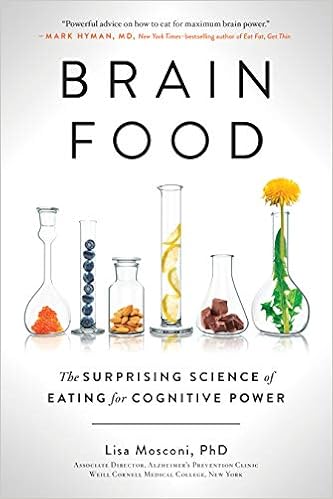
While this book has Alzheimer’s prevention at its heart, it’s a powerful read for anyone who wants to “do good” for their brain to improve memory, prevent cognitive decline, and eliminate brain fog. Packed with tons of practical information backed by research, this is an easy-to-read perspective on how we help our most vulnerable organ (the brain) by digging deep into the fat, protein, carbs, sugars, vitamins, and minerals it needs to function optimally.
I borrowed this book from a friend around a decade ago and never gave it back, with good reason. Dr. Posen breaks down stress using simple stories, relevant information, and a few hard truths. The book is divided into 52 (mercifully short) chapters, each ending with a highly actionable "prescription" to help you convert the concepts into action and make small changes that add up to a much healthier relationship with life's demands.
Where the Crawdads Sing (Recommended by Reese’s Book Club and my Hockey Moms Book Club) is about Kya Clark, an isolated, abandoned “Marsh Girl” who is educated in the swamps of North Carolina living deep with nature. A coming-of-age novel that covers prejudice, friendship, solitude, desertion, and education, the narrative is as rich as the setting Owens describes. Make sure to read it before the motion picture comes out this summer.
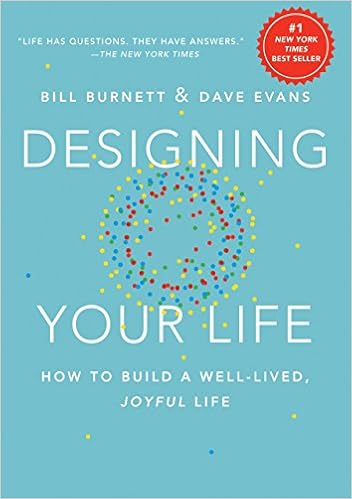
My pick provides a fascinating look at how you can apply design thinking to your own life to create options, possibilities, and a mindset that allows you to craft a life well-lived. Haven’t been to design school? Don’t see yourself as a creative person? No problem. Get this book, grab a notepad, and be ready to think outside the box, because Bill and Dave will take you step by step through a series of exercises that will get you thinking like a designer to solve problems and mental blocks, brainstorm the “many lives” you could live productively and happily, then choose the one that speaks to you most. Happy summer reading!
This is a fun history book about film, music, sports, politics, culture, global events, and the momentum of the internet. If you are interested in reliving the nineties in an unconventional manner, this is a terrific read. Chuck Klosterman writes with engaging insight and humor that will evoke both memories and questions and explains things I wasn't able to explain for myself.
For those who love historical novels with a twist, this is a fabulous read. It is the story of a young, bright woman with a restless spirit who rebels against the mores of her time. Sue Monk is a daring woman herself as she introduces Jesus who meets up with this young woman when they are both older teenagers and marries her. It is a marriage of convenience that serves both well. The writing is grounded in meticulous research and written with a reverential approach to Jesus’ life that focuses on his humanity. And it is an inspiring and unforgettable account of one woman’s bold struggle to realize her own potential in a dangerous time for women to speak up. More than that, it is just great story telling and good writing. I love learning about historical periods in this way. Enjoy.
Alexis Ullerick, Program Logistics Lead
The Productivity Project by Chris Bailey
My pick synthesizes the findings of the author’s year long project to become as productive as possible. Grounded in the concept that productivity comes from managing your time, attention, and energy, Bailey shares his year long journey of productivity experiments like getting up at 5:30 every morning, cutting out caffeine, becoming more intentional and deliberate in his work, and so many more. Each chapter includes a challenge to implement his insights into your own life. Chris Bailey’s writing is fun and witty! When I finished the book I felt like I’d gained a year’s worth of knowledge in just a few days, which already had me feeling pretty productive!
Many websites use affiliate links to make money when you buy something from Amazon – we don’t. Feel free to follow the links provided or pick up the book you want from your favourite local bookseller. Prior to now, hybrid working environments have never existed on a wide-scale basis. With few proven best practices to rely on, you need to work together with your team to create a new playbook for how to get the best out of the team and its individual members.
By necessity, this involves a lot of experimentation. To capture the lessons from these experiments, it will be essential that your people are willing to ask questions to gain clarity, share ideas on how to do things differently, and voice concerns when things aren’t on track. And this can only happen if your team members believe they are safe to do so.
Unfortunately, biology is not on your side. By default, people want to avoid looking ineffective or incapable to their leader. To foster psychological safety on your team, it’s not enough to encourage your people to speak up. You need to consistently demonstrate that it’s expected, appreciated, and rewarded.
Level the playing field
Like it or not, your people are hard-wired to view you as a threat. The amygdala, sometimes referred to as our “lizard brain,” is constantly scanning the environment for threats – and, according to Your Brain at Work author, Dr. David Rock, social threats like an imbalance of power are no exception. As much as you tell your people they can be honest with you, the amygdala will override the logical part of the brain until it has witnessed a pattern of behaviour consistently enough to convince it you’re not a threat.
“Telling people to speak their mind won’t yield any results if they haven’t seen a predictable pattern of behaviour from you that it’s safe to do so.”
In other words, telling people to speak their mind won’t yield any results if they haven’t seen a predictable pattern of behaviour from you that it’s safe to do so. You have to show them, over and over again, that the only thing that will result is a better work environment.
To sow the seeds of psychological safety, you need to set clear expectations with your team, ask for specific input on a regular basis, and practice responding positively – even when you don’t like what you hear, the timing is bad or the input is delivered in a way that triggers you.
Change the frame
People are unlikely to speak their mind when given a vague invitation for feedback. Consider the response you get when you ask someone “How are you?” Most of the time the reply is some version of “Busy but good.” or “Could be worse.”
Change the frame by explicitly stating that as the team adapts to a hybrid model, there will be much to learn and it is critical that everyone shares what is going on from their point of view. Emphasize that for the team to be successful, people need to speak up. Be clear that the expectation is that people will share ideas, ask questions, voice concerns, and admit mistakes.
“Be clear that the expectation is that people will share ideas, ask questions, challenge consensus, and admit mistakes.”
Walk the talk
After framing the expectation, reinforce it by consistently asking people for input. Instead of asking “any questions?”, which tends to garner nodding heads and silence, ask a variety of specific questions to surface where people are at.
- “Vikram, what do you see as the most challenging part of this?”
- “Alexis, you’ve been quiet, what are your thoughts on this approach?”
- “Jordan, how might this group support you in completing your task?”
Recognize the effort and impact
When people do voice their opinion, reinforce that behaviour by specifically describing what they’ve done right, illustrating the behaviour’s positive impact, and expressing appreciation for the effort. When it’s warranted, be sure to acknowledge the emotional component as well.
- “Natasha, asking for help kept the project on track and saved Peggy’s team from having to work late. Keep it up.”
- “Soheli, your idea led to a great discussion that got the whole team engaged. Keep them coming.”
- “Darren, it took a lot of courage to bring this to my attention and I really appreciate it. What can I do to help you move forward?”
Manage your outside voice
In some cases, encouraging this behaviour might be difficult. Suppose that you are just wrapping up a planning meeting at one of your in-person days in the office when Janelle excitedly suggests a new approach. Aside from the terrible timing, the idea itself raises huge red flags for you.
Internally you might be thinking “going that route would be a complete disaster!” But if your inside voice becomes your outside voice, you’ve just made the environment a little less safe for people to provide input.
To help you convey that input is welcome, even in moments when you’ve been triggered, a simple 3 step process can help.
- Pause: take a moment to breathe and ask yourself what the moment needs from you.
- Acknowledge: a simple thanks is often enough.
- Respond: in most cases you will need to get more clarity, provid clarity, or delay the matter and revisit later.
They’ll believe it when they see it
When people feel safe to share ideas, voice concerns, admit mistakes and ask questions, you have better access to the information you need to keep your team on a path to high performance. Foster psychological safety on your team by framing input as essential to success, asking for the input you need, and recognizing your people for doing the right thing.
Learn skills for leading in a hybrid world
Leaders who are able to leverage the advantages and mitigate the challenges of hybrid work will build high-performing teams at a time when engagement and commitment are at risk.
Learn practical skills for leading hybrid teams in our program, Leading in a Hybrid World.