By Dane Jensen / CEO, Third Factor
All teams suffer setbacks. What separates resilient teams from the rest is how they respond. Resilient teams come back stronger after failure because leaders and team members lean into the negative emotions that inevitably accompany setbacks and use the energy under those emotions to fuel recovery.
Negative emotion is volatile fuel
Heading into the women’s World Cup in 2011, Canada’s national soccer team was one of the favourites. Two weeks later, they were knocked out of the round robin in a 4-0 defeat to France and headed home without winning a game – finishing dead last.
“It wasn’t going to define us”
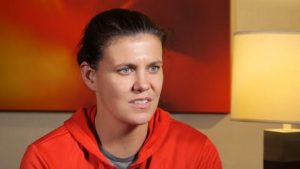
Team Captain Christine Sinclair talked about feeling “humiliated” – like they had let down the country. And yet just one year later, the same team outperformed at the London Olympics to win Canada’s first ever medal in soccer. “We knew what we were capable of and just because we had one bad tournament it wasn’t going to define us,” said Sinclair. The head coach of the Women’s National Team, John Herdman, spoke about how the team was “an easy group to motivate” because they had just suffered such a crushing defeat.
Negative emotion can be powerful fuel for positive response. It can provide ‘bulletin board material’ that leads to determination, and ultimately harder work and higher standards.
But negative emotion is highly volatile fuel. If not handled correctly, it can trigger a negative feedback loop that leads to the blame game and teams that end up either combusting or just detaching.
Three Jobs for Leaders of Resilient Teams
We’ve observed that leaders of resilient teams are able to trigger the positive feedback loop from negative feedback by doing three things differently than leaders of less resilient teams:
1. Lean into negative emotion
Leaders of resilient teams don’t retreat from negative emotion. They don’t try to rescue people from it and make them feel good. Rather, they use it for its developmental potential.
The psychologist Roberto Assagioli has said, “a psychological truth is that trying to eliminate pain merely strengthens its hold. It is better to uncover its meaning, include it as an essential part of our purpose and embrace its potential to serve us.”
When leaders try to reassure people or make the pain go away, they rob it of its power. It is better to acknowledge the pain and embrace it so that it can be used to fuel growth.
“As painful as it feels now, it will help him.”
So, what does ‘leaning in’ look like? Consider “the shot.” Kawhi Leonard’s quadruple bouncing Game 7 buzzer beater was a moment of euphoria for Toronto. On the other side, however, it was a devastating moment for a young Philadelphia 76ers team featuring 25-year-old star Joel Embiid, who left the court in tears. When asked about the emotional response of Embiid in the post-game press conference, Philadelphia head coach Brett Brown said, “As painful as it feels now, it will help him. It will help shape his career.” Rather than shying away from the pain, comforting Embiid and trying to lessen the sting, Brown leaned into it and helped his young player see it as a growth opportunity – a sign that he needed to work harder.
2. Frame negative emotion differently
Leaders of resilient teams have a different answer to the question “what is this pain telling us?” than leaders of less resilient teams.
They frame pain as a signal that they aren’t there yet – rather than a sign that they aren’t good enough. As a result of this framing, resilient teams respond to negative emotion with determination. They get committed to the challenges they face by exerting control where it matters: their own effort.
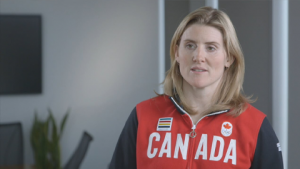
After a lacklustre season heading into Salt Lake City in 2002, the Canadian women’s hockey team held a player’s only meeting where they came up with the acronym WAR, for ‘We Are Responsible.’ As 4-time gold medalist Janya Hefford reports, “there was a lot of the blame game going on”– and the WAR framing helped them redirect attention away from the officiating, their opponents, etc. and towards what they were responsible for. Ultimately, this perspective proved vital in overcoming 8 straight penalties in the Gold-Medal game to triumph.
3. Channel negative emotion
After embracing negative emotion and finding its meaning, teams and their leaders must still channel the emotion into positive outcomes. Our founder, Peter Jensen, will often ask teams who have suffered failure one powerful question: “What are we going to do with the energy under this emotion?”
it’s easy to channel emotion into what Ben Zander has called “the conversation of no possibilities” and allow the dangerous side of negative emotion affect to take over. Channeling negative emotion productively requires individuals on teams to take responsibility for redirecting energy towards growth and hard work.
Negative emotion is fuel for growth
Resilient teams process negative emotion in a way that leads to harder work and higher standards as opposed to detachment or combustion. They do that by leaning into negative emotion rather than retreating, by framing it a little differently and by seeing it with a sense of challenge, control and commitment.
As a leader, your job is to create the conditions that allow negative emotion to be used to its full potential. The next time your team suffers a setback, encourage your team to accept their feelings, find meaning in their failure, and channel their emotions to come back stronger than before. We all know that we need to move our training focus beyond simply acquiring knowledge; success in training is about the application of new knowledge and skills – it’s about behaviour change. Unfortunately, right now we are failing in this mission: only 10-20% of what people learn in a training session is transferred back to the workplace. The reason? Recent research shows us that there is a distinction between a ‘motivation to learn’ and a ‘motivation to transfer’, and while most organizations are good at tapping into the first source of motivation, the second is often left unaddressed.
Drawing on her 20+ years of experience in the corporate training world, Peggy Baumgartner debunks two common fallacies surrounding what it takes to tap into this ‘motivation to transfer’ – and highlight a strategy that we use at Third Factor to close the gap between learning and doing, and ensure successful application of the knowledge gained in learning events.
Click here to download the whitepaper. Valuing lessons from failure is an important mindset in business, but in reality most teams aren’t prepared to fail. The consequences of failure can breed negativity and erode team culture, destroying productivity, preventing future success, and masking the very lessons that make failure valuable in the first place.
In our 25 years of experience working with hundreds of teams in the worlds of elite sport, business, not-for-profit, Government and Academia – including the last 4 medal-winning Canadian Women’s Olympic hockey teams – we’ve observed the characteristics that define resilient teams, and the steps they and their leaders take to use failure as a catalyst for growth and high performance.
In this keynote address, Third Factor CEO, Dane Jensen, will draw on the lessons we’ve learned from the Olympic athletes we’ve worked with to inspire you with new ideas to foster resilience on teams in your organization by examining four characteristics of resilient teams.
SORRY WE MISSED YOU
This event has passed, but it won’t be the last. Be the first to know about future events from Third Factor by entering your information below.
The presentation features the voices of athletes and coaches who have persevered in the face of failure and tremendous pressure, including:
- Hayley Wickenheiser, 4-time Olympic Gold Medallist, women’s hockey
- Jayna Hefford, 4-time Olympic Gold Medallist, women’s hockey
- Christine Sinclair, 2-time Olympic Medallist and captain of the Canadian Women’s National Soccer Team
- Roy Rana, Assistant Coach, Sacramento Kings
- Dr. Peter Jensen, Founder, Third Factor
Participants will learn:
- How resilient teams harness and channel the negative emotions associated with loss and disappointment
- How their communication systems allow them to work through setbacks more productively and therefore recover faster
- How the relationships amongst team members can support or hinder recovery, and
- The vital role that a strong shared purpose plays in making it through the hard times
You should attend if:
- You are responsible for enabling and fostering team culture in your organization
- You are responsible for fostering a culture of innovation in your organization
- You want new ideas on how to maintain productivity and performance through difficult times
- You want to build resilience for yourself or your team
Set against the backdrop of one of Toronto’s newest and most exciting innovation spaces, OCAD U CO, participants will enjoy great peer networking and a delicious breakfast.
About the presenter:
 Dane Jensen
 is a cross-pollinator between the podium and the boardroom. As CEO of Third Factor, he works every day to enhance Canada’s business and athletic competitiveness through better strategy and stronger leadership. His clients include RBC, CIBC, WestJet, University Health Network, the Canadian Paralympic Committee, the Canadian Sport Institute Ontario, and Right To Play. He has worked as an advisor to Senior Executives in 12 countries on 5 continents, he contributes regularly to The Globe and Mail on the topics of strategy and leadership, and was previously an Associate Partner at the strategy consultancy Monitor Deloitte.
About the venue:

Just minutes from Union Station on Toronto’s waterfront,
OCAD U CO is a state-of-the-art 14,000 square foot studio designed specifically for collaborative innovation work. The space features is home to 20 resident design-led startups, a suite of formal and informal meeting spaces, and is the setting for our program,
How To Lead Innovation, which we run in partnership with OCAD U CO and the Smith School of Business at Queen’s University.
Reserve your spot:
SORRY WE MISSED YOU
This event has passed, but it won’t be the last. Be the first to know about future events from Third Factor by entering your information below.