Register for updates
Enter your information below to be notified when this breakfast event is rescheduled.

“Canada’s challenge wasn’t producing world-class athletes; it was producing world-class athletes who could perform with all the distractions and pressure of the Olympics”In other words, Canada’s challenge wasn’t producing world-class athletes; it was producing world-class athletes who could perform with all the distractions and pressure of the Olympics. Brian Orser was one of Canada’s star athletes at the Calgary Games in 1988, and he spoke to us about the pressure of competing in front of a home crowd. To help Canada’s performers prepare for the pressure of Olympic competition, the not-for-profit organization Own the Podium was formed to provide and fund support structures designed to give Canadian athletes the preparation that would allow them to access their best performances in the face of Olympic pressure. Own The Podium was a spectacular success. At Vancouver, Canadian athletes won 26 medals, including a record-setting 14 gold medals, placing Canada third overall. Since that time, Canadian athletes have been ‘converting’ at a rate of around 70% and Canadians now enter Olympic Games with an expectation that they could indeed, be the best in the world.
“Peter had to keep the information from the team so as not to become an enormous distraction”Peter had to notify the leadership at Hockey Canada and, with their blessing, continued to support the mental performance of the Women’s Olympic Hockey Team. As they headed into their most important competition of the four-year cycle, Peter had to keep the information from the team so as not to become an enormous distraction while simultaneously teaching skills, being at his best and dispensing regular doses of his usual sense of humour. Peter is currently cancer-free and maintains a crazy busy schedule delivering keynote speeches to audiences big and small around the world. Peter wrote about his experience in his own words in his whitepaper, When Health and Performance Converge: What I (re)Learned From Cancer. It’s a great read if you’re curious to learn more about how he was able to stay resilient through such a difficult time. To those of us at Third Factor, the 2010 Vancouver Games are a reminder that Peter doesn’t just teach people how to handle pressure, he lives and breathes the content. Great leaders coach their people by teaching, giving feedback, mentoring, and asking questions. And, when necessary, they confront problem behaviours. When done right, challenging conversations can lead to positive behaviour change and strengthen the relationship between the leader and team member. How you begin the conversation is the best predictor of the outcome. In this practical and motivating keynote address, Third Factor Associate Trainer and Olympian, Karyn Garossino, will introduce a map for challenging conversations and guide you through the process of effectively initiating a difficult discussion. By gaining a better understanding of the internal conversation that precedes the external one, you will leave the keynote with a better understanding of the positive aspects of challenging conversations and a new confidence in your ability to speak up when change is not negotiable and resistance may be high.
What can you expect at this event? Take a look at this recap from our last executive breakfast.
 Olympian Karyn Garossino, BA, M. Ed., brings a combination of insight and grit from 40+ years of being coached and coaching others. Her experience at the highest levels of elite sport, Master’s Degree in psychology and adult education, and experience working with thousands of leaders in business and government bring huge depth to her understanding what it takes to thrive under pressure—and to lead others to do the same.
 Just minutes from Union Station on Toronto’s waterfront, OCAD U CO is a state-of-the-art 14,000 square foot studio designed specifically for collaborative innovation work. The space features is home to 20 resident design-led startups, a suite of formal and informal meeting spaces, and is the setting for our program, How To Lead Innovation, which we run in partnership with OCAD U CO and the Smith School of Business at Queen’s University.
This event has been postponed. Be the first to know when it’s rescheduled by entering your information below.
“We realized that a lot of what was happening was the blame game.”Through a frank, players-only discussion the team was able to come together, but the conversation could have gone a number of different ways. It stayed on track because the team was prepared – mentally and emotionally – to have performance conversations under pressure and surface a number of issues the team needed to resolve. And that preparation turned out to be an important stepping stone to winning gold in Salt Lake City.
“The biggest opportunity for meaningful growth is often to increase self-awareness and strengthen their ability to communicate productively when under pressure.”We’ve worked with hundreds of teams in elite sport and business, including the last four medal-winning Canadian women’s hockey teams. One of the things we’ve learned is that when teams are already operating at a high level, the biggest opportunity for meaningful growth is often to increase their self-awareness and strengthen their ability to communicate productively when under pressure. To support this, we’ve developed a process to help teams become more aware of their tendencies, develop systems and practice performance conversations anytime. At the heart of this process is a tool called the TAIS – The Attentional and Interpersonal Styles inventory. The TAIS was developed for use by Navy SEALs and Olympic athletes, and we’ve found it to be an incredibly valuable tool for diagnosing communication challenges on all kinds of teams. When the pressure is on, when teams are in the midst of setbacks and failure, individuals will fall back on their default communication styles.
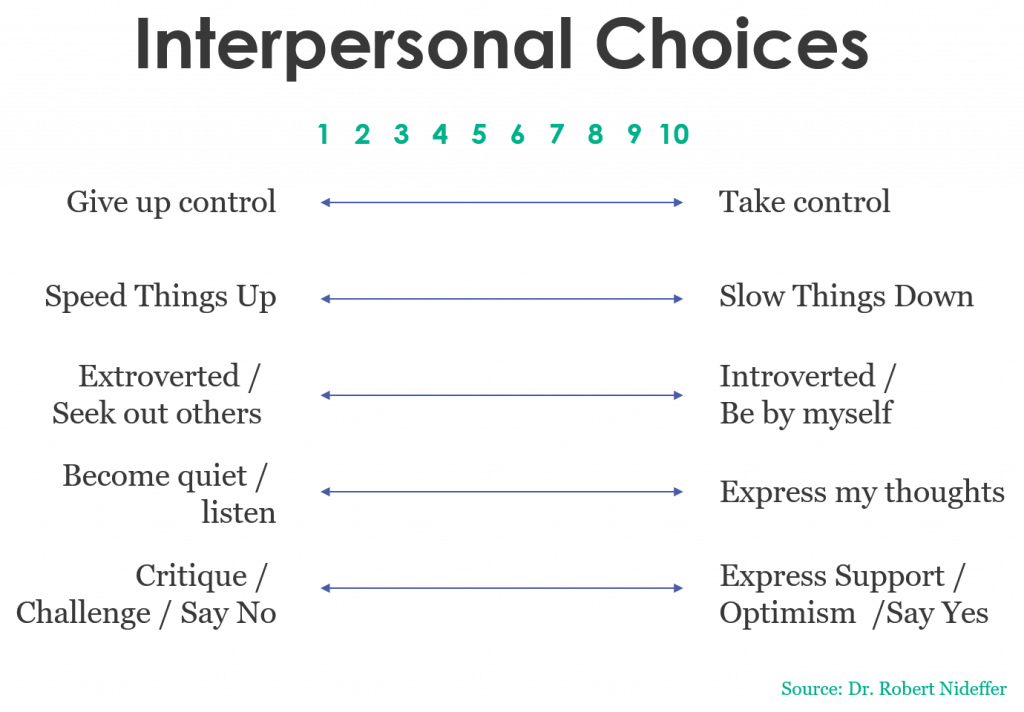
The next time you’re headed into a potentially high stakes conversations, use the five choices below to carry out a short 3-step preparation exercise:
1. Plot your default tendency on each of the five scales – given your past history, where are you most likely to fall?
2. Where would you ideally like to be as you head into this specific interaction?
3. What are the gaps between your ideal and default style? What actions will you take to ensure you are at your ideal?
Brian Orser describes the media frenzy and inescapable layers of pressure he felt leading up to the ‘Battle of the Brians’ on home ice at the 1988 Calgary Olympics.“There was a media frenzy”
Tracy Wilson shares how she practiced the emotional moments in advance of competition at the 1988 Olympic Games in Calgary.“What got me so excited was representing Canada”
Brian Orser talks about how he established and practiced routines for any situation, whether he had to skate first or wait around to skate 6th.“We were prepared for any scenario”
Tracy Wilson explains how leaning into emotions can help performers diffuse tension and how coaches can use communication to help their team members perform at critical moments. In the summer of 2019, we changed our name from Performance Coaching to Third Factor. We’ve heard so much positive feedback on the name change, but there’s a big question I’ve been asked many times over: what does third factor mean? I have the privilege of teaching in the Executive Leadership program at Queen’s University, and I took some time to explain the concept in a recent class. If you’re curious to learn more about the concept of Third Factor, this video will shine some light.“I hate this part”
“It wasn’t going to define us”Team Captain Christine Sinclair talked about feeling “humiliated” – like they had let down the country. And yet just one year later, the same team outperformed at the London Olympics to win Canada’s first ever medal in soccer. “We knew what we were capable of and just because we had one bad tournament it wasn’t going to define us,” said Sinclair. The head coach of the Women’s National Team, John Herdman, spoke about how the team was “an easy group to motivate” because they had just suffered such a crushing defeat. Negative emotion can be powerful fuel for positive response. It can provide ‘bulletin board material’ that leads to determination, and ultimately harder work and higher standards. But negative emotion is highly volatile fuel. If not handled correctly, it can trigger a negative feedback loop that leads to the blame game and teams that end up either combusting or just detaching.
“As painful as it feels now, it will help him.”So, what does ‘leaning in’ look like? Consider “the shot.” Kawhi Leonard’s quadruple bouncing Game 7 buzzer beater was a moment of euphoria for Toronto. On the other side, however, it was a devastating moment for a young Philadelphia 76ers team featuring 25-year-old star Joel Embiid, who left the court in tears. When asked about the emotional response of Embiid in the post-game press conference, Philadelphia head coach Brett Brown said, “As painful as it feels now, it will help him. It will help shape his career.” Rather than shying away from the pain, comforting Embiid and trying to lessen the sting, Brown leaned into it and helped his young player see it as a growth opportunity – a sign that he needed to work harder. 2. Frame negative emotion differently Leaders of resilient teams have a different answer to the question “what is this pain telling us?” than leaders of less resilient teams. They frame pain as a signal that they aren’t there yet – rather than a sign that they aren’t good enough. As a result of this framing, resilient teams respond to negative emotion with determination. They get committed to the challenges they face by exerting control where it matters: their own effort. After a lacklustre season heading into Salt Lake City in 2002, the Canadian women’s hockey team held a player’s only meeting where they came up with the acronym WAR, for ‘We Are Responsible.’ As 4-time gold medalist Janya Hefford reports, “there was a lot of the blame game going on”– and the WAR framing helped them redirect attention away from the officiating, their opponents, etc. and towards what they were responsible for. Ultimately, this perspective proved vital in overcoming 8 straight penalties in the Gold-Medal game to triumph. 3. Channel negative emotion After embracing negative emotion and finding its meaning, teams and their leaders must still channel the emotion into positive outcomes. Our founder, Peter Jensen, will often ask teams who have suffered failure one powerful question: “What are we going to do with the energy under this emotion?” it’s easy to channel emotion into what Ben Zander has called “the conversation of no possibilities” and allow the dangerous side of negative emotion affect to take over. Channeling negative emotion productively requires individuals on teams to take responsibility for redirecting energy towards growth and hard work.