We have long said growth is what gives meaning to pressure. During difficult times, the people who are most likely to stay committed are the ones who have clarity and feel like they’re moving forward with their personal development. And the person with the greatest ability to provide clarity and help drive that development forward is their leader; their coach. In this interactive, 60-minute online session, one of Canada’s leading experts on coaching, Cyndie Flett, will explore the strategies great coaches use to ensure clarity, inspire and develop their people even when faced with significant uncertainty. And, she’ll introduce the tools leaders can use to overcome the logistical challenges of building engagement while working remotely. This session is about people – not technology. The environment has changed, but people’s basic needs haven’t. You will come away with a better understanding of the role coaches play in supporting people to rise to the occasion while meeting them where they’re at. You’ll also gain practical tools you can immediately apply in your environment, backed up by examples and best practices from top coaches. Participants will learn:
SORRY WE MISSED YOU

This event has passed, but it won’t be the last. Be the first to know about future webinars from Third Factor by entering your information below.


About the presenter:
Cyndie Flett is one of Canada’s leading experts on coaching. As the former Vice President of Research and Development for the Coaching Association of Canada, and Director of the National Coaching Certification Program, Cyndie has dramatically impacted the way that literally millions of coaches are educated across the country.
Editor’s note: This article was first published on April 14th, 2020, just a few weeks into the COVID-19 pandemic. While the context may have changed, your plays as a leader are still the same.

In this article:

Four imperatives for leaders in times of uncertainty

In these uncertain times, you are likely facing new challenges as a leader. From working from home to school closures and outright community lockdowns – everyone has been dealing with significant, unexpected change over the past few weeks. These changes have impacted us all – changing the way we communicate, work together, and accomplish our goals. During these tough times what we have noticed is people’s desire to help others. The feeling that we will come through this together is a rallying cry that gives heart to many. But as leaders, as coaches, what does this mean? How do you help your people during times like this? It’s a question many are struggling with.

It’s all about the relationship

When people go through difficult times together, they can emerge more connected – but only if they’re conscious about it. Difficult times can also lead to fracture. As a leader, it’s your job to step back and really think about how you are building and deepening relationships with your people in this new environment. Take the time to check in with your people and listen to them. Take some time to step back and see what you’re going through as impartial observers and acknowledge that it’s hard. These are unprecedented times and the effort you make to stay connected with your people can make a huge difference. Coach Roy Rana of the Sacramento Kings spoke with us about how building relationships is intentional. There is an intention to communicate, to make the person feel connected, to ensure they know they have your attention. He talks about the little things that he does to accomplish this. In the video below, he lays out the wonderful challenge he sets for himself of “30 seconds every day for every player”:
Rana’s Strategies are for basketball – not your environment. So what would work for you? What are the little ways you can connect with your people to communicate that you are thinking of them and you care?

The game has changed

By now, every workplace has been impacted by COVID-19. The game has changed, and clarity needs to be re-established. Your team needs new skills and mindsets so that you can get through this together.
“We can’t go back, only forward.”
Ask yourself what your team needs for their new playbook. Do your people know what the work expectations are today? Timelines are different. Things change quickly so clarity is always evolving. Think short term and help them find focus. Do they know what other people need from them? Are they aware of how your goals have shifted? Especially if your team is working differently than they’re used to, over-communication is impossible when it comes to these things. Your team also needs clarity on what your organization’s values look like in this reality. Not just the vague, nice-sounding words – what they actually look like. If you value safety, how are you acting on that value? If you value team, how are you making sure that no one’s feeling isolated? Get together as a team to discuss your values and think through how you’re living up to them at this time. Through all of this, recognize that as a coach you need to meet your people where they’re at. Some team members might be juggling kids and other family constraints. They may even be caring for someone who is sick. Give them real clarity on how your team can work well together in a way that’s not going to make anyone feel criticized, judged or guilty. Have empathy for what they’re going through and use humour to help people feel at ease. Some team members (and perhaps even you) may be thinking they just need to hold on for a little bit longer until things get back to normal. That thinking will not serve them or the organization well. When companies face disruption, the ones who try to ignore it or find a way to hang on to their old ways of doing things don’t fare well – think Blockbuster. We can’t go back, only forward.

New plays for a new game

When the game changes, you can’t expect to get the same results from the same behaviours. As a coach, your goal is to help your people succeed in their new reality – and this means helping them get up to speed on the skills that will support the new expectations as well as discouraging the old behaviours that are no longer productive. This is all about consistent feedback and communication, and feedback is a challenge when you can’t see what people are doing. For the coachee, the lack of visibility can lead to frustration and unnecessary roadblocks that can harm engagement. Make a habit of checking in frequently with each team member to support their development. This isn’t about micromanaging or checking up on them; it’s about making sure they’re not sitting alone frustrated because something’s blocking their progress. If that sounds like a big job, that’s because it is. Coach Rana told us about how making time for each and every team member is a challenge even as a professional coach. And he offered this advice for keeping the connection alive even when it feels like you’re too busy.

Out of sight, not out of mind

If what I’m doing can’t be seen, how do I know if it’s valued or appreciated? This is one of the challenges your people are facing as they transition to a new reality. People need to know that what they do has value, so giving appropriate recognition is more important now than ever. This doesn’t mean handing out awards and prizes. It’s about looking for the bright spots – things that are going well, little wins, positive behaviours – and acknowledging them. You might recognize a team member who creates a shared space for everyone to connect, or someone who volunteers to take on a task for another team member they see struggling. It’s also vital to recognize that people need to feel connected and not isolated. Make every conversation a coaching one. Even simple questions like “how are things going today” have value for a coach. As you explore the answer, you can uncover the information you need to find possibilities and build commitment to a solution. When people are worried, anxious or afraid they’re harder on themselves than ever. Having the coach remind them of who they are at their best brings tremendous energy.

Be ready for the human element

Behind all this is a real humanitarian challenge. As time goes on, the people on your team may become sick, need time off to care for loved ones, or worse. Loss is going to look very different for different people – it can be loss of a loved one, income, or something else. As a coach you have a role to play in supporting your team members as they recover from whatever their loss may be. The temptation is to think that when someone is in pain over their loss that bringing it up will cause undue pain by reminding them of it. Just keep to your work and ignore it. And that’s like the monster under the bed for a little kid. As long as the kid believes there’s a monster under the bed it gets bigger and bigger. The longer it goes, the bigger it gets.
“When loss isn’t acknowledged, it feels like it’s been dismissed.”
This is true on both sides of the relationship. In Sheryl Sandberg’s book, Option B: Facing Adversity, Building Resilience, and Finding Joy, she talks about how the hardest part of going back to work after losing her husband was the silence. When loss isn’t acknowledged, it feels like it’s been dismissed. And a significant loss being dismissed feels really bad. You don’t need to be a counsellor or have all the answers, and there’s no secret formula for how to deal with these times. Your job as a coach is to bring things to the surface and give people permission to talk about it if and when they want.

Help people get better at whatever it is they do

We often define a coach’s core job as this: help people get better at whatever it is they do. We call this developmental bias, the idea that a coach is always biased toward developing their people no matter what the circumstance. As the “whatever it is they do” continues to change and evolve over the coming months, and probably years, you have an opportunity to help your people stay engaged and rise to the occasion. By maintaining and building relationships, building clarity around what’s expected, building competence in new ways of working, and recognizing the all of what is happening, you can show your people that you’re on their side and help your entire team emerge stronger for it. This Friday marks the 10-year anniversary of the Closing Ceremonies of the Vancouver 2010 Olympic Games. Here at Third Factor, we were incredibly proud to directly and indirectly support many of the athletes and coaches that would go on to become household names. Ten years later, we are still committed to supporting Olympic and Paralympic athletes and coaches in their bid for the podium. And three incredible stories from the 2010 Games continue to influence our understanding of the power of pressure and the way we interact with our clients across all areas of our business.

Changing a Canadian mindset

Prior to the Vancouver Olympics, Canada was known in Olympic circles for one notable achievement: it was the only nation in the world to host the Games without a local athlete winning gold. In fact, Canada had achieved this feat twice; first at the 1976 Summer Games in Montreal, and again at the 1988 Winter Games in Calgary. When Vancouver won the bid to host the 2010 Winter Games, Canada’s 13 winter national sport organizations were determined to change that reputation. A report by sport management consultant and Olympic Hall of Famer, Cathy Priestner Allinger, found that Canadian athletes ranked top-five in the world the year before the games were far less likely to go on to win an Olympic medal than international athletes who were performing at the same level.
“Canada’s challenge wasn’t producing world-class athletes; it was producing world-class athletes who could perform with all the distractions and pressure of the Olympics”
In other words, Canada’s challenge wasn’t producing world-class athletes; it was producing world-class athletes who could perform with all the distractions and pressure of the Olympics. Brian Orser was one of Canada’s star athletes at the Calgary Games in 1988, and he spoke to us about the pressure of competing in front of a home crowd.
To help Canada’s performers prepare for the pressure of Olympic competition, the not-for-profit organization Own the Podium was formed to provide and fund support structures designed to give Canadian athletes the preparation that would allow them to access their best performances in the face of Olympic pressure. Own The Podium was a spectacular success. At Vancouver, Canadian athletes won 26 medals, including a record-setting 14 gold medals, placing Canada third overall. Since that time, Canadian athletes have been ‘converting’ at a rate of around 70% and Canadians now enter Olympic Games with an expectation that they could indeed, be the best in the world.

The impact of self-awareness and communication strategies

We had always believed that self-awareness was a critical component of team performance, and there was no doubt on the subject following our work with the Canadian Women’s Olympic Hockey Team at the Vancouver Games. In 2010, the team was looking to defend its gold medal from the Turin Games four years prior. They were also preparing to face their American arch-rivals who had bested them at the world championship the year before. As the team’s mental performance coach, Third Factor Founder, Dr. Peter Jensen, was tasked with helping the team perform through the high-stakes tournament while under intense scrutiny from the home crowd. To help keep the team running like a finely tuned engine, he elected to bring in our collaboration guru, Peggy Baumgartner, to guide the team through our Self-Aware Team process. Through the program, the team was able to gain a better understanding of their tendencies – both individually and as a team under pressure. And, they leveraged that new understanding to design systems to keep communication flowing effectively when the pressure mounted. The players remember it as a challenge that was both extremely difficult, and extremely worthwhile.
With a strategy in place, the team was able to communicate and stay consistent whether things were going well or poorly. They were able to work their way through the ups and downs of Olympic competition and successfully defend their gold medal on home ice. What we learned is that when you have a high functioning team – even one that’s among the best in the world – one of the most powerful ways to further enhance their performance is to increase their self-awareness and communication skills.

The convergence of health and performance

For us at Third Factor, there was a hidden storyline we were following that was far more significant than the Olympics. One week prior to the start of the Games, Peter Jensen was with the Women’s Olympic Hockey Team in Jasper, Alberta, at their pre-Olympic camp when he received confirmation that he had throat and neck cancer.
“Peter had to keep the information from the team so as not to become an enormous distraction”
Peter had to notify the leadership at Hockey Canada and, with their blessing, continued to support the mental performance of the Women’s Olympic Hockey Team. As they headed into their most important competition of the four-year cycle, Peter had to keep the information from the team so as not to become an enormous distraction while simultaneously teaching skills, being at his best and dispensing regular doses of his usual sense of humour. Peter is currently cancer-free and maintains a crazy busy schedule delivering keynote speeches to audiences big and small around the world. Peter wrote about his experience in his own words in his whitepaper, When Health and Performance Converge: What I (re)Learned From Cancer. It’s a great read if you’re curious to learn more about how he was able to stay resilient through such a difficult time. To those of us at Third Factor, the 2010 Vancouver Games are a reminder that Peter doesn’t just teach people how to handle pressure, he lives and breathes the content. In 2002, the Canadian Women’s National Hockey Team entered the Olympic Games in Salt Lake City in an unfamiliar position: as underdogs. They had not hit their stride as a team, their confidence had taken a hit, and emotions were at risk of boiling over. In eight head-to-head games against the Americans leading up to the Olympics, Canada had lost all eight. For many players, it was hard to avoid memories from four years earlier when the team had lost to the Americans in the gold medal game. Jayna Hefford, who was playing in the first Games of her Hall of Fame career, recalls the point when the stress and emotion came to a head: “There was an intense conversation in the dressing room with the team. A lot of people had a lot to say about things we needed to do and how we were going to get better, and we realized that a lot of what was happening was the blame game.”
“We realized that a lot of what was happening was the blame game.”
Through a frank, players-only discussion the team was able to come together, but the conversation could have gone a number of different ways. It stayed on track because the team was prepared – mentally and emotionally – to have performance conversations under pressure and surface a number of issues the team needed to resolve. And that preparation turned out to be an important stepping stone to winning gold in Salt Lake City.

Training the bomb squad

Handled poorly, team communication under pressure can lead to combustion. And just like you wouldn’t get success as a bomb disposal technician going in without their toolkit, you won’t find success in communicating through tense situations if your team isn’t prepared. The advantage the women’s team had that allowed them to emerge from that conversation united was a deep awareness of their communication tendencies and systems to counteract the counterproductive ones. They had laid the foundation for performance conversations in good times so that they could happen and be productive when the difficulty hit. In other words: they had a tool kit and they knew how to use it.
“The biggest opportunity for meaningful growth is often to increase self-awareness and strengthen their ability to communicate productively when under pressure.”
We’ve worked with hundreds of teams in elite sport and business, including the last four medal-winning Canadian women’s hockey teams. One of the things we’ve learned is that when teams are already operating at a high level, the biggest opportunity for meaningful growth is often to increase their self-awareness and strengthen their ability to communicate productively when under pressure. To support this, we’ve developed a process to help teams become more aware of their tendencies, develop systems and practice performance conversations anytime. At the heart of this process is a tool called the TAIS – The Attentional and Interpersonal Styles inventory. The TAIS was developed for use by Navy SEALs and Olympic athletes, and we’ve found it to be an incredibly valuable tool for diagnosing communication challenges on all kinds of teams. When the pressure is on, when teams are in the midst of setbacks and failure, individuals will fall back on their default communication styles.
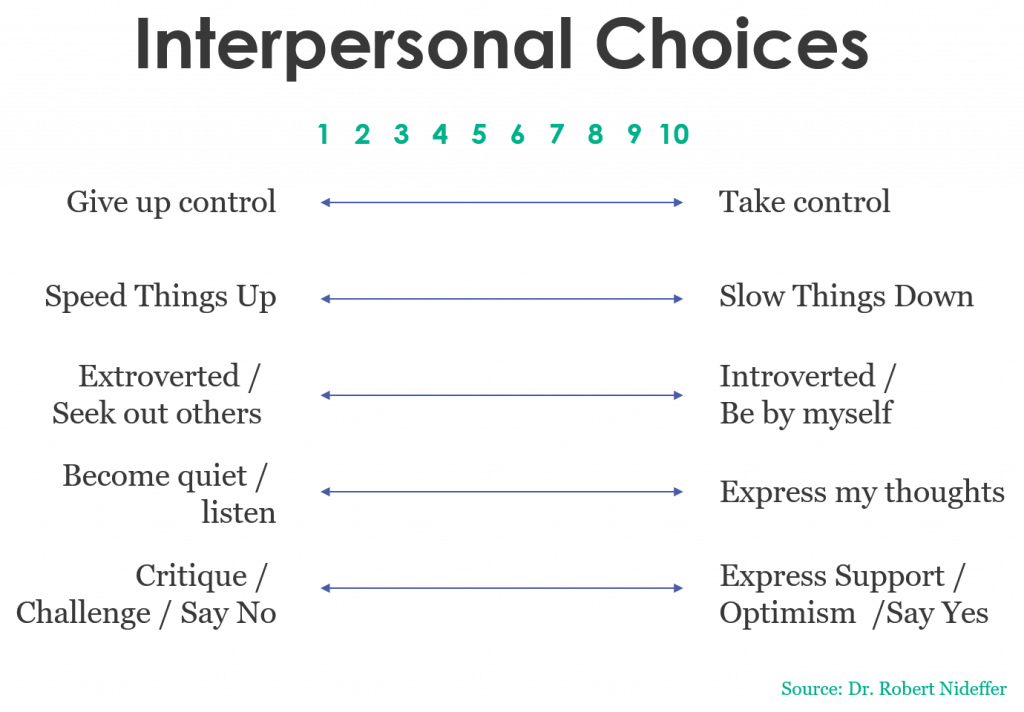
Five communication choices

The author of the TAIS, Dr. Robert Nidefer, showed that people make five choices over and over in the course of a conversation. These choices are informed by their tendencies on five dimensions.
Give up/take control – are you more likely to try to take control, or cede control to someone else? Speed up/slow down – are you more likely to force action or a decision, or encourage more thought and consideration? Extroverted/introverted – are you going to seek out others, or try to solve the problem yourself? Become quiet/express thoughts – are you going to become quiet and try to understand, or advocate for your position? Critique/express support – will you say no and become more critical, or will you say yes and express support?

Cut the right wire

Every team will have members with different tendencies. Ultimately, it’s not the tendencies that matter; it’s the level of awareness team members have of their tendencies, and the systems they put in place to leverage their strengths and weaknesses in the heat of the moment. The highest performing teams we work with take three critical steps in preparing for productive communication under any circumstances.

Acknowledge the “I” in team

Great coaches know that the phrase “there is no I in team” is a myth. Every individual makes their own contribution – and without self-awareness, people can’t adjust. That’s why the first step in your team’s communication action plan is to encourage every individual to build self-awareness across these five choices. By knowing and understanding their default tendencies, team members can begin to recognize their behaviour and course-correct when necessary for the good of the team.

Connect to the “we” of the team

It’s advantageous to know your individual tendencies, and the value is multiplied when that information is shared with everyone on the team. When you raise the waterline of team awareness, everyone can work on the same communication system. Team members can see the intent behind the behaviors their teammates exhibit. The process can be incredibly difficult; Team Canada Captain Hayley Wickenheiser called sharing her profile with her team-mates, “the most stressful part of the 4-year [Olympic] quadrennial.”

Come together as a team

Armed with knowledge of self and others, teams can come together and translate self-awareness into action. When pressure hits, if everybody on the team has the tendency to get louder, express their thoughts and try to take control of the conversation, the team can make decisions in advance to decide who’s going to take control when issues arise. By having these conversations earlier, teams can build systems to fall back on when the pressure is turned up.

Preventing detonation

The next time you’re headed into a potentially high stakes conversations, use the five choices below to carry out a short 3-step preparation exercise:

1. Plot your default tendency on each of the five scales – given your past history, where are you most likely to fall?

2. Where would you ideally like to be as you head into this specific interaction?

3. What are the gaps between your ideal and default style? What actions will you take to ensure you are at your ideal?

Repurpose the fuel for growth

We’ve said before that negative emotion is volatile fuel. Improperly handled, it can lead to combustion. Used properly, it can lead to high performance. Team communication must go beyond just staying cool during difficult times. Teams must use communication to understand and lean in to their negative emotions, uncover what the emotions are telling them, and frame it as an opportunity for growth. This is what happened with the women’s team in 2002. They prepared to have productive communication at all times, and used the tools they learned to find the opportunity for growth at a moment when it could have blown up. Jayna Hefford explains:
By understanding your individual communication style, sharing your tendencies with the team and proactively planning to address potential faults, your team can find its way through difficult times and not just safely diffuse difficult situations but find new strength and opportunity for higher performance in the process. On November 19th, 2019, 75 leaders from Toronto’s business and HR communities gathered at OCAD U CO for a discussion on team resilience. Here’s what they learned:
Leading the discussion, Third Factor CEO Dane Jensen brought together the voices of elite athletes and coaches to talk about what separates those teams that are able to rebound from failure to reach even higher levels of performance from teams that tend to crumble or falter in the face of failure. Drawing on insights from our work with high-performing sports teams, including the last four medal winning women’s Olympic hockey teams and the men’s and women’s national soccer teams, Dane identified what it takes for teams to not just perform but also to recover and be resilient. These are the four traits we’ve observed that characterize resilient teams, or differentiate resilient teams from those that are less resilient: 1. Negative emotion. Resilient teams process negative emotion in a way that leads to harder work and higher standards as opposed to detachment or combustion. They frame it so rather than being scared of negative emotion, they choose to lean into it, work with it, and see it with a sense of challenge, control and commitment. 2. Communication. The teams that recover quickly from setbacks communicate differently because they have worked consciously on awareness. They’ve surfaced their communication styles and worked on having performance conversations in the good times. 3. Relationships. Teams are more resilient when they work diligently on building relationships, even if that’s just 30 seconds for each person every day. 4. Shared purpose. Teams work best in the face of failure when they have a clear a line of sight to shared purpose. They don’t do hard work for it’s own sake, but because they choose to connect it to something that actually matters to them.
JOIN US FOR OUR NEXT LEARNING BREAKFAST

Be the first to know about upcoming learning opportunities from Third Factor by entering your information below.
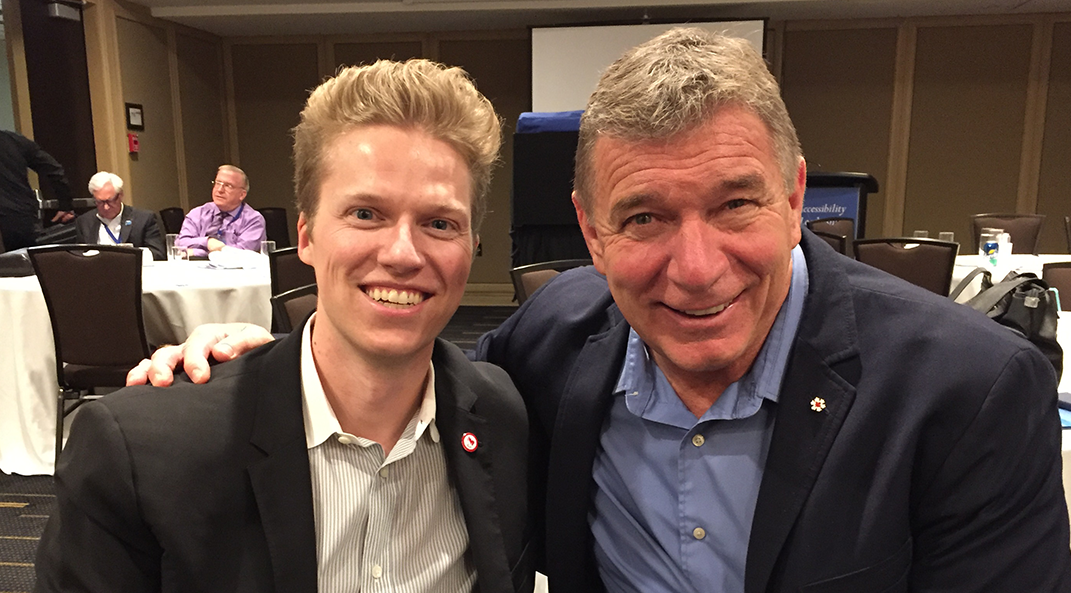
Approximately 1 in 5 Canadians identify as having a disability, and this number will continue to rise as our population ages. At Third Factor, we have a long history of working to reduce barriers for people with disabilities and we want to shine some light on an initiative we’re participating in this week: the annual Rick Hansen Foundation Accessibility Leadership Forum. Inspired by the belief that anything is possible, Rick Hansen began the Man In Motion World Tour in 1985, wheeling 40,000km over two years. The Rick Hansen Foundation, established in 1988, has made transformational change in raising awareness and removing barriers for people with disabilities, and funding research for the cure and care of people with spinal cord injuries. Today, the Foundation focuses on improving accessibility to create a world that’s accessible and inclusive for all. In service of this, Rick and the Foundation have brought together a group of leaders from the disability community to collaborate on making Canada the most accessible country in the world. The forum has met annually for the past 4 years to leverage their unique organizational strengths, exchange ideas, build practical recommendations, assess progress, and identify priorities for the coming year. Since this group first came together we’ve been privileged to work with Rick and his team at the Rick Hansen Foundation to help design the day, making sure that we’re engaging all the stakeholders appropriately and sending them back to the real world with a renewed sense of commitment towards an inclusive and accessible world for people of all abilities. Third Factor CEO Dane Jensen and Rick HansenThird Factor CEO Dane Jensen and Rick Hansen This year, the focus will be primarily on discussing what it means to be a collaborative community of organizations. How do we think about combining our efforts to make sure that we are punching above our weight and not just acting as a number of independent organizations? We are stronger as a whole and through better corporate collaboration, we can accelerate the pace of progress for people with disabilties. This year also marks the launch of the Accessibility Professional Network, a membership network created to bring together accessibility professionals, consultants, students and anyone passionate about creating a Canada that’s accessible for all. The network will host its first Annual Accessibility Professional Network Conference on Oct. 31-Nov. 1 in Toronto, which will provide a platform to learn about national and international initiatives in accessibility and contribute to enhancing the field of accessibility in Canada. Canada is a better place to live because of the important work that Rick and the Foundation have done to raise awareness and remove barriers, and we’re pleased that we’re able to contribute to a movement that’s making a real difference in the lives of people with disabilities in this country. If you’re interested in doing more to improve accessibility within your organization or community, learn more at the Rick Hansen Foundation.   Sometimes we need to step outside of ourselves in order to better understand what is going on, on the inside. Self-reflection is one of those things that managers often brush aside. In a forward-focused business environment it can feel as though you just don’t have time to be reflective. However, in order to be great it is crucial to first understand your own strengths and limitations and this understanding rests on the ability to become self-aware. Sandra Stark and Peggy Baumgartner discuss why self-awareness is important, what it looks like, and the questions you must be able to answer about yourself. They introduce the concept of “active awareness”, a skill that helps you leverage self-awareness in the moment, and that has worked for the thousands of Canadian executives that Third Factor has worked with over the past ten years. The time that you invest in getting to know yourself in the present, will only serve to benefit you in the future. Click here to download the whitepaper. “I was covering a colleague’s position while she was on maternity leave. She has now returned and we have negotiated shared authority and management roles. Co-management is not easy. Now we have to see where our roles intersect and what makes us distinct. It was so much easier to be the sole operator and know exactly what my role was and what I was accountable for. I think that is the hardest part. How do we decide about accountability?” In our workshops, we constantly talk about the importance of clarity. Nowhere is this more important than in areas of joint responsibility. My preferred starting point for clarity in these situations is the basic building block of management responsibility: the decision.

First and foremost, you and your colleague must be on exactly the same page with respect to what the key decisions are that are made in the course of your work, and then you need to have an open and frank discussion around who has the right to ‘make’ the decision vs. who has an ‘input’ right (I.e. They need to be consulted, but ultimately the decision is not theirs to make), or even just a ‘notify’ right (I.e. They must be notified once the decision has been made).

A lot of the issues in shared roles come when people believe they have a make right, but actually they just have an input right, or vice versa. Agreeing on this up front can diffuse a lot of potential tension.

It is very tempting to establish ‘joint make’ rights for key decisions—i.e. we both need to agree to make the decision. In my experience, ‘joint make’ rights cause some significant issues in the real world, and often lead to paralysis. Even though it can be very painful up front, it is better to align on one person who ultimately has the responsibility for making each decision. These ‘make’ rights would ideally be aligned with the unique knowledge, skills, etc. that you bring to the table. Sometimes this may not be possible, but try to use a “joint make” very sparingly.

One way to think about making this real is in going through the core job responsibilities you’ve outlined in your job description and really honing in on what the choices implied in each. For example, let’s say one element of your job is to “oversee the creation and implementation of a comprehensive communication strategy”. Within this task you might have 3 key decisions: 1) what core messages are we highlighting to which audiences, 2) what budget are we allocating for communications, 3) what media mix are we going to use. What you want to do is isolate the decisions that are likely to be hotly contested, and make sure you have clearly laid out decision rights with your partner. For example:

Once decision rights are clarified, accountability is easy: you are accountable to your supervisor for the decisions over which you have a ‘make’ right, and your accountability as colleagues is that you will effectively provide for, and really listen to, input across all decisions where you have agreed that the other person has input rights. Allocating decision rights is an exercise in power. Prepare for the discussion with your colleague to be a challenging one. If you push through it, however, you will have a solid foundation upon which to build a productive, collaborative relationship.

Click here to download this article as a PDF.