Register for updates
Enter your information below to be notified when this breakfast event is rescheduled.

What can you expect at this event? Take a look at this recap from our last executive breakfast.
 Olympian Karyn Garossino, BA, M. Ed., brings a combination of insight and grit from 40+ years of being coached and coaching others. Her experience at the highest levels of elite sport, Master’s Degree in psychology and adult education, and experience working with thousands of leaders in business and government bring huge depth to her understanding what it takes to thrive under pressure—and to lead others to do the same.
 Just minutes from Union Station on Toronto’s waterfront, OCAD U CO is a state-of-the-art 14,000 square foot studio designed specifically for collaborative innovation work. The space features is home to 20 resident design-led startups, a suite of formal and informal meeting spaces, and is the setting for our program, How To Lead Innovation, which we run in partnership with OCAD U CO and the Smith School of Business at Queen’s University.
This event has been postponed. Be the first to know when it’s rescheduled by entering your information below.
“We realized that a lot of what was happening was the blame game.”Through a frank, players-only discussion the team was able to come together, but the conversation could have gone a number of different ways. It stayed on track because the team was prepared – mentally and emotionally – to have performance conversations under pressure and surface a number of issues the team needed to resolve. And that preparation turned out to be an important stepping stone to winning gold in Salt Lake City.
“The biggest opportunity for meaningful growth is often to increase self-awareness and strengthen their ability to communicate productively when under pressure.”We’ve worked with hundreds of teams in elite sport and business, including the last four medal-winning Canadian women’s hockey teams. One of the things we’ve learned is that when teams are already operating at a high level, the biggest opportunity for meaningful growth is often to increase their self-awareness and strengthen their ability to communicate productively when under pressure. To support this, we’ve developed a process to help teams become more aware of their tendencies, develop systems and practice performance conversations anytime. At the heart of this process is a tool called the TAIS – The Attentional and Interpersonal Styles inventory. The TAIS was developed for use by Navy SEALs and Olympic athletes, and we’ve found it to be an incredibly valuable tool for diagnosing communication challenges on all kinds of teams. When the pressure is on, when teams are in the midst of setbacks and failure, individuals will fall back on their default communication styles.
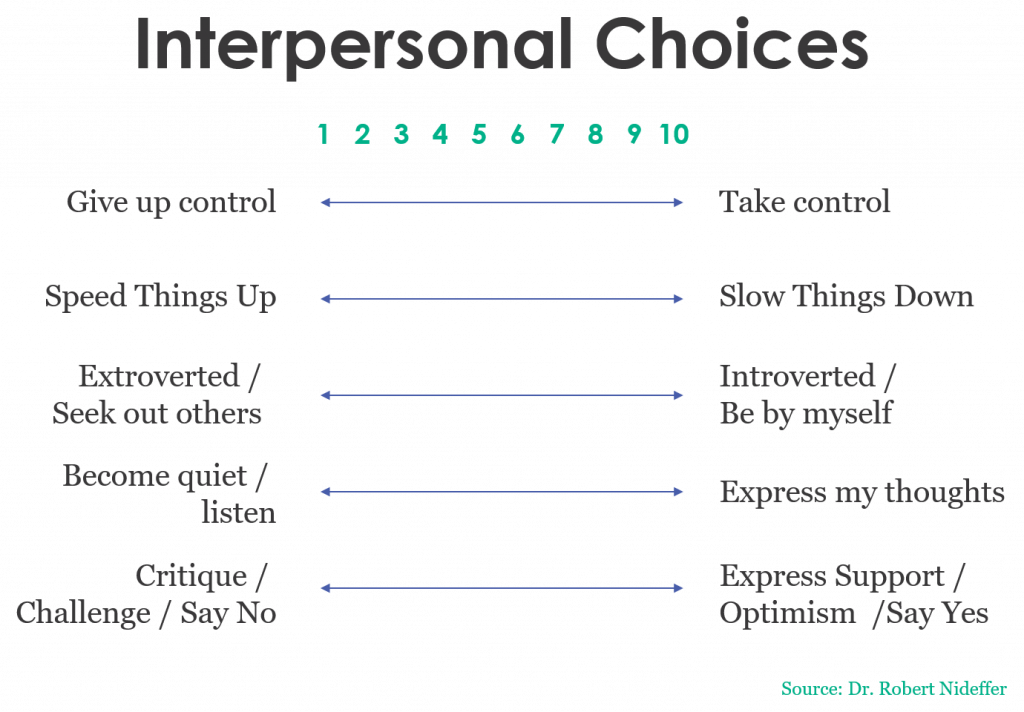
The next time you’re headed into a potentially high stakes conversations, use the five choices below to carry out a short 3-step preparation exercise:
1. Plot your default tendency on each of the five scales – given your past history, where are you most likely to fall?
2. Where would you ideally like to be as you head into this specific interaction?
3. What are the gaps between your ideal and default style? What actions will you take to ensure you are at your ideal?
Be the first to know about upcoming learning opportunities from Third Factor by entering your information below.
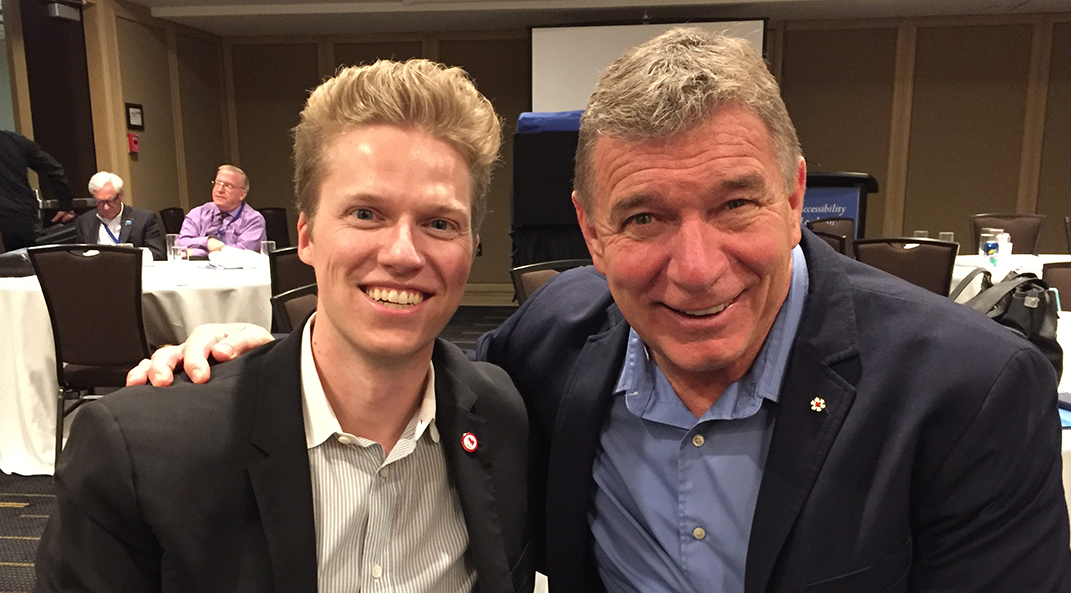 Third Factor CEO Dane Jensen and Rick Hansen
This year, the focus will be primarily on discussing what it means to be a collaborative community of organizations. How do we think about combining our efforts to make sure that we are punching above our weight and not just acting as a number of independent organizations? We are stronger as a whole and through better corporate collaboration, we can accelerate the pace of progress for people with disabilties.
This year also marks the launch of the Accessibility Professional Network, a membership network created to bring together accessibility professionals, consultants, students and anyone passionate about creating a Canada that’s accessible for all. The network will host its first Annual Accessibility Professional Network Conference on Oct. 31-Nov. 1 in Toronto, which will provide a platform to learn about national and international initiatives in accessibility and contribute to enhancing the field of accessibility in Canada.
Canada is a better place to live because of the important work that Rick and the Foundation have done to raise awareness and remove barriers, and we’re pleased that we’re able to contribute to a movement that’s making a real difference in the lives of people with disabilities in this country.
If you’re interested in doing more to improve accessibility within your organization or community, learn more at the Rick Hansen Foundation.