The Power of Pressure: Read the First Chapter
Enter your name and email address to get access.

Enter your name and email address to get access.
There are no lives sessions of this webinar upcoming. Fill out the form below to register to watch this webinar on demand.
 About the presenter:
Dane Jensen advises senior leaders and their teams on how to perform under pressure in our disruptive world.
Dane has worked with executives in 23 countries on 5 continents. As CEO of Third Factor, Dane oversees delivery of the firm’s leadership development programs throughout North America. Dane is Affiliate Faculty with UNC Executive Development at Kenan-Flagler Business School in Chapel Hill, NC. He also teaches in the full-time and executive MBA programs at the Smith School of Business, Queen’s University in Ontario, Canada.
In addition to his corporate and academic work, Dane advises athletes, coaches, leaders, and boards in the Olympic and Paralympic sport systems. He is author of The Power of Pressure: Why Pressure Isn’t the Problem, It’s the Solution (HarperCollins, 2021), and a regular contributor to Harvard Business Review. He lives in Toronto with his wife and their three children.

🧹 People who think highly of themselves might brush off the piece of corrective feedback, giving more weight to the positive news surrounding it.
😟 But those who are self-critical might dwell on the bad news and miss out on the good.
🐍 And the lack of direct communication makes people feel like they’re victims of a sneak attack.
Instead, Peggy offers simple advice for leaders who need to give feedback: Describe the behaviour you want to reinforce or correct, explain the impact of the behaviour, and outline what you want them to do. Click here to read the article on hbr.org. The plans for the Tokyo Games have been in the news a lot lately. In this video, our founder, Peter Jensen, shares his perspective on the preparations taking place within Team Canada. Rather read than watch? Here is the full text of Peter’s update: Greetings! Well, it’s certainly been a while. And a few things have happened this past year, to put it mildly. I thought I’d give you an update from my perspective on the Tokyo Olympics. I believe unless something else dramatic changes, and that’s certainly a possibility, that the Olympics will proceed, but they certainly will not resemble, for the participants at least, a normal Olympics. As a spectator watching on television, you’ll see a lot of what you would normally see with the exception of loud crowds and loud noises. In the latest installment, they’re hoping to have people in the stands but get this, they’re not allowed to cheer. And that’s obviously for COVID reasons. Quite frankly, the COC is doing its best to encourage parents, family, and friends not to attend the Olympics in person because they won’t have access to the athletes and their children. Likely, it will be like the World Junior Hockey Championships, where gatherings will be held afterward online – so you might as well stay at home. What do we know from the athlete’s perspective? We know that they’re only allowed in the village five days before their event and they must leave when the event is over. Obviously each country will have their own bubble. It will not be a normal Games in terms of the athlete’s experience.“The athletes need to be able to prepare for something very different than they’ve imagined their entire life”The opening and closing ceremonies are still up in the air. Mid February, the IOC will publish a playbook outlining their plan. Now from a psychological perspective, the athletes need to be able to prepare for something very different than they’ve imagined their entire life. I’m sure you’ve had the experience, especially early on in the pandemic, of going to do something you normally do and then realizing, “Oh I’m not driving anywhere. I simply have to go on my computer and go online.” Those images of how we used to do things stay very strong for a long period of time. But once we start doing things differently, those things become the inner images. The athletes don’t have the advantage of that because we still don’t know enough detail to paint a clear picture of what it’s going to look like to be in Tokyo. It will get clearer over the coming months. And it will definitely not be a level playing field. Some of the countries will prioritize the athletes in terms of vaccinations, others will not. Some countries have been allowing their athletes to train in groups, others, including Canada, have not. One of the biggest things is that test events that normally are held in the Olympic venues to help athletes prepare for the Olympics, will not be held. It’s been ages since any of our athletes have had the opportunity to compete. And so, as I’ve said, A lot of changes and a lot of variables. There’s no doubt you’ll hear a lot about this in the coming months. But the Olympics are usually about overcoming hardship and hope, and my goodness, we could all use a little of that. In our 3×4 Coaching virtual learning journey, participants are given challenges to apply what they’ve learned on the job. In this video, our Chief Learning Officer, Peggy Baumgartner, showcases how one program participant used a challenge activity to make a lasting difference in his organization. When it comes to coaching, it’s not about what you know; it’s what you do that ultimately matters. That’s why we make challenge activities a part of our online learning journeys. Participants are given a challenge and encouraged to make note of what works for them and what impact it had. One participant, taking the 3×4 Coaching program through Queen’s Executive Education, really took his challenge on recognition to heart. Following the challenge, Dave Cooper shared that he had written a letter to his team to recognize their contributions through the pandemic. As the manager of retail leadership development for Sport Chek, a major retailer with approximately 250 stores, his team had been hard hit by the Covid-19 pandemic. “Our training team got very disconnected from the stores, which was really difficult for me personally and difficult for our team,” Dave told us. “After going through eight months of this constant stress, I wanted to see if I could write something to recognize what they’d accomplished how long they had endured. And maybe give them a little nudge that they have more in them.” Dave’s letter to his team was particularly effective because it took all the key concepts from the recognition module and used them in a very powerful way:
Webinars or a-synchronous content to spark ideas and motivation for groups of any size.
Learning journeys that integrate video, synchronous learning, 1:1 coaching and application to build mastery for up to 49 people.
Half-day interactive instructor-led sessions for up to 18 people to build core skills.
Download a full summary of our leadership development programs.
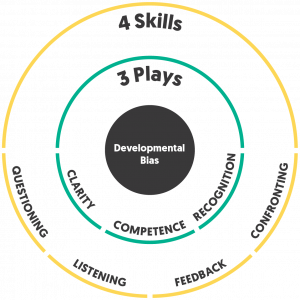
The 3×4 Coaching model explores the 3 plays and 4 skills consistently executed by world-leading coaches.
We have a full range of options for bringing our industry-leading 3×4 Coaching model to life virtually – with a specific eye to how to coach in a virtual environment.Coaches are leaders who do all they can to help people improve and succeed. It is a way of thinking and interacting with people that communicates high expectations, respect and caring. In this 4 – 6 week (depending on your desired pace) virtual program, individuals learn the concepts and skills of a coaching style of management that builds commitment, drives employee engagement, gets results, and integrates this learning into the flow of their work.
Get a feel for the learning experience in this 3-minute video overview of the program.
Coaches are leaders who do all they can to help people improve and succeed. It is a way of thinking and interacting with people that communicates high expectations, respect and caring. In this 4 – 6 week (depending on your desired pace) virtual program, individuals learn the concepts and skills of a coaching style of management that builds commitment, drives employee engagement, gets results, and integrates this learning into the flow of their work.
Our practical, 4-step map for challenging conversations is rooted in our 25 years of experience helping elite athletes manage emotions under intense pressure. Participants explore methods of preparing to confront, learn an effective format for an opening statement, practice managing reactivity and discuss how to close the conversation with accountability built-in.
Learning coaching skills is the best way to dramatically increase your people’s commitment level and performance. This interactive 1-hour online session starts your powerful coaching journey.
The 3×4 Coaching Video Program is a self-paced, asynchronous learning journey that unpacks the 3 plays and 4 skills of exceptional coaches. It provides learners with a powerful, easy-to-understand model for coaching people to higher levels of results and engagement.
Watch a brief sample of the 3×4 Coaching video program
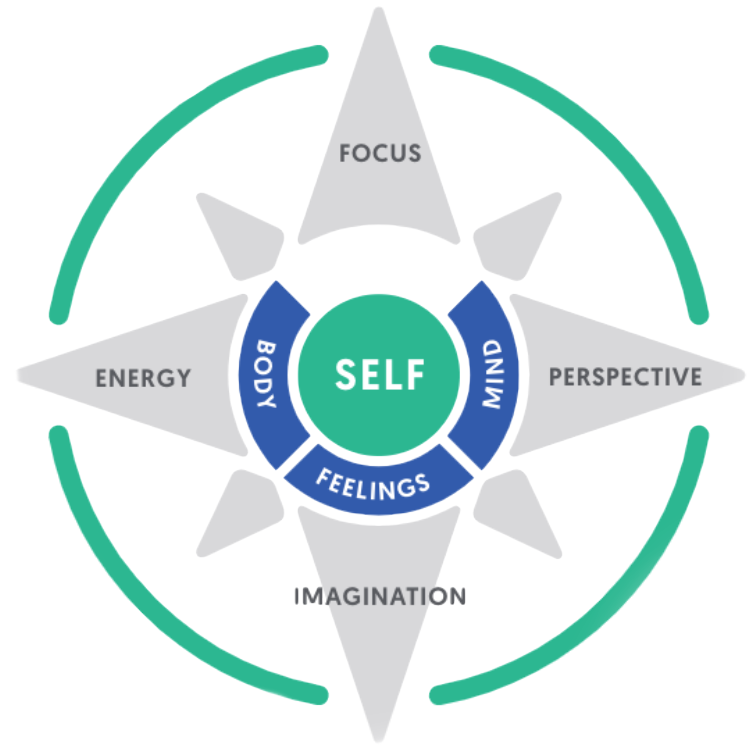
Building Resilience is aimed at giving participants a toolkit of inner skills to navigate their high pressure realities.
Rarely has resilience been as relevant as it is right now. We take our 30+ years of experience in resilience, and bring it to life in a way that gives people the insight and skills needed right now.The virtual Building Resilience program synthesizes 30 years of science-backed and performance-proven strategies into a practical toolkit that participants can use to stay healthy under pressure and recover when they are thrown off balance. Our approach to resilience draws on work in elite sport, teaching and research in academia, and work with thousands of people in organizations of all sizes. Building Resilience is a transformative experience that allows participants to learn in the flow of work while changing the way they relate to pressure.
A leader’s ability to stay resilient through setbacks and be predictable under pressure is the #1 indicator of how their team will weather the storm. Learn practical techniques for staying even-keeled when it matters most in this 1/2-day online workshop.
This online session equips participants with an understanding of how uncertainty and pressure impact their performance and health, an awareness of the choices they have to enhance their resilience under pressure, and a guided, applied exercise that will specifically tackle how they are framing and taking direct action on the areas that will most impact their performance and resilience.
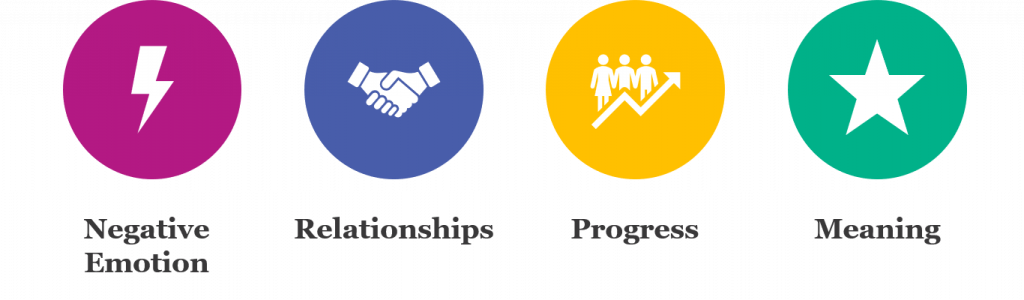
Our Maintaining Team Motivation Through The Troughs program teaches leaders four allies for fighting disillusionment.
A collection of fit-for-purpose programs that address hot button issues like motivation through prolonged periods of uncertainty, challenging conversations from a distance, and the imperative for agility and personal ownership over re-skilling.As the pandemic drags on, maintaining motivation and engagement will become a primary challenge for leaders. Learn practical techniques to keep people energized, resilient and motivated, inspired by Olympic coaches and athletes, in this 1/2-day online workshop.
Meta-skills are the connective tissue that allow people and organizations to let go of the skills that have anchored their successful past and master and embrace new ways of working – in other words, to evolve. Packed with ideas on both how to foster the development of meta-skills for yourself, and how to build meta-skilled organizations as stewards of talent, this keynote lays out a framework for six key meta-skills that allow individuals and organizations to see clearly, move quickly, and stay the course.
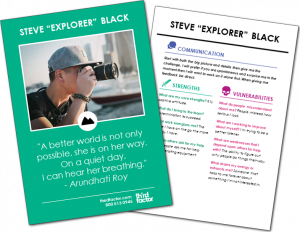
The “player’s card” is one of our favourite tools for helping learners translate self-awareness to communication and action.
The Self-Aware Leader program combines the TAIS assessment, three one-on-one coaching sessions, the creation of a personal action plan to address a real business challenge, an ability to chart your progress and adjust your approach through the guidance of a coach. It will help leaders understand and leverage their strengths under pressure and identify what changes if made, would matter the most.
Whether you want to build self-awareness for a few executives or all of your people managers, the TAIS can help them identify environments and performance situations in which they will thrive and excel, when and how they are most likely to make mistakes and what they can do to ensure you will perform well under pressure. Participants receive an individual report detailing 18 personal styles as they relate to attention, information, leadership, social and communication and have the opportunity to build further clarity with a 1:1 coaching call.
Get a complete overview of our coaching, collaboration and resilience programs.
“Let me give you some feedback on that.”“Then use a verbal yellow highlighter,” I responded. “Whenever I have to give anybody feedback, and I want to to make sure it’s been heard and recognized as feedback, I always use the word feedback and emphasize it… as in ‘let me give you some feedback on that.’” On the next day of the program she walked up to me and said “Oh my gosh that was so simple, and it will make a big difference. In thinking back to my conversations with my employees I realized that very often when I was actually giving them some feedback I rarely used the word feedback, so they didn’t recognize it as such when they were asked.” It will definitely help the employees’ performance and, secondarily the results on her 360 feedback. Negative emotion is an incredibly volatile fuel. Our CEO, Dane Jensen, lays out how to harness its energy for building motivation in his latest article for Harvard Business Review titled Turn Your Team’s Frustration into Motivation. In the article, Dane offers three tools for leaders to motivate people facing a setback:
🏷 Label the negative emotion and engage. Right or wrong, giving it a name helps uncover important information that can be used for moving forward. 👏 Feed the self-coach, not the self-critic. Encourage them to look for the opportunity in the crisis. 🛴 Channel energy to action. Use the moment to build a vision of a better future and build clarity around what it takes to get there.
Strong leaders don’t shy away from negative emotions. They lean into them and help their people use them to recover and grow. Click here to read the article on hbr.org.