SORRY WE MISSED YOU
This event has passed, but it won’t be the last. Be the first to know about future events from Third Factor by entering your information below.

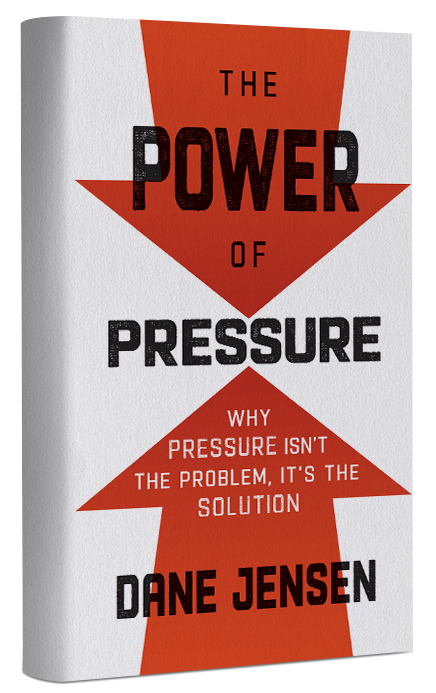
Join Third Factor CEO, Dane Jensen, to celebrate the launch of his new book: The Power of Pressure: Why Pressure isn’t the Problem, It’s the Solution.
In this virtual book launch event, Dane Jensen will tell unforgettable stories of pressure, teach practical skills for performing in peak moments and over the long haul, and leave you with renewed energy for tackling the biggest sources of pressure in your life.
Registration is $29.99 and includes participation in the live event on September 1st or 8th, 2021, access to a recording of the session, and a hardcover copy of The Power of Pressure.
 Dane Jensen is the CEO of Third Factor, an acclaimed speaker, an instructor at Queen’s University and the University of North Carolina, a regular contributor to Harvard Business Review, and the author of The Power of Pressure (HarperCollins).
In the absence of information, people tell themselves storiesIn the absence of information, people tell themselves stories – and those stories are rarely positive. Without a clear understanding of the benefit of returning to work, people are likely to tell themselves that it’s because they’re not trusted to do their job while working remotely. Or, that it’s because of their leaders’ own discomfort with remote work. To combat this, organizations need to be able to clearly articulate the value of why people are being asked to come back to the office, beyond “you get to keep your job.” People need to understand how it benefits the organization, how it benefits their team, and how it benefits them personally. A client I work with, League, provides a useful example of this in their communication to employees about their plans for a hybrid model. Their Chief People Officer, Kim Tabac, has promised their people to, “strike the balance between the ‘I’ and the ‘We’ by focusing on the intersection of the employees needs for meaningful work, and a continued focus on their mental health and wellness, with the company’s focus on high performance, innovation, and connection to our mission.” In addition to helping motivate people who would rather continue to work remotely, being clear about the value of working in-person can help to ease the pain of change for everyone in the organization. A few months into the pandemic, we asked leaders about their challenges in the remote work environment and almost one in five said their biggest obstacle was others not being open to change. By giving the change meaning, organizations can reduce this friction point and accelerate the pace at which the benefit of the change begins to outweigh the discomfort of the change itself.
People do things for people, not things.Too often, people leaders feel like managing their team is a “to do” along with the rest of their job. In fact, when we asked the same group of leaders what gets in their way of having career conversations with their people, 42% told us they don’t have the time. Organizations need to give leaders a clear expectation that helping their people grow and develop is their first job, rather than something to be fit in around other tasks. By investing in people and having these conversations, that’s how the work’s going to get done. It’s not the other way around. As the plan is set in motion, focus on three priorities to enable leaders through the transition to in-person work:
 Rosie MacLennan recovers from injury / Source: Instagram














“The ways they brought energy were as diverse as the people themselves.”As the group shared their player cards, it quickly came to light that a number of different members of this team had been significant “energy givers” through this difficult time. And the ways they brought energy were as diverse as the people themselves.
“Create a clear image of what it looks like to be an energy giver.”Start by setting the expectation that energy is a team responsibility. Work with your people to create a clear image of what it looks like to be an “energy giver” and what behaviors will move the team’s energy level in a positive direction. Help your team surface the different ways “energy givers” sustain the team in tough moments. Make it a part of your regular check-ins to ask people what’s contributed to their energy over the past week and encourage open discussion when appropriate. Finally, provide opportunities for regular feedback and recognition so that each “energy giver” knows what to keep doing. This feedback can come from you as a leader, but people should also hear from their peers. Effective feedback recognizes the behavior, communicates its impact, and encourages the person to continue. With this approach, a leader can create more energy on their team than they could ever hope to do alone, while at the same time helping their people to stay engaged and motivated through whatever may come.
Every engine needs fuel, and in the coaching relationship there is no stronger fuel than emotion.Falling into this trap, however, robs you of the opportunity to direct the energy in that emotion in a productive direction. When a team member expresses negative emotion, it means they care. When leaders make an effort to notice and acknowledge the emotion, they can deepen the relationship and build trust. And by exploring the emotion, they can help their people see what’s possible and use their feelings as motivation to take a step in the right direction. In these situations, the relationship is what allows the coach to lean into the emotion and explore it. In our 3×4 Coaching program, we give participants challenges to apply key learnings back on the job. In one of these challenges, a participant committed to asking their people simple questions like, “What’s new from the weekend?” much more frequently than they had before. Asking more, personal questions helped this leader build rapport with their people. And it provided the leader with new insight into their people’s emotions. In the course of these conversations, this leader noticed that the emotion in the person’s response provided a deeper view to valuable information. By leaning into those emotions and exploring them further, the leader was able to learn more about how they were interpreting their experiences. Noticing what made them frustrated, anxious, fearful, or even happy and excited, improved the leader’s ability to identify and address their team’s issues and challenges. With stronger relationships in place, and positive results beginning to emerge, it wasn’t long before the leader began asking more direct questions to gain a deeper understanding of their people’s feelings. Equipped with better information, the leader was able to give more and more targeted support and feedback to enable their team’s success. As a leader and a coach, the relationship you have with your people is what allows you to help them be at their best. When leaders give their relationships the care they need and lean into emotions, they can drive higher levels of performance, and ultimately results.