
Kindness Is the Mechanism That Lets Standards Hold
When choosing who to work with, one thing mattered most to the brothers. “Skills can be learned,” Brian says, “but the right compatibility is [most] important.” For Brian and Robin, compatibility meant being able to handle feedback without eroding trust. It wasn’t about being agreeable, it was about keeping standards high while delivering feedback with kindness. “There could be criticisms, there can be hard conversations,” Brian explains. But when feedback came with “kindness in their hearts and how it’s being presented,” it became “much easier to listen to it and to debrief, and figure out a better way forward.” That difference mattered for learning. With trust in place, someone could say, “Hey, I think if you do something this way, you’ll be faster,” and it would be heard as help. As Brian says, “we all get better together.” Robin noticed the same effect. Strong trust meant “less micromanaging.” Standards didn’t drop; roles were clear, intentions were trusted, and learning could continue under pressure. Here’s Brian sharing about the importance of kindness to their culture:Kindness Can Raise the Bar
One of the most important moments in Brian’s Paralympic career happened because a competitor took the time to help him. Early in his Para Nordic career, Brian sometimes raced without a guide. In one event, he finished just “30 seconds behind the top guy in the world.” Afterward, the German athlete and his guide told him, “You need to have a guide, because today with a guide, you might have won.” Brian remembers thinking, “Why would another nation be helping me out on this?” The answer was simple: they were “just excited to have competition.” That advice changed Brian’s path. Because of that conversation, he asked Robin to guide him, beginning “10 years of pretty fun work racing together.” Sometimes kindness doesn’t make sport easier. It makes it better. On why others helped them out to raise the bar:Trust Is Built in the First Failure, Not the First Success
Their first World Cup together took place at the Salt Lake City Olympic course in March 2001. It was unusually warm – about 15 Celsius, Robin recalls – and the snow was wet and unpredictable. On a fast downhill, something went wrong. Robin reached the bottom and realized, “Brian’s not there.” He waited, then started hiking back up the course. He heard Brian yelling. What he saw first wasn’t Brian, but “a ski sitting off the edge of the trail.” Brian had caught an edge in the “sloppy snow,” gone off course, and ended up “hanging off of a tree upside down.” Robin climbed down, removed the skis, and pulled him back up. From Brian’s side, he stepped outside the track to get a push and hit the “mashed potatoes” snow: “My ski stopped and I kept going.” The tree became “the only thing stopping me from sliding headfirst down a steep mud slope.” He held on and waited for Robin. “I figured he’d eventually figure out I wasn’t there,” Brian says. Robin later called it “a very big failure on day one.” What mattered was what followed. “We laughed about it.” No blame. No anger. That moment set the tone. Trust wasn’t automatic – even between brothers. It was built through shared experience and protected by how mistakes were handled. Kindness showed up early, not as softness, but as steadiness. Here’s Robin sharing their early guiding failures:Autonomy in Preparation. Alignment in Execution.
The McKeevers succeeded because they didn’t pretend they were the same athlete. As Robin explains, “We have overlapping roles that work together … we have the same end goal, but we still need to arrive there in slightly different ways.” That showed up in training. “We have our own training programs,” he says. “It’s not exactly the same, but we still need to arrive at the same point where we can ski together, race together, and communicate in order to achieve a team victory.” Brian puts it plainly: “I can ski by myself. Robin can ski by himself, but he’s there to help me. And we are winning this together. We’re not doing this individually.” Giving each other space reduced friction. Coming together at the right moments kept them aligned. Trust and looking out for each other were the glue that made both possible.What Leading With Kindness Looks Like in Practice
The McKeevers’ story reveals three practical behaviours that translate directly to leadership and teams:01.
Reset without blame when something goes wrong.
02.
Deliver feedback as performance support, not personal judgment.
03.
Clarify ownership to reduce micromanagement and create alignment.
01. Reset without blame when something goes wrong
When Brian crashed off the course in Salt Lake City, the response wasn’t panic or finger-pointing. Robin described the day as a failure, but one they laughed about and moved on from. That response preserved trust in a moment where it could have fractured.02. Deliver feedback as performance support, not personal judgment
Hard conversations were unavoidable, but when framed with respect, people stayed receptive. The feedback that mattered most was specific and performance-focused: if you do this differently, you’ll be faster.03. Reduce micromanagement by clarifying ownership and alignment
Trust allowed Brian and Robin to prepare in their own way while still arriving at the same execution point. Different paths. Same outcome. This is kindness without lowering the bar: respect that keeps people engaged, paired with precision that drives improvement. In the McKeevers’ case, kindness turned trust into medals, and a partnership into a lasting competitive advantage. —- Brian will be coaching the Canadian para-Nordic team as they go for gold in Milan-Cortina starting on March 10 (see the team schedule here), while Robin will be supporting the Canadian Nordic team as a member of the coaching staff.Build Resilience In Your Organization
Bring the skills that elite athletes use to build resilience and perform under pressure to your organization. Contact us to learn more about our resilience programs.
That preparation mattered in Sochi. When pressure mounted, the team didn’t fracture emotionally. They had already agreed on how they would behave.
You Perform How You Prepare
A persistent myth about high performance – whether in athletes or business leaders – is that resilience appears when it’s needed most. The reality is simpler: it shows up only to the extent that it has been rehearsed. Months before the Olympics, Jensen met with the team before a game against a strong AAA boys’ team from Brandon, Manitoba. The discussion wasn’t about winning that night. Instead, it focused on a specific scenario they could face: being down 2-0 in the third period. The players began by talking through how they would manage the clock. “You think about it in 10-minute segments,” Jensen explains. “You break it in half … and break it down into achievable things.” He then narrowed the window. What if there were only five minutes left? Now it became two-and-a-half-minute sequences. Smaller problems. Clearer focus. The emphasis was not on emotion or outcome, but on behaviours the team could control under pressure. So when Team Canada found itself down two goals with around seven minutes left in the Sochi gold medal game, the players weren’t overwhelmed. The situation felt familiar. They had been there before and knew how to respond.
“Stay Positive” Is Not a Strategy
Another subtle but critical shift was Jensen’s refusal to let the team sidestep uncomfortable realities. When asked how they would respond individually late in a close game, players emphasized the importance of staying positive and supporting their teammates. Jensen pushed back. “The coach shortens the bench. And so you’re irritated,” he told them, adding players who weren’t getting ice time would feel frustrated and lose focus. Pretending otherwise wouldn’t make that problem go away. So the team discussed what that “irritation” might feel like and how players could still support their teammates on the ice. By talking about those moments in advance, they normalized them. Falling behind stopped being a psychological threat and became a known condition with a known response. That preparation mattered in Sochi. When pressure mounted, the team didn’t fracture emotionally. They had already agreed on how they would behave.Normalize Adversity Instead of Hoping It Won’t Appear
After the gold medal game, head coach Kevin Dineen summed up his team in a few words: They never gave up. From Jensen’s perspective, there was more to that explanation. “They didn’t give up because that’s who they were,” he says. “We’d done a lot of work on team vision and culture. But we’d also simulated what they would need to do.” The team didn’t treat adversity as an anomaly. They treated it as an inevitability. By rehearsing the moments most likely to derail them – shortened benches, frustration, time pressure – they removed surprise from the equation. And when surprise disappears, performance improves. The Sochi gold medal didn’t come from belief summoned in the moment. It came from preparation that made the moment feel familiar.Pre-Plan for Adversity
You don’t need an Olympic stage to apply these lessons. The same approach Team Canada used to win gold works in business, leadership and life. Here’s how to get started:- Identify two to three scenarios that are most likely to derail your team.
- Break each scenario into smaller, controllable steps to solve, rather than treating it as one overwhelming problem.
- Decide in advance what you will think, say, and do when those moments show up.
- Choose simple imagery or verbal cues that help ground focus and regulate emotion under pressure.
Key Insights:
-
Resilience is not a personality trait; it is a trained response to pressure.
-
Breaking high-stakes situations into smaller, controllable segments reduces cognitive overload and sharpens execution.
-
Avoiding negative scenarios creates fragility; rehearsing them creates confidence.
-
Teams perform better under pressure when they normalize adversity instead of treating it as failure.
-
Preparation replaces hope with clarity.
Build Resilience In Your Organization
Bring the skills that elite athletes use to build resilience and perform under pressure to your organization. Contact us to learn more about our resilience programs.
“We can BE the best, even when we’re not AT our best.”At PyeongChang in 2018, on the other hand, “before our music even started, I felt different. I felt like a high performer, and I didn’t feel like I needed the judges’ results to prove that for me.” And contrary to the feeling after the 2010 Games, after 2018, “there was real joy and satisfaction that came from the hard work, from the pressure, from all of the things that I would’ve found totally depleting two, four, eight or 12 years earlier.” So what changed? In our conversation with Tessa, three evolutions stood out: embracing discomfort rather than focusing on the number of hours spent in training; a deliberate shift in mindset from chasing perfection to pursuing excellence; and – above all else – a reclamation of personal power.
01. Creating discomfort vs. over-training
After the over-use injuries and surgeries that characterized 2010, the comeback in 2018 was built on less training time – three hours a day instead of 12 – more recovery time, and using the limited training hours to deliberately create imperfect conditions to sharpen their resilience. Whether it was leaving the ice unflooded and chipped, pumping in crowd noise, or falling on command to practise recovery, each practice built confidence that, as Tessa says, “we can BE the best, even when we’re not AT our best.” Here’s Tessa discussing that process:02. Pursuing excellence vs. chasing perfection
In Tessa’s words, “We needed to stop chasing perfection and instead pursue excellence … and once we took perfect off the table, we thought excellence was possible.” Their daily goal became showing up at an “8 out of 10”; not in effort, but in execution. Reframing their approach unhooked them from the impossible standard of perfection and freed them to connect with the joy and challenge of consistent excellence. Listen to Tessa talk about this shift:03. Becoming drivers vs. passengers
At the heart of Tessa and Scott’s story behind the story is reclaiming a sense of agency and self-efficacy. After years of being “good little soldiers,” for their 2018 comeback, they stepped into the driver’s seat: assembling their own team, setting their own standards, and “operating as if we were the CEOs of our own business,” she says. “We had agency and autonomy, we really were steering the ship.” That changed their experience leading up to the Games and, she believes, made the ultimate win more fulfilling. Listen to Tessa talk about this shift: Of course, the effectiveness of these shifts is not limited to sports. We can all benefit from:- Increasing short-burst intensity and building time for recovery instead of focusing on hours worked or busyness as a proxy for effectiveness.
- ‘Roughing up the ice’ to build resilience into our projections, targets, pilots, and project plans instead of making plans that rely on perfect conditions.
- Embracing ‘8 out of 10’ efforts that will produce more from consistency over the long haul instead of aiming for the impossibility of perfection.
- Seeing ourselves as the author of our stories instead of allowing ourselves to fall into the mindset of being characters.
Build Resilience In Your Organization
Bring the skills that elite athletes use to build resilience and perform under pressure to your organization. Contact us to learn more about our resilience programs.
Meet our expert: Karyn Garossino, Associate Trainer

“How do you collaborate with someone who is different from you in personality, style, or approach?”
- Assertiveness: the ability to contribute and communicate your own perspective with conviction.
- Co-operation: an equal willingness to understand and integrate the other person’s view.
Diversity: The Advantage and the Risk
Differences in personality, style, and perspective are not obstacles; they are assets. Research shows that diverse teams often outperform homogeneous ones because they bring varied perspectives, unique knowledge, and deeper problem-solving capacity. However, diversity only leads to better performance when it’s managed properly. Without effective interactions, differences can amplify conflict, miscommunication, and breakdowns in cohesion. That’s the risk McKinsey and others have highlighted: diverse teams can either perform brilliantly or fail spectacularly depending on how they engage with one another. So the first step in collaborating with someone different is not to wish away those differences; it’s to welcome them, and reframe them as advantages. See differences not as barriers, but as opportunities to expand what’s possible. When someone’s style or perspective differs from yours, that’s not a threat; it’s new data. It’s an invitation to learn something new and explore another approach. To do this, you must be intentional about:- Setting aside your default approach long enough to understand how their thinking works.
- Asking questions to truly explore the other person’s priorities, assumptions, and logic.
- Active listening, where your goal is to nurture a trusting environment.
- Holding both stories as true – yours, theirs – and then creating a shared story together.
- Position yourself with the other person, not opposite them.
- Focus together on the problem, not on each other.
- Use a shared surface (whiteboard, document, screen) where both contributions and perspectives are captured and visible.
- “How do you see this unfolding?”
- “What matters most to you here?”
- “What’s your biggest concern?”
- “Where might we be missing something?”
Key Takeaways:
-
Collaboration ≠ Compromise. It’s Expansion. If you’re “meeting in the middle,” you’re probably shrinking the outcome. Real collaboration grows the pie by combining strengths, not trading them off. The goal isn’t to protect your idea, it’s to create a better one together.
-
Differences Are Data, Not Disruptions. When someone’s style or thinking throws you off, that’s not friction, it’s information. High-performing teams treat difference as an input to improve the solution, not a hurdle to overcome.
-
Psychological Safety Is the Multiplier. Diversity only pays off when people feel safe to speak, question, and challenge. If you’re defending or persuading, you’re shutting down performance. If you’re curious and inquiring, you’re unlocking it.
-
Get on the Same Side of the Table, Literally and Mentally. Opposite sides create opposition. Side-by-side creates partnership. Shift your posture, share the surface (whiteboard, doc, screen), and aim your energy at the problem, not the person. It’s a simple move that changes the whole dynamic.
When people picture elite sport, they usually imagine the glory: the medals, the anthem, the moment everything comes together. What they don’t often see is the psychological turbulence underneath those performances – the doubt, fear, shame, and self-recrimination that show up when things don’t go according to plan.
Years ago, Third Factor founder Peter Jensen was working with a Canadian national team that was, by all measures, one of the best in the world. They were perennial contenders, a program with history and swagger. And yet, in the first days of a world championship, everything came undone. They lost to their arch-rivals badly, and the shock was devastating.
We’re always navigating the gap between what is and what ought to be. That gap hurts. But the hurt is meaningful. And if we can help people explore that meaning, we unlock the very thing that allows them to grow.
By the next morning, the athletes stood in the hotel lobby looking hollowed-out. Angry. Embarrassed. Anxious. They knew the tournament was short. They knew another loss could knock them out. And they knew they were at risk of spiraling.
This is the territory we work in every day – not just in sport, but in business, education, and leadership. People experiencing disappointment, failure, or the deep discomfort of not living up to their own expectations. As psychologist Kazimierz Dabrowski wrote, we’re always navigating the gap between what is and what ought to be. That gap hurts. But the hurt is meaningful. And if we can help people explore that meaning, we unlock the very thing that allows them to grow.
What follows is how Peter helped that team turn a moment of psychological crisis into the fuel that carried them to a gold medal, not despite their negative emotions, but because of them.
01.
Acknowledge the pain and help people observe it
02.
Move toward compassion, not criticism
03.
Help them find the meaning inside the pain
1. Acknowledge the pain and help people observe it
When Peter asked the players how they were feeling that morning, they didn’t hold back: awful, embarrassed, sad, angry. A typical response might have been reassurance: You’ll be fine, shake it off, don’t worry about it. But reassurance rarely helps; it often makes people feel more alone in their emotions. Instead, Peter simply said: “Yeah. You look awful.”
It may sound blunt, but it wasn’t judgmental. It was observational. It told the players: I see you. What you’re feeling makes sense. Let’s look at it together.
When the strength coach announced they’d be doing lunges at practice, Peter asked: “How are you going to look doing lunges? How will your teammates know you’re back?” These were reflective questions not about the loss, but about how they were showing up in response to it. They invited the players to step outside themselves and observe what was happening internally. This is the first job of a coach in hard moments: Help people dis-identify from the emotion without dismissing it and let them see the feeling rather than become the feeling.2. Move toward compassion, not criticism
Negative emotions become destructive not because they exist, but because we weaponize them against ourselves. We interpret them as proof: I’m not good enough. I’ll never perform. I don’t belong here. A coach must interrupt that spiral. Peter did this in an unexpected way. That morning, a staff member had told a long, mundane story about buying a T-shirt on sale. The players had zero patience for it. Peter asked the staff member to tell the story again to the entire team. Afterwards, he asked: “Why did he buy that T-shirt?”. Eventually someone answered: “Because he got a good deal.” Peter replied: “Right. He wasn’t going to overpay. He knows what shirts are worth. You guys are overpaying right now.” No judgment. Just compassion and perspective. The point was simple: Don’t pay more than the moment is worth. You lost a game. It hurts. But don’t add interest by beating yourselves up. A coach helps people see the whole truth, not the narrow, distorted version they’re stuck inside.3. Help them find the meaning inside the pain
That afternoon, the team played a weaker opponent and won only 2–0. Instead of relief, they felt further proof that they were failing. So Peter gathered them and asked each player to share what it meant to represent their country. What surfaced were stories of parents driving endless hours to practices, communities fundraising to support them, comebacks from injury, and dreams that had taken years to build. It was emotional. And it was clarifying. The problem wasn’t that they had lost a game. The problem was that they weren’t living up to what the opportunity meant to them. And when people reconnect with meaning, they reconnect with agency. They can choose how to move forward. From that point on, Peter reinforced that meaning daily: At practice: “An American player woke up today preparing to face you in the gold medal game. How are you preparing?” In the weight room: “Can you improve 1% today? What will you do to show you’re getting better?” By naming their pain and understanding its purpose the team turned the emotional energy inward, toward growth instead of self-attack. They never lost another game. They won the gold medal.When negative feelings become a weapon
Negative emotions are not the problem. What hurts performance is when people interpret those emotions as evidence of inadequacy: “I failed, therefore I’m a failure.” This is the voice of the critic – a destructive internal narrator that convinces us we’re incapable of growth or unworthy of success. A coach’s role is to challenge that voice by asking better questions:- What is this feeling signaling?
- What is the conflict between what is and what ought to be?
- And what does this moment make possible?
The takeaway for leaders and coaches
Whether you’re leading a national team or a project team, the principles are the same:- Acknowledge negative feelings without trying to eliminate them.
- Help people step back and observe their internal state.
- Guide them toward understanding what the discomfort is pointing to.
The Canadian Ski Team
Ski Cross is one of the most exciting freestyle skiing events at the Games. We’ve been proud to work with the athletes and coaches on both the men’s and women’s teams to help them build self-awareness, leverage their strengths, and perform under pressure. We’ll be cheering them on in the Ski Cross events on February 17th & 18th. Our work with Alpine Canada has also taken us to the downhill skiing events. We’ll be keeping a close eye on Team Canada at the men’s and women’s Slalom, Giant Slalom, and Super-G events.Figure skaters from around the world
Brian Orser and Tracy Wilson are not just Olympic medallists, but widely regarded as the top coaches in the sport. They’ve shared their perspectives on performing in critical moments with us, and we’ll be cheering on their skaters as they compete for the podium in Beijing. Tracy Wilson is an Olympic Medallist and 7-time Canadian champion
The Canadian Women’s Hockey Teams
We’ll be staying up late to watch Team Canada battle to reclaim Gold. We’ll also be keeping our eye Marie-Philip Poulin who is not just one of the best pressure performers in the world, but the best hockey player in the world, full stop according to our co-founder Peter Jensen.Bring the Summer Learning Series to your team • Request a call • Send this page to your manager or HR team
Energize your team as we move out of the pandemic with a series of three, one-hour virtual learning events. The months ahead will present new challenges as business needs change, blended working environments begin to take shape, and leaders are once again forced to adjust to rapid change and uncertainty. Help ready your people to lead and perform through the next phase with a series of virtual learning events.
TWO TRACKS TO CHOOSE FROM
Develop your people in the areas that will benefit them most. Choose our leadership track to build your team’s coaching and collaboration capabilities, or choose our resilience track to build your team’s ability to perform under pressure.LEADERSHIP TRACK Develop high performing leaders.
3×4 Coaching
Drawing on a wealth of experience from our 30+ years of working with the world’s top coaches, 3×4 Coaching introduces the 3 Plays and 4 Skills great coaches use to build commitment and get results.Building High-Performing Teams
Basketball coach Roy Rana has built high performing teams at every level from high school to the NBA. Drawing on years of experience, he will share what he has learned about how to create an environment in which a team is more than the sum of its parts.Working With People You Don’t Understand
Introduce participants to the relationship between their mindsets, behaviours and results, and take them on an interactive tour of how adopting new mindsets of curiosity and generosity can make those behaviours automatic.
RESILIENCE TRACK Enhance performance under pressure.
Building Resilience
High performance is not possible without pressure. The Building Resilience keynote introduces a personal resilience toolkit used by elite athletes to develop a relationship with stress and pressure that puts them in the driver’s seat.Maintaining Team Motivation Through the Troughs
When teams face challenging times, leaders have four allies to preserve motivation and fight the tide of disillusionment. This session brings these allies to life with stories from people who have used them under incredible pressure.The Power of Pressure
Drawing insights from his book, The Power of Pressure: Why Pressure isn’t the Problem, it’s the Solution, Dane Jensen’s new keynote address introduces three powerful strategies for using pressure as an advantage.
DELIVERED BY A WORLD-CLASS FACULTY
Our speakers teach at top business schools, have coached Olympic and professional athletes, been Olympic athletes, consulted at the highest level of business, and practiced law. Their strong personalities and unique personal experience draw audiences in and keep learners engaged.






LEARN MORE
Want to learn more about bringing our Summer Learning Series to your organization? Leave your contact information below and we’ll get in touch.In this article
Explore our virtual leadership development options to meet your current needs.
One Size Doesn’t Fit All
Depending on your goals for virtual learning, different approaches are required. We’ve taken a ‘small / medium / large’ approach to our product development to meet the needs of a variety of scenarios:Large Group Experiences
Webinars or a-synchronous content to spark ideas and motivation for groups of any size.
Targeted Group Programs
Learning journeys that integrate video, synchronous learning, 1:1 coaching and application to build mastery for up to 49 people.
In-depth Cohort Programs
Half-day interactive instructor-led sessions for up to 18 people to build core skills.
Get the catalog
Download a full summary of our leadership development programs.
Timeless skills + the right tools for right now
Of course, we have a range of virtual options in our core competencies: coaching skills for managers, resilience skills for all, and self-awareness skills to enable more productive collaboration. And, we are continuously launching virtual programs that give learners the skills they need to be successful right now. Note that we are continuously developing new offers (and adapting our in-person programs to virtual delivery) so this list will be updated as new programs come online.Coaching skills for managers
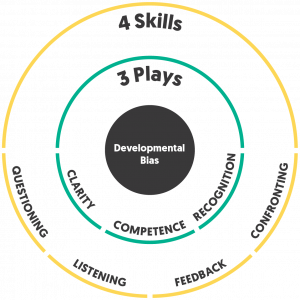
The 3×4 Coaching model explores the 3 plays and 4 skills consistently executed by world-leading coaches.
We have a full range of options for bringing our industry-leading 3×4 Coaching model to life virtually – with a specific eye to how to coach in a virtual environment.In-depth Cohort Programs
3×4 Coaching Virtual Learning Journey
Coaches are leaders who do all they can to help people improve and succeed. It is a way of thinking and interacting with people that communicates high expectations, respect and caring. In this 4 – 6 week (depending on your desired pace) virtual program, individuals learn the concepts and skills of a coaching style of management that builds commitment, drives employee engagement, gets results, and integrates this learning into the flow of their work.
Get a feel for the learning experience in this 3-minute video overview of the program.
Targeted Group Programs
Coaching Remotely 1/2-day Virtual Program
Coaches are leaders who do all they can to help people improve and succeed. It is a way of thinking and interacting with people that communicates high expectations, respect and caring. In this 4 – 6 week (depending on your desired pace) virtual program, individuals learn the concepts and skills of a coaching style of management that builds commitment, drives employee engagement, gets results, and integrates this learning into the flow of their work.
Having Challenging Conversations from a Distance 1/2-day Virtual Program
Our practical, 4-step map for challenging conversations is rooted in our 25 years of experience helping elite athletes manage emotions under intense pressure. Participants explore methods of preparing to confront, learn an effective format for an opening statement, practice managing reactivity and discuss how to close the conversation with accountability built-in.
Large Group Experiences
3×4 Coaching Overview Webinar
Learning coaching skills is the best way to dramatically increase your people’s commitment level and performance. This interactive 1-hour online session starts your powerful coaching journey.
3×4 Coaching Asynchronous Video Program
The 3×4 Coaching Video Program is a self-paced, asynchronous learning journey that unpacks the 3 plays and 4 skills of exceptional coaches. It provides learners with a powerful, easy-to-understand model for coaching people to higher levels of results and engagement.
Watch a brief sample of the 3×4 Coaching video program
Resilience skills for all
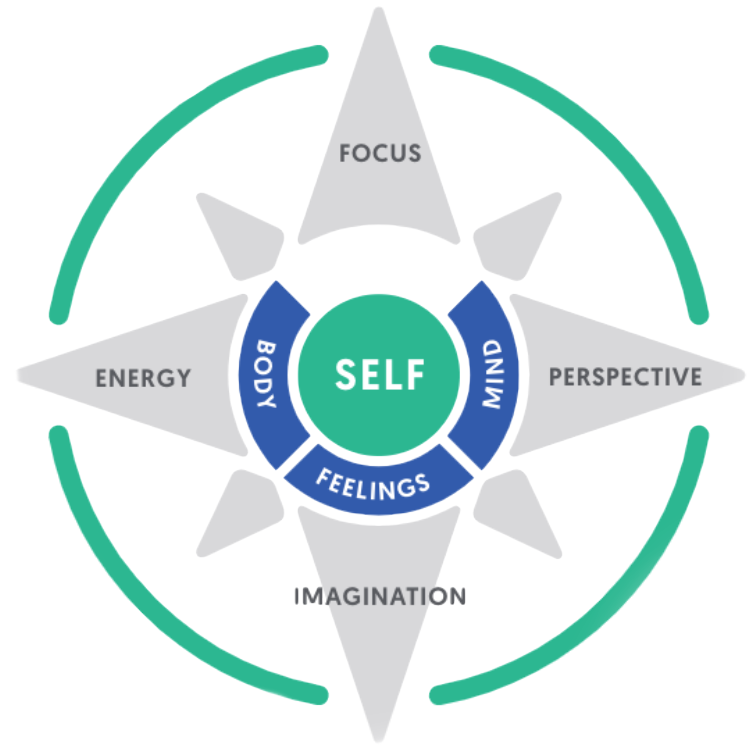
Building Resilience is aimed at giving participants a toolkit of inner skills to navigate their high pressure realities.
Rarely has resilience been as relevant as it is right now. We take our 30+ years of experience in resilience, and bring it to life in a way that gives people the insight and skills needed right now.In-depth Cohort Programs
Building Resilience Virtual Learning Journey
The virtual Building Resilience program synthesizes 30 years of science-backed and performance-proven strategies into a practical toolkit that participants can use to stay healthy under pressure and recover when they are thrown off balance. Our approach to resilience draws on work in elite sport, teaching and research in academia, and work with thousands of people in organizations of all sizes. Building Resilience is a transformative experience that allows participants to learn in the flow of work while changing the way they relate to pressure.
Targeted Group Programs
Building Resilience 1/2-day Virtual Program
A leader’s ability to stay resilient through setbacks and be predictable under pressure is the #1 indicator of how their team will weather the storm. Learn practical techniques for staying even-keeled when it matters most in this 1/2-day online workshop.
Large Group Experiences
Building Resilience Overview Webinar
This online session equips participants with an understanding of how uncertainty and pressure impact their performance and health, an awareness of the choices they have to enhance their resilience under pressure, and a guided, applied exercise that will specifically tackle how they are framing and taking direct action on the areas that will most impact their performance and resilience.
Topical skills leaders need right now
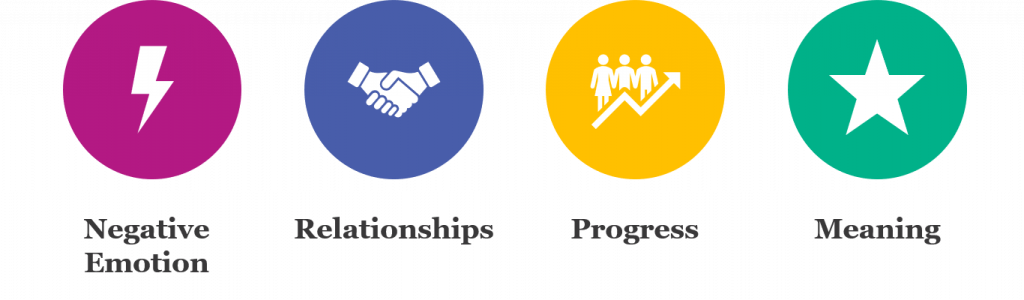
Our Maintaining Team Motivation Through The Troughs program teaches leaders four allies for fighting disillusionment.
A collection of fit-for-purpose programs that address hot button issues like motivation through prolonged periods of uncertainty, challenging conversations from a distance, and the imperative for agility and personal ownership over re-skilling.Targeted Group Programs
Maintaining Team Motivation Through the Troughs 1/2-day Virtual Program
As the pandemic drags on, maintaining motivation and engagement will become a primary challenge for leaders. Learn practical techniques to keep people energized, resilient and motivated, inspired by Olympic coaches and athletes, in this 1/2-day online workshop.
Large Group Experiences
The Meta-Skilled Organization
Meta-skills are the connective tissue that allow people and organizations to let go of the skills that have anchored their successful past and master and embrace new ways of working – in other words, to evolve. Packed with ideas on both how to foster the development of meta-skills for yourself, and how to build meta-skilled organizations as stewards of talent, this keynote lays out a framework for six key meta-skills that allow individuals and organizations to see clearly, move quickly, and stay the course.
Self-awareness & collaboration
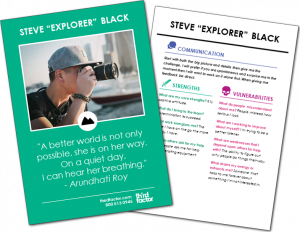
The “player’s card” is one of our favourite tools for helping learners translate self-awareness to communication and action.
Targeted Group Programs
The Self-Aware Leader Virtual Program
The Self-Aware Leader program combines the TAIS assessment, three one-on-one coaching sessions, the creation of a personal action plan to address a real business challenge, an ability to chart your progress and adjust your approach through the guidance of a coach. It will help leaders understand and leverage their strengths under pressure and identify what changes if made, would matter the most.
Large Group Experiences
TAIS Assessment + 1:1 Coaching
Whether you want to build self-awareness for a few executives or all of your people managers, the TAIS can help them identify environments and performance situations in which they will thrive and excel, when and how they are most likely to make mistakes and what they can do to ensure you will perform well under pressure. Participants receive an individual report detailing 18 personal styles as they relate to attention, information, leadership, social and communication and have the opportunity to build further clarity with a 1:1 coaching call.
Let’s talk!
If you’re interested in any the above – or anything that you don’t see here – let’s chat! You can get in touch at hello@thirdfactor.com.Download the catalog.
Get a complete overview of our coaching, collaboration and resilience programs.